
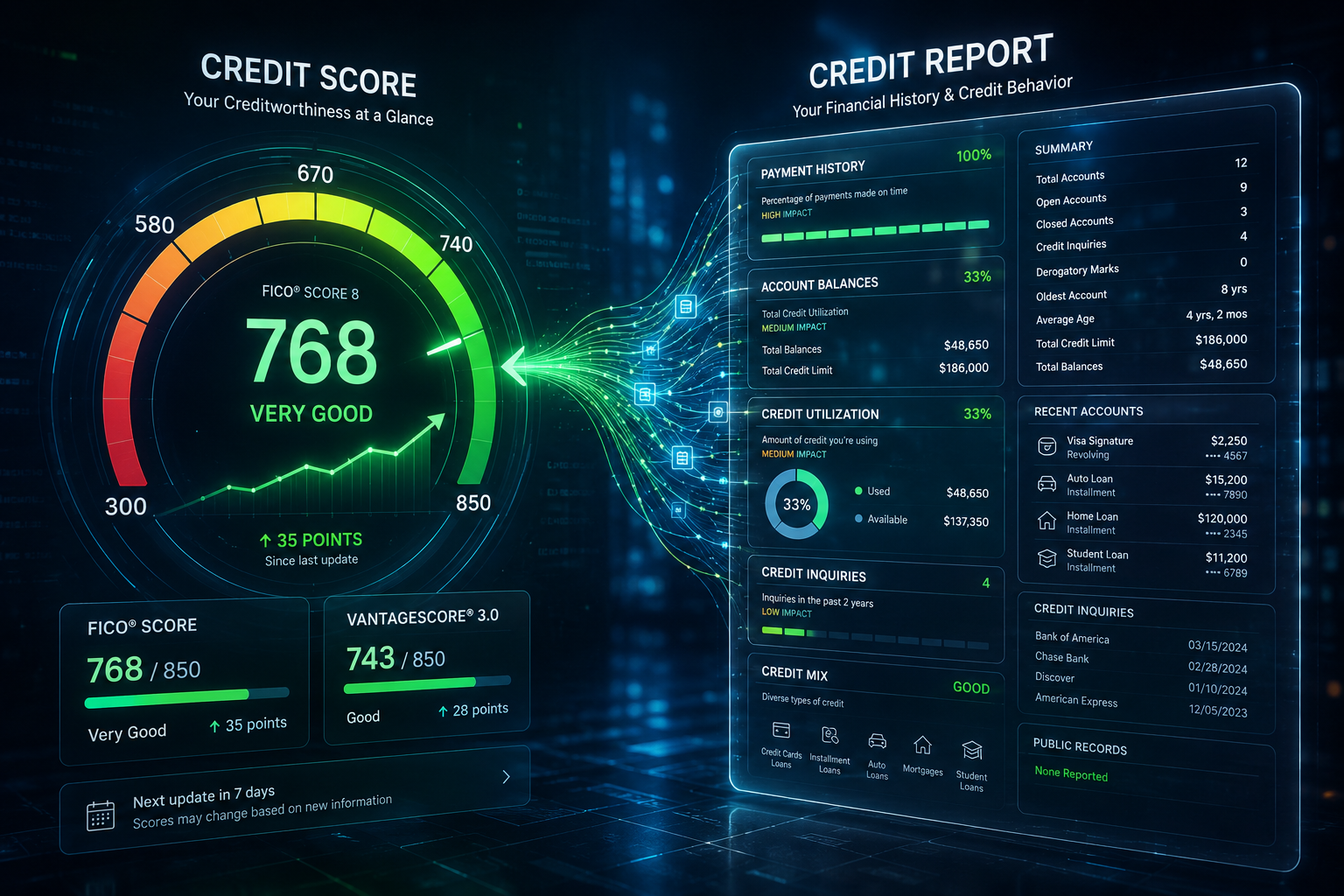
Many people use the terms credit score and credit report interchangeably, but they are not the same thing. In fact, understanding the difference between a credit score and a credit report is one of the most important steps you can take toward managing your financial health.
If you’ve ever wondered why lenders check your credit before approving a loan, why your Credit Karma score may differ from your Experian score, or whether your credit report includes your credit score, you’re not alone. These are some of the most common questions people have when trying to understand how credit works.
Simply put, your credit report is a detailed record of your borrowing and repayment history, while your credit score is a numerical summary of that information. Your credit report contains the data, and your credit score is the result of that data being analyzed by credit scoring models such as FICO and VantageScore.
Understanding the relationship between a credit score and a credit report can help you make better financial decisions, improve your chances of loan approval, identify errors that could hurt your creditworthiness, and build stronger credit over time.
In this guide, you’ll learn:
- Credit score vs credit report: the key differences
- What a credit score actually measures
- What information appears in a credit report
- Which one do lenders pay the most attention to
- How your credit report affects your credit score
- FICO score vs credit score explained
- Why Credit Karma scores may differ from other scores
- How to get a free credit report and monitor your credit effectively
By the end of this article, you’ll clearly understand the difference between a credit score and a credit report, why both matter, and how they work together to shape your financial profile.
Quick Answer: Credit Score vs Credit Report
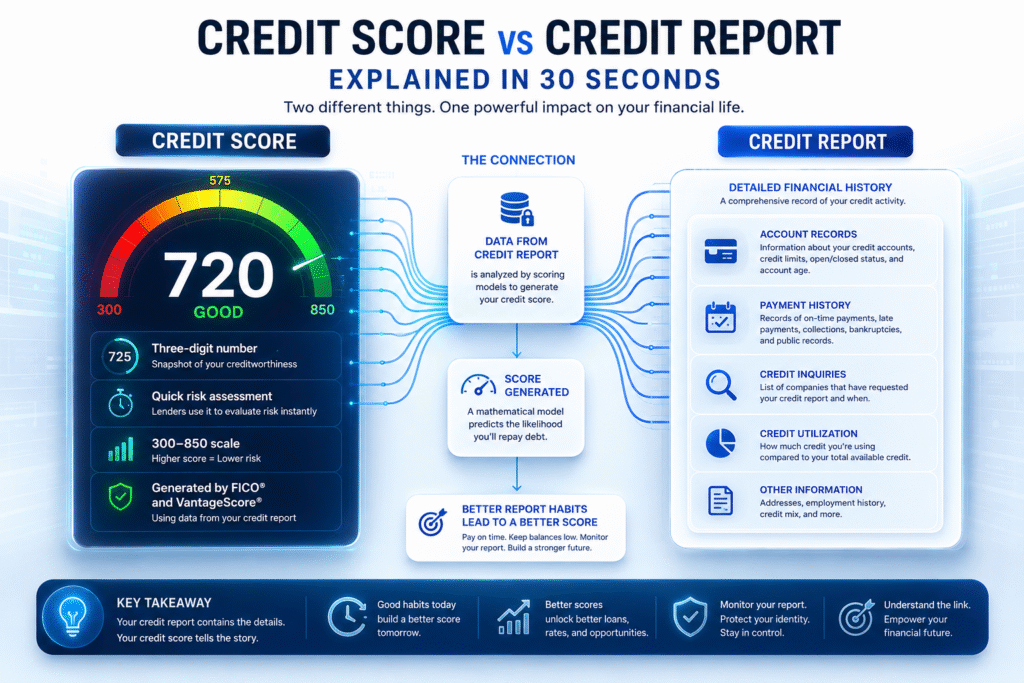
The simplest way to understand the difference between a credit score and a credit report is this:
👉 A credit report is the detailed record of your credit history, while a credit score is a numerical rating based on the information contained in that report.
Think of your credit report as a school report card containing all your subjects, grades, attendance records, and comments from teachers. Your credit score is like the final grade calculated from all that information.
Although they are closely connected, they serve different purposes.
| Credit Score | Credit Report |
| A credit is a three-digit number that summarizes creditworthiness | A detailed document containing your credit history |
| Usually ranges from 300 to 850, depending on the scoring model | Contains account details, payment history, inquiries, and balances |
| Used by lenders for quick risk assessment | Used by lenders for deeper financial evaluation |
| Changes based on information in your credit report | Continuously updated with new financial activity |
| Calculated using scoring models such as FICO and VantageScore | Created and maintained by credit bureaus like Experian, Equifax, and TransUnion |
For example, if your credit report shows that you consistently pay your bills on time, keep credit card balances low, and manage accounts responsibly, your credit score will likely improve.
On the other hand, if your credit report contains missed payments, high credit utilization, or multiple hard inquiries, your credit score may decrease.
In short:
- Your credit report tells the story.
- Your credit score summarizes that story into a number.
- Lenders often review both when making lending decisions.
Understanding the relationship between a credit report and a credit score is important because improving the information on your credit report is one of the most effective ways to improve your credit score over time.
Why People Confuse Credit Scores and Credit Reports

It’s easy to see why many people think a credit score and a credit report are the same thing.
After all, both are connected to your credit history, both are used by lenders, and both play a role in determining whether you qualify for loans, credit cards, mortgages, or other financial products.
When people check their credit through services like Credit Karma, Experian, Equifax, or TransUnion, they often see a credit score displayed alongside information from their credit report. Because the two appear together, many assume they are identical.
However, while they are closely related, they serve very different purposes.
Your Credit Report Creates the Foundation
A credit report is the source of the information.
It contains detailed records about your financial activity, including:
- payment history
- credit card accounts
- loan accounts
- account balances
- credit utilization
- hard inquiries
- account age
Think of your credit report as a financial file that tracks your borrowing and repayment behavior over time.
This information is collected and maintained by credit bureaus such as Experian, Equifax, and TransUnion.
Your Credit Score Is Calculated From That Information
Your credit score is not a separate record.
Instead, it is a numerical representation of the information contained in your credit report.
Credit scoring models such as FICO and VantageScore analyze the data in your report and calculate a score that helps lenders quickly assess your creditworthiness.
In other words:
- The credit report contains the data.
- The credit score interprets the data.
- Lenders often use both when evaluating applications.
Why the Confusion Matters
Many people focus only on their credit score because it is easier to understand.
A score of 750 looks good.
A score of 600 may indicate problems.
But the score itself does not explain why it changed.
The answers are usually found in your credit report.
For example:
- A missed payment appears on your credit report.
- High credit card balances appear on your credit report.
- New hard inquiries appear on your credit report.
Those changes can then affect your credit score.
This is why monitoring both your credit score and your credit report is important. Your score tells you what is happening, while your report often tells you why it is happening.
The Simple Rule to Remember
If you’re ever confused about credit score vs credit report, remember this simple rule:
👉 Your credit report is a detailed financial record.
👉 Your credit score is the summary of that record.
Understanding this relationship makes it much easier to improve your credit, identify errors, and make smarter financial decisions in the future.
What Is a Credit Score?

A credit score is a three-digit number that represents your creditworthiness, or how likely you are to repay borrowed money responsibly.
Lenders, banks, credit card companies, and other financial institutions use credit scores to assess the risk of lending money to an individual. In simple terms, your credit score helps determine whether you are viewed as a low-risk or high-risk borrower.
Your credit score is calculated using information from your credit report, including your payment history, credit utilization, account age, credit mix, and recent credit activity.
What Is a Good Credit Score?
While scoring ranges can vary slightly depending on the scoring model, most credit scores typically fall between 300 and 850.
| Credit Score Range | Rating |
| 800-850 | Excellent |
| 740-799 | Very Good |
| 640-739 | Good |
| 580-669 | Fair |
| 300-579 | Poor |
A higher credit score usually signals responsible credit behavior, while a lower score may indicate higher lending risk.
Why Your Credit Score Matters
Your credit score can influence many financial decisions, including:
- loan approvals
- mortgage applications
- credit card approvals
- interest rates
- credit limits
- rental applications
- financing offers
In many cases, a higher credit score may help you qualify for better loan terms and lower borrowing costs.
How Credit Scores Are Calculated
Credit scoring models such as FICO and VantageScore evaluate several factors when calculating your score.
The most common factors include:
Payment History
Your record of making payments on time is one of the most important factors affecting your credit score.
Credit Utilization
This refers to how much of your available credit you are currently using. Lower utilization is generally viewed more favorably by lenders.
Length of Credit History
Older credit accounts provide a longer track record of financial behavior, which may help strengthen your credit profile.
Credit Mix
Having different types of credit accounts, such as credit cards and loans, may contribute positively to your overall profile.
New Credit Activity
Opening multiple accounts or generating several hard inquiries within a short period may affect your score.
Is a Credit Score the Same as a Credit Report?
No.
A credit score is a numerical summary of your financial behavior, while a credit report is the detailed record containing the information used to calculate that score.
Think of it this way:
- Your credit report contains the data.
- Your credit score interprets the data.
- Lenders often review both before making decisions.
This is one of the biggest distinctions in the credit score vs credit report discussion and an important concept for anyone trying to understand how credit works.
The Bottom Line
A credit score is a numerical representation of your creditworthiness based on information found in your credit report. It helps lenders quickly evaluate lending risk and plays an important role in loan approvals, interest rates, and many other financial decisions. Understanding how credit scores work is essential for building and maintaining strong financial health.
What Is a Credit Report?
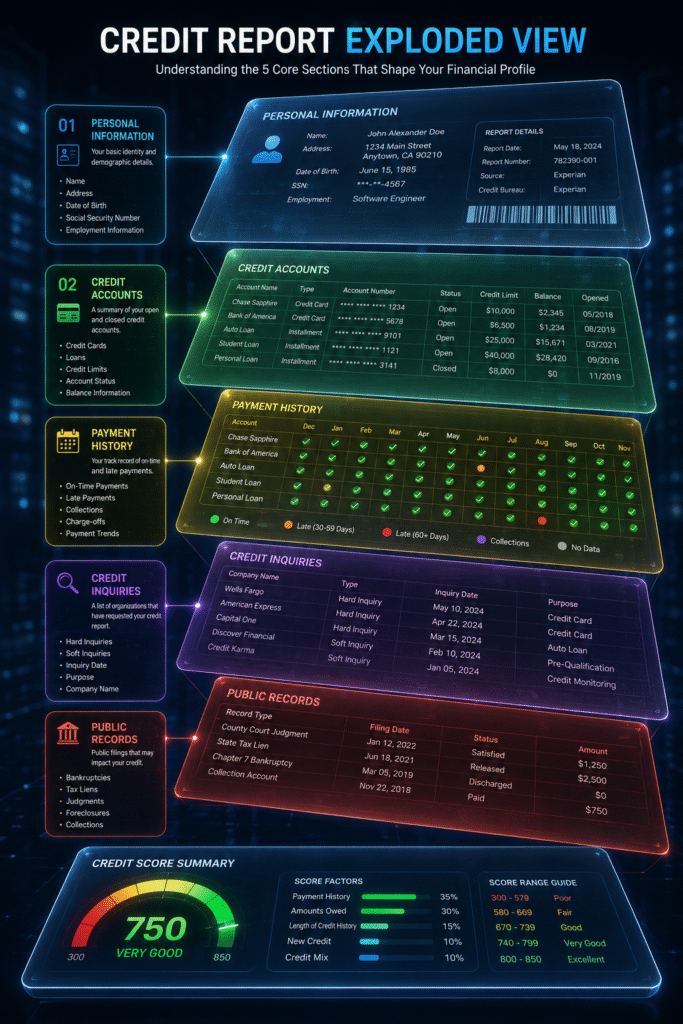
A credit report is a detailed record of your credit history and financial behavior. It contains information about how you have managed credit accounts, loans, and debt over time.
While your credit score provides a quick numerical summary of your creditworthiness, your credit report tells the complete story behind that number.
Think of your credit report as your financial resume. It gives lenders, banks, and other financial institutions a detailed overview of your borrowing history and repayment habits.
How Does a Credit Report Work?
Credit reports are created and maintained by credit bureaus, also known as credit reporting agencies.
These organizations collect information from lenders, banks, credit card issuers, and other financial institutions. The data is then organized into a credit report that can be reviewed by:
- lenders
- banks
- mortgage providers
- credit card companies
- landlords
- insurers (in some regions)
- you
The information in your credit report is regularly updated as new financial activity occurs.
For example:
- making a loan payment
- opening a new credit card
- paying off a balance
- applying for new credit
may all appear on your credit report.
Why Credit Reports Matter
Your credit report plays a critical role in many financial decisions because it helps lenders understand your borrowing behavior.
When reviewing your report, lenders may evaluate:
- how consistently you make payments
- How much debt do you carry?
- How long have you managed credit accounts?
- how frequently you apply for new credit, and
- whether you’ve experienced financial difficulties in the past
This information helps them assess lending risk and determine whether to approve applications.
What Is the Difference Between a Credit Report and a Credit Score?
This is where many people become confused.
A credit report and a credit score are connected, but they are not the same thing.
Your credit report contains detailed financial information, while your credit score is calculated using the information found in that report.
In simple terms:
- The credit report contains the raw data.
- The credit score summarizes the data.
- Changes to your credit report can affect your credit score.
For example, if your credit report shows a missed payment or a high credit card balance, your credit score may decrease.
Similarly, positive information on your report—such as consistent on-time payments—may help improve your score over time.
Can You Check Your Credit Report?
Yes.
In many countries, consumers can request and review their credit reports through official credit bureaus or authorized reporting services.
Regularly checking your credit report can help you:
- Identify reporting errors
- Detect identity theft
- Monitor account activity
- track financial progress
- understand changes in your credit score
Reviewing your report is one of the most effective ways to stay informed about your overall financial profile.
Why Monitoring Your Credit Report Is Important
Many people only monitor their credit score, but reviewing their credit report is equally important.
Your score may tell you that something has changed, but your report usually explains why it changed.
By checking your credit report regularly, you can spot potential problems before they negatively affect your creditworthiness or future loan applications.
What’s Included in a Credit Report?
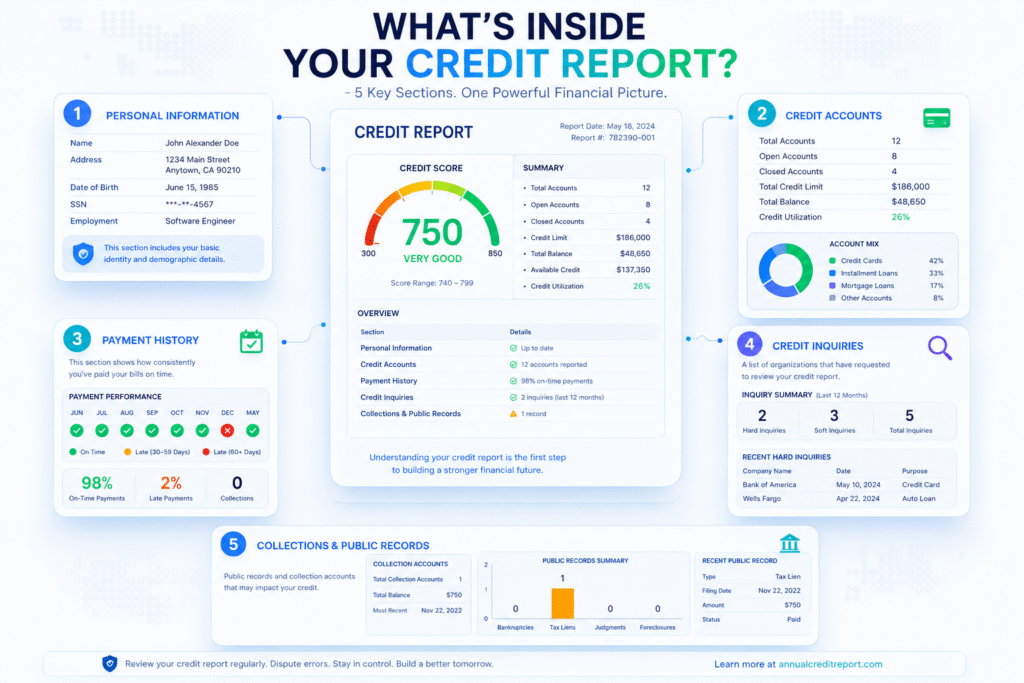
If your credit score is a summary of your financial behavior, your credit report is the complete record behind that summary.
A credit report contains detailed information about your borrowing history, repayment behavior, and overall credit activity. Lenders use this information to evaluate your financial profile and determine how risky it may be to lend you money.
Understanding what is included in a credit report can help you identify errors, monitor your financial health, and understand why your credit score changes over time.
Personal Information
The first section of a credit report typically contains basic identifying information.
This may include:
- Your full name
- current and previous addresses
- date of birth
- Social Security Number or identification details (depending on the country)
- employment information (if reported)
This section helps credit bureaus match financial information to the correct individual.
It’s important to review this information regularly to ensure there are no inaccuracies that could indicate reporting errors or identity theft.
Credit Accounts
This is often the largest section of a credit report.
It contains information about your credit accounts, including:
- credit cards
- personal loans
- auto loans
- student loans
- mortgages
- lines of credit
For each account, your credit report may show:
- account opening date
- credit limit
- current balance
- payment status
- account type
- account ownership
Lenders often pay close attention to this section because it reveals how you’ve managed credit over time.
Payment History
Your payment history is one of the most important parts of your credit report.
It shows whether you have made payments on time and whether you’ve ever missed payments.
This section may include:
- on-time payments
- late payments
- missed payments
- delinquent accounts
- collection accounts
Because payment history is a major factor in most credit scoring models, negative information here can significantly affect your credit score.
Credit Inquiries
Whenever you apply for new credit, an inquiry may appear on your credit report.
There are generally two types:
Hard Inquiries
Hard inquiries occur when a lender reviews your credit report as part of a lending decision.
Examples include:
- credit card applications
- loan applications
- mortgage applications
Multiple hard inquiries within a short period may affect your credit score.
Soft Inquiries
Soft inquiries occur when you check your own credit report or when companies perform background credit checks for promotional purposes.
Soft inquiries generally do not affect your credit score.
Public Records and Collections
Depending on local reporting practices, a credit report may also contain certain public record information or collection accounts.
Examples may include:
- accounts sent to collections
- bankruptcies (where applicable)
- court-related financial judgments
These items can signal increased lending risk and may affect future borrowing opportunities.
What Lenders Look at Most on a Credit Report
Although lenders review the entire report, they often focus heavily on:
- payment history
- current debt levels
- credit utilization
- account age
- recent credit inquiries
- outstanding loan balances
These factors help lenders evaluate your creditworthiness and determine whether you are likely to repay future debt responsibly.
Why Reviewing Your Credit Report Matters
However, your credit report often provides far more useful information because it explains what is influencing that score.
Reviewing your credit report regularly can help you:
- identify errors
- spot fraudulent activity
- understand score changes
- Monitor account activity
- improve your overall financial health
The earlier you detect a problem, the easier it is usually to resolve.
10 Major Differences Between a Credit Score and a Credit Report
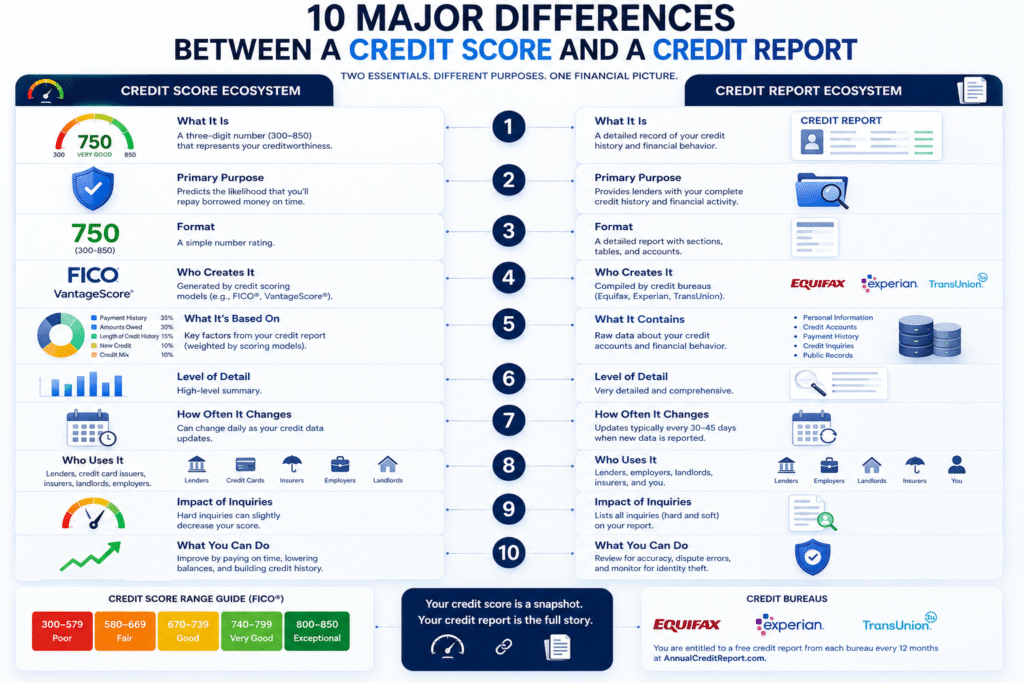
Although a credit score and a credit report are closely connected, they serve different purposes and provide different types of information.
Your credit report contains the detailed data about your financial behavior, while your credit score is a numerical summary of that data.
Understanding the difference between a credit score and a credit report can help you make better financial decisions and understand what lenders evaluate when reviewing your application.
Here are the 10 biggest differences.
| Credit Score | Credit Report |
| A three-digit number | A detailed financial document |
| Summarizes creditworthiness | Contains complete credit history |
| Generated using scoring models | Created by credit bureaus |
| Usually ranges from 300–850 | Has no numerical range |
| Changes based on report data | Records financial activity |
| Quick risk assessment tool | Detailed lending evaluation tool |
| Easier to understand at a glance | Requires deeper review |
| Used for rapid approval decisions | Used for detailed application reviews |
| Calculated from report information | Provides information used for calculations |
| Represents financial health in a number | Shows the full financial picture |
A Credit Score Is a Number, While a Credit Report Is a Document
The most obvious difference is their format.
A credit score is a three-digit number that helps summarize your creditworthiness.
A credit report is a detailed record of your credit accounts, payment history, balances, and inquiries.
A Credit Score Summarizes Your Creditworthiness
Lenders often use a credit score to quickly assess lending risk.
A higher score generally indicates responsible credit behavior, while a lower score may suggest greater lending risk.
A credit report, however, contains the detailed information that explains why your score is high or low.
Credit Scores Are Calculated Using Scoring Models
Credit scores are generated using models such as:
- FICO
- VantageScore
These models analyze information found in your credit report and calculate a score.
Credit reports themselves are not calculated—they are simply records of financial information collected by credit bureaus.
Credit Reports Are Maintained by Credit Bureaus
Credit bureaus such as:
- Experian
- Equifax
- TransUnion
collect and maintain credit report information.
Scoring companies then use this data to generate credit scores.
Credit Scores Have Ranges
Most credit scores typically fall between 300 and 850, depending on the scoring model.
Credit reports do not have a score range because they are documents rather than ratings.
Credit Reports Contain Detailed Financial Information
A credit report may include:
- personal information
- account history
- payment history
- credit utilization
- hard inquiries
- collection accounts
A credit score does not show these details—it simply reflects them.
Credit Scores Help Lenders Make Quick Decisions
When lenders need a fast assessment of risk, they often start with a credit score.
The score provides a quick snapshot of your financial reliability without requiring a full review of your credit history.
Credit Reports Provide Context Behind the Score
If a lender wants to understand your financial behavior in more detail, they will review your credit report.
The report helps explain:
- Why your score changed
- whether you’ve missed payments
- How much debt do you carry
- How you’ve managed credit over time
Changes in Your Credit Report Can Affect Your Credit Score
Your credit score is directly influenced by information in your credit report.
For example:
- a missed payment
- high credit card balances
- multiple hard inquiries
may negatively affect your score.
Positive activity can improve it.
Both Work Together During Lending Decisions
One of the biggest misconceptions is that lenders only look at your credit score.
In reality, many lenders review both.
Your credit score provides a quick summary, while your credit report provides the detailed evidence behind that summary.
Together, they help lenders evaluate your overall financial profile and creditworthiness.
Quick Rule to Remember
If you’re still wondering about credit score vs credit report, remember this:
👉 Your credit report is the complete financial story.
👉 Your credit score is the headline of that story.
Understanding both gives you a clearer picture of your financial health and helps you make smarter borrowing decisions.
Which One Do Lenders Actually Use?

One of the most common questions people ask after learning about credit scores and credit reports is:
Which one matters more to lenders?
The answer is simple:
👉 Most lenders use both.
Your credit score and your credit report work together to help lenders evaluate your creditworthiness and determine whether to approve your application.
However, each serves a different purpose during the lending process.
Why Lenders Look at Credit Scores First
A credit score provides lenders with a quick snapshot of your overall credit risk.
Because it is a single numerical rating, lenders can quickly compare applicants and make initial decisions.
For example, lenders may use your credit score to:
- Evaluate lending risk
- determine loan eligibility
- Assess credit card applications
- set interest rates
- establish credit limits
A higher credit score generally signals responsible borrowing behavior and may increase your chances of approval.
This is why many lenders review your credit score before looking at the details of your financial history.
Why Lenders Review Your Credit Report
While a credit score provides a summary, it does not explain the full story.
That’s where your credit report becomes important.
Lenders often review your credit report to understand:
- How you manage debt
- whether you make payments on time
- How much credit do you currently use
- How long you’ve had credit accounts
- whether you’ve recently applied for multiple loans or credit cards
The report provides context that a credit score alone cannot provide.
For example, two people may have similar credit scores, but their credit reports could look very different.
One applicant may have a long history of responsible borrowing, while another may have a shorter credit history with recent financial challenges.
The credit report helps lenders identify these differences.
What Do Lenders Look at Most?
Although every lender has its own approval process, many focus heavily on:
Payment History
Consistently paying bills on time demonstrates financial responsibility and reliability.
Credit Utilization
Using a large percentage of your available credit may signal financial stress and increase lending risk.
Outstanding Debt
Lenders often evaluate how much debt you currently owe compared to your available credit and income.
Length of Credit History
A longer history provides more information about your financial behavior over time.
Recent Credit Activity
Multiple loan applications or hard inquiries within a short period may raise concerns about financial stability.
Which Matters More: Credit Score or Credit Report?
In reality, neither is more important than the other.
Your credit score and credit report serve different purposes.
Think of it this way:
- Your credit score helps lenders make quick assessments.
- Your credit report helps lenders verify the details behind those assessments.
A strong credit score may attract attention, but a lender may still review your credit report before making a final decision.
Similarly, a good credit report often helps support a healthy credit score.
Can You Get Approved With a Good Credit Score but a Poor Credit Report?
Sometimes, but it can be difficult.
Even if your credit score appears acceptable, lenders may become concerned if your credit report contains:
- recent missed payments
- high debt levels
- collection accounts
- excessive hard inquiries
- inaccurate information
This is one reason why monitoring both your credit score and your credit report is important.
Can Your Credit Report Affect Your Credit Score?
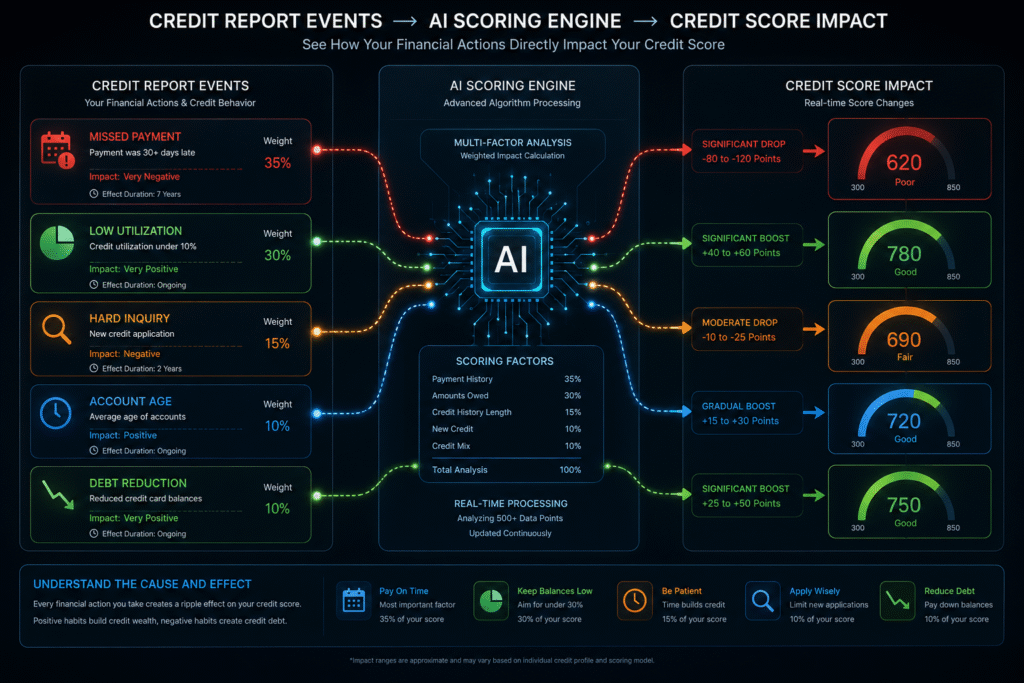
Yes.
In fact, your credit report is one of the biggest factors that affect your credit score.
A common misconception is that a credit score and a credit report are separate financial tools that operate independently. In reality, your credit score is largely calculated using the information contained in your credit report.
This means that changes to your credit report can directly influence your credit score.
How Does a Credit Report Affect a Credit Score?
Credit scoring models such as FICO and VantageScore analyze the information found in your credit report to calculate a score.
The report provides the raw financial data, while the scoring model interprets that data and assigns a numerical rating.
Think of it like this:
- Your credit report is the ingredient list.
- Your credit score is the final recipe.
If the ingredients change, the final result may change as well.
Information That Can Improve Your Credit Score
Certain positive information on your credit report may help improve your credit score over time.
Examples include:
- making on-time payments consistently
- maintaining low credit utilization
- keeping older credit accounts open
- responsibly managing different types of credit
- avoiding excessive hard inquiries
These behaviors demonstrate responsible credit management and may strengthen your overall credit profile.
Information That Can Lower Your Credit Score
Negative information appearing on your credit report can have the opposite effect.
Examples include:
- missed payments
- late payments
- collection accounts
- high credit card balances
- multiple hard inquiries
- loan defaults
Because scoring models consider these factors when calculating risk, negative information may reduce your credit score.
Why Your Credit Score May Change Even If You Didn’t Apply for New Credit
Many people are surprised when their credit score changes, even though they haven’t applied for a new loan or credit card.
This often happens because information on the credit report has changed.
For example:
- A credit card balance increased
- A payment was reported late
- An account was updated
- A lender reported new activity
Even small changes in your credit report can sometimes affect your credit score.
Why Is My Credit Score Different From My Credit Report?
This is another common source of confusion.
Your credit report is not a score.
It is a collection of financial information.
Your credit score is a number generated from that information using a specific scoring model.
Because different scoring models weigh factors differently, two companies may calculate different scores from similar credit report data.
This is one reason why you may see different scores through services like:
- Credit Karma
- Experian
- Equifax
- TransUnion
We’ll explore this in more detail in the upcoming sections.
Can Errors on a Credit Report Affect Your Credit Score?
Absolutely.
If your credit report contains incorrect information, it may affect your credit score.
Examples include:
- accounts that don’t belong to you
- inaccurate payment history
- incorrect balances
- duplicate accounts
- fraudulent activity
This is why reviewing your credit report regularly is so important.
Identifying and correcting errors early may help protect both your credit report and your credit score.
Final Thoughts: Understanding Both Gives You a Financial Advantage

Your credit report is the detailed record of your financial history. It contains information about your accounts, payment history, credit utilization, inquiries, and borrowing behavior.
Your credit score, on the other hand, is a numerical summary of that information. It helps lenders quickly assess your creditworthiness and make lending decisions.
The most important thing to remember is this:
👉 Your credit report creates the foundation.
👉 Your credit score reflects that foundation.
If your credit report contains positive financial habits, your credit score will often benefit. If your report contains errors, missed payments, or excessive debt, your score may suffer as a result.
That’s why monitoring both is essential.
By regularly reviewing your credit report, checking for inaccuracies, and maintaining healthy credit habits, you can strengthen your financial profile and improve your chances of qualifying for loans, credit cards, and better interest rates in the future.
Take the Next Step
Now that you understand the difference between a credit score and a credit report, continue building your credit knowledge with these helpful guides:
- How to Improve Your Credit Score
- Does Checking Your Credit Score Lower It?
- How to Build Credit With No Credit History
- What Is a Good Credit Score?
- Why Did My Credit Score Drop?
The more you understand how credit works, the better positioned you’ll be to make smarter financial decisions and build long-term financial confidence.
Leave a Reply