
Improving your credit score can feel confusing, frustrating, and sometimes even impossible—especially if your score dropped unexpectedly or you’ve been trying to fix it for months without seeing real progress. Many people search for “how to improve your credit score fast” because they want better financial opportunities, lower interest rates, and a stronger financial future, but most advice online feels too generic or unrealistic.
The truth is, improving your credit score is not about finding shortcuts or “overnight hacks.” It’s about understanding the factors that actually affect your score and using the right strategies consistently. Whether you want to improve your credit score after a missed payment, recover from debt, build credit fast as a beginner, or simply learn the best way to improve your credit score, there are practical steps that can make a real difference.
In this guide, you’ll learn exactly how to improve your credit score, what helps your score increase the fastest, and the most effective ways to fix credit problems yourself—without confusion or expensive credit repair services. We’ll also cover how long it takes to improve your score, how to raise your credit score faster, and the biggest mistakes that could be holding you back.
How to Improve Your Credit Score
If you want to know how to improve your credit score, the most effective approach is to focus on the habits and credit factors that directly influence your score over time.
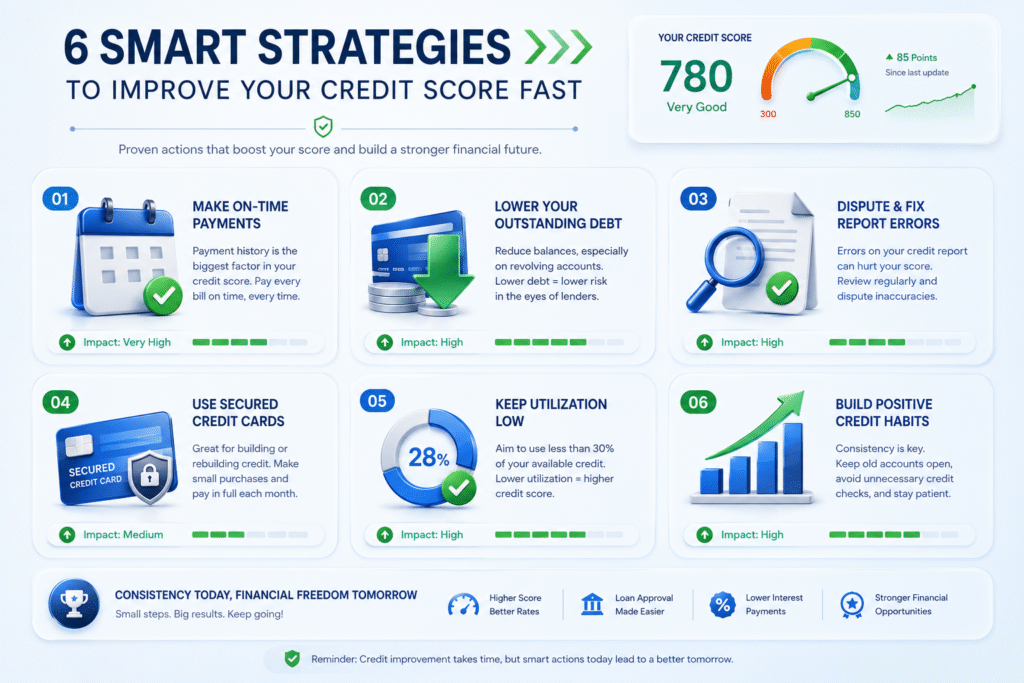
The fastest ways to improve your credit score include:
- Paying all bills on time
- Reducing your credit utilization
- Avoiding unnecessary credit applications
- Keeping older accounts open
- Checking your credit report for errors
👉 These actions help demonstrate responsible credit behavior, which is one of the biggest factors used in credit scoring models.
What Improves Your Credit Score the Most?
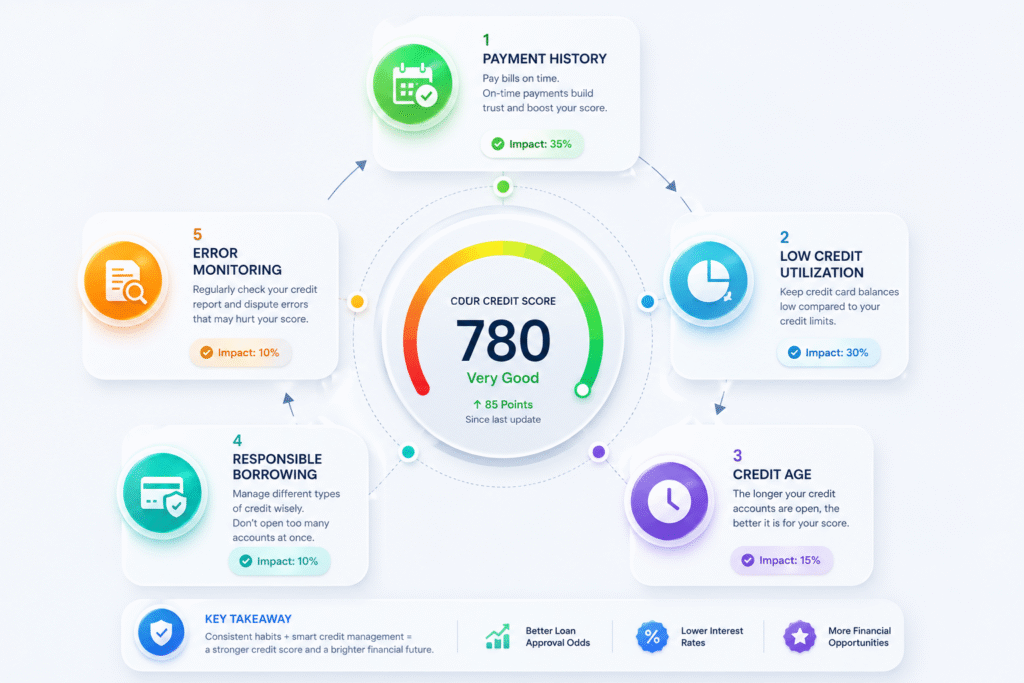
While many factors affect your score, the two most important are:-
Payment History
Your payment history shows whether you consistently pay bills on time. Even one missed payment can hurt your score significantly.
Credit Utilization
This refers to how much credit you’re using compared to your total available limit. Experts generally recommend keeping utilization below 30%, and ideally below 10% if you want to improve your credit score fast.
Can You Improve Your Credit Score Quickly?
Yes — in some cases, you can see improvement faster than expected.
For example:
- Paying down high credit card balances
- Correcting credit report errors
- Lowering your utilization ratio
👉 These changes can sometimes increase your score within weeks, especially if high utilization was the main problem.
However, long-term improvement still requires consistency and healthy financial habits.
How to Improve Your Credit Score Fast
If your goal is to raise your credit score fast, focus on high-impact actions first:
- Make every payment on time
- Reduce credit card balances immediately
- Avoid new hard inquiries
- Monitor your credit report regularly
👉 These are some of the best ways to improve your credit score quickly, especially if your score recently dropped.
15 Proven Ways to Improve Your Credit Score Fast
If you want to improve your credit score fast, the key is to focus on actions that directly impact the factors used in credit scoring models. While there’s no magic shortcut, some strategies can help you see improvement much faster than others.
Here are 15 proven ways to improve your credit score quickly and build stronger financial health over time.
🧠 1. Pay Every Bill on Time
Your payment history is the single biggest factor affecting your credit score.
👉 Even one missed payment can hurt your score significantly.
To improve your credit score:
- Set payment reminders
- Use auto-pay if possible
- Never ignore minimum payments
🧠 2. Reduce Your Credit Utilization Ratio
High credit utilization can quickly lower your score.
👉 Try to keep your utilization:
- Below 30%
- Ideally, below 10% for faster improvement
Paying down balances is one of the fastest ways to raise your credit score.
🧠 3. Keep Old Credit Accounts Open
Length of credit history matters.
Even if you no longer use an old credit card regularly, keeping it open can help stabilize and improve your score over time.
🧠 4. Avoid Applying for Too Much Credit
Every credit application creates a hard inquiry.
👉 Too many inquiries can make lenders think you’re financially stressed.
If you want to fix your credit score fast, avoid unnecessary applications.
🧠 5. Check Your Credit Report for Errors
Mistakes on your credit report can lower your score unfairly.
Look for:
- Incorrect late payments
- Wrong balances
- Accounts you don’t recognize
👉 Correcting errors is one of the best ways to fix your credit score yourself.
🧠 6. Dispute Incorrect Information Immediately
If you find inaccurate information:
- File a dispute quickly
- Provide supporting documents
Removing incorrect negative information can improve your score faster than expected.
🧠 7. Build Positive Credit Activity Consistently
Credit improvement is about consistency.
👉 Small positive habits matter:
- Use credit responsibly
- Pay balances on time
- Keep usage low
This helps build your credit score gradually and sustainably.
🧠 8. Become an Authorized User
If a trusted family member has:
- Good payment history
- Low utilization
Being added as an authorized user may help improve your score.
👉 This is a popular strategy for people trying to build credit fast.
🧠 9. Use a Secured Credit Card
If you’re rebuilding or starting from scratch, a secured card can help establish a positive history.
👉 It’s one of the easiest ways to:
- Build credit with no credit,
- improve credit as a beginner
🧠 10. Avoid Closing Paid-Off Accounts
Closing accounts can:
- Reduce your available credit
- Increase utilization
👉 Keeping older accounts open can help improve score stability.
🧠 11. Improve Your Credit Score After a Missed Payment
Missed a payment? Don’t panic.
👉 Focus on:
- Bringing the account current immediately
- Avoiding future late payments
- Rebuilding consistency
Over time, positive activity reduces the impact of older mistakes.
🧠 12. Fix Your Credit Score After Identity Theft
Identity theft can seriously damage your score.
👉 If this happens:
- Freeze your credit
- Report fraudulent accounts
- Dispute unauthorized activity immediately
Quick action helps limit long-term damage.
🧠 13. Improve Your Credit Score After Debt Settlement
Debt settlement may temporarily lower your score, but recovery is possible.
👉 Focus on:
- Rebuilding payment history
- Keeping balances low
- Avoiding new debt problems
Consistency is critical after settlement.
🧠 14. Build Credit Without a Credit Card
You can still build credit without traditional credit cards.
Options include:
- Credit-builder loans
- Rent reporting services
- Authorized user status
👉 This is helpful for beginners learning how to build credit with no credit card.
🧠 15. Stay Consistent — Real Credit Growth Takes Time
Improving your credit score is a long-term process, not a quick trick.
👉 The people who succeed usually:
- stay disciplined
- avoid emotional spending
- Monitor their credit regularly
That’s the real secret behind lasting credit improvement.
How to Improve Your Credit Score Fast in 30 Days
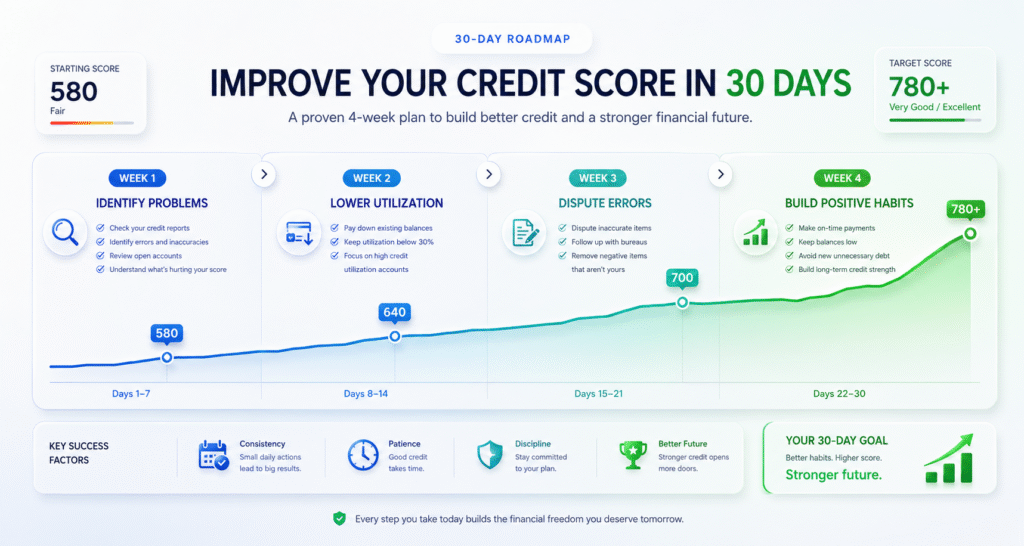
If you’re wondering how to improve your credit score in 30 days, the good news is that meaningful progress is possible—especially if your score is being affected by high credit utilization, report errors, or inconsistent payment habits.
While you may not build a perfect score overnight, the right actions can help you raise your credit score fast and create noticeable improvement within a month.
Here’s a realistic 30-day plan to help improve your credit score quickly and responsibly.
🧠 Week 1: Understand What’s Hurting Your Score
The first step is identifying the exact reason your score needs improvement.
👉 Start by:
- Checking your credit report
- Looking for missed payments
- Reviewing balances and utilization
- Identifying errors or suspicious activity
This is one of the smartest ways to fix your credit score yourself before making any major financial decisions.
🧠 Week 2: Lower Your Credit Utilization Immediately
Credit utilization is one of the fastest-moving credit factors.
👉 Focus on:
- Paying down high balances
- Keeping utilization below 30%
- Avoiding unnecessary spending
If your balances are high, reducing them can quickly help improve your credit score.
🧠 Week 3: Eliminate Credit Report Errors
Errors can unfairly damage your score.
Check for:
- Incorrect late payments
- Duplicate accounts
- Wrong balances
👉 Disputing errors is one of the most effective ways to fix your credit score for free and potentially see faster improvement.
🧠 Week 4: Build Positive Credit Habits
Long-term improvement comes from consistency.
During the final week:
- Make all payments on time
- Avoid new credit applications
- Monitor your score regularly
- Keep spending disciplined
👉 These habits help build momentum and strengthen your score over time.
🧠 Fastest Ways to Improve Your Credit Score in 30 Days
If your goal is rapid improvement, prioritize these actions first:
✅ Pay Down Credit Card Balances
One of the fastest ways to boost your score.
✅ Avoid Hard Inquiries
Too many applications can hurt progress.
✅ Correct Report Errors
Especially important if your score dropped unexpectedly.
✅ Keep Old Accounts Open
Helps maintain credit history length.
🧠 Can You Raise Your Credit Score 100 Points in 30 Days?
Sometimes—but it depends on your starting point and the reason behind your low score.
👉 Larger improvements are more likely when:
- Your utilization was extremely high
- Errors are removed from your report
- You recently missed payments, but corrected them quickly
However, promises like “raise credit score 100 points overnight” are usually unrealistic.
Real improvement comes from consistent, responsible financial behavior.
🧠 What Slows Down Credit Score Improvement?
Avoid these common mistakes:
- Missing another payment
- Applying for multiple credit cards
- Maxing out balances
- Ignoring your credit report
👉 These habits can slow your progress and make it harder to increase your credit score over time.
How to Raise Your Credit Score 100 Points
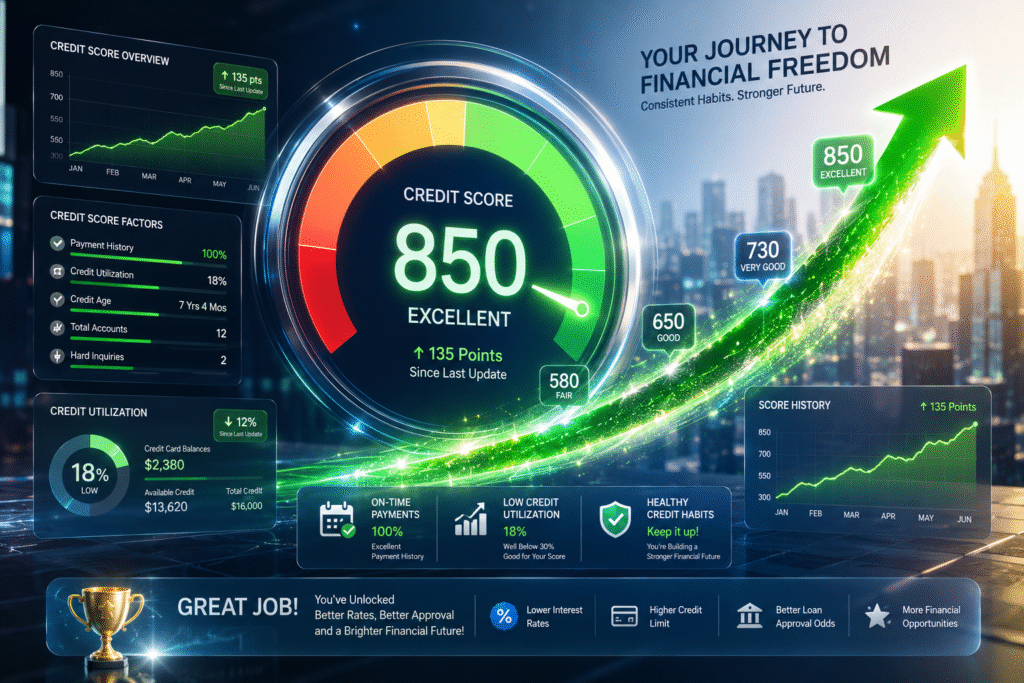
If you’re trying to raise your credit score 100 points, it’s important to understand that while major improvement is possible, it doesn’t usually happen overnight.
The speed of improvement depends on:
- Your current credit score
- What’s hurting your score
- How quickly you fix those problems
👉 In some cases, people can see large improvements within a few months—especially if their score is being affected by high utilization, missed payments, or credit report errors.
🧠 Is It Possible to Raise Your Credit Score 100 Points Fast?
Yes — but only under certain conditions.
You’re more likely to see faster improvement if:
- Your credit utilization is extremely high
- Your report contains errors
- You recently missed payments, but corrected them quickly
- You’ve started building positive credit habits consistently
👉 These situations create opportunities for faster recovery and can help improve your credit score fast.
🧠 1. Lower Your Credit Card Balances Immediately
This is one of the fastest ways to improve your score.
👉 Focus on:
- Paying down high balances
- Keeping utilization below 30%
- Avoiding maxed-out cards
Reducing utilization can sometimes create noticeable score increases within weeks.
🧠 2. Never Miss Another Payment
Payment history has the biggest impact on your credit score.
If you’ve missed payments before:
- Bring accounts current immediately
- Set automatic payments
- Build a streak of on-time payments
👉 Consistency is critical if you want to raise your credit score fast.
🧠 3. Dispute Credit Report Errors
Incorrect information can unfairly lower your score.
Check for:
- Wrong balances
- Duplicate accounts
- Incorrect late payments
👉 Removing errors is one of the fastest ways to fix your credit score yourself.
🧠 4. Avoid New Hard Inquiries
Applying for multiple loans or credit cards in a short period can slow progress.
👉 If you’re trying to:
- Increase your credit score
- Rebuild credit fast
Avoid unnecessary applications until your score improves.
🧠 5. Keep Older Accounts Open
Older accounts strengthen your credit history.
Closing them can:
- Reduce account age
- Increase utilization
👉 Keeping long-standing accounts open helps improve score stability.
🧠 6. Build Positive Credit Activity
You need positive activity to offset older mistakes.
👉 This includes:
- responsible credit card usage
- on-time payments
- low balances
These habits gradually help build your credit score over time.
🧠 Can You Raise Your Credit Score 100 Points Overnight?
Realistically, no.
Claims like:
👉 “Raise credit score 100 points overnight.”
They are usually misleading.
However, rapid improvement can happen when:
- Major report errors are removed
- utilization drops dramatically
- Negative activity stops immediately
👉 Real credit improvement is built through consistency, not shortcuts.
🧠 How Long Does It Usually Take?
For many people, raising a credit score by 100 points can take:
- A few weeks (rare cases)
- A few months (more common)
- Longer for serious credit damage
👉 The key is focusing on the factors that matter most and staying consistent.
How Long Does It Take to Improve Your Credit Score?
One of the most common questions people ask is:
👉 “How long does it take to improve your credit score?”
The honest answer is:
It depends on what’s affecting your score and how consistently you improve your financial habits.
Some people may see small improvements within a few weeks, while larger credit score recovery can take several months. The key is understanding that credit improvement is usually gradual—not instant.
🧠 What Determines How Fast Your Credit Score Improves?
The timeline depends on several important factors:
- Your current credit score
- The severity of negative marks
- Your credit utilization ratio
- Your payment history
- How quickly you correct problems
👉 For example, lowering high credit card balances may improve your score relatively quickly, while recovering from missed payments or collections can take much longer.
🧠 Typical Credit Score Recovery Timelines
🔹 Small Credit Score Improvements
Time frame: A few weeks to 1–2 months
Possible causes:
- Reduced credit utilization
- Corrected report errors
- Better payment consistency
👉 These are some of the fastest ways to improve your credit score quickly.
🔹 Moderate Credit Score Improvements
Time frame: 2–6 months
Common situations:
- Recovering from high balances
- Building a new positive payment history
- Reducing hard inquiries
👉 This is often where people start seeing more noticeable progress.
🔹 Major Credit Score Recovery
Time frame: 6 months to several years
This applies to:
- Missed payments
- Debt settlement
- Collections
- Bankruptcy
- Identity theft recovery
👉 Serious credit damage takes longer to repair, but improvement is still absolutely possible with consistent effort.
🧠 How to Improve Your Credit Score Faster
If your goal is to raise your credit score fast, prioritize high-impact actions:
✅ Lower Your Credit Utilization
One of the fastest-moving factors.
✅ Never Miss Payments
Payment history matters most.
✅ Correct Credit Report Errors
Removing inaccuracies can create quicker improvements.
✅ Avoid New Hard Inquiries
Too many applications can slow recovery.
🧠 Can You Improve Your Credit Score in 30 Days?
Yes — in some cases.
If your score problems are mainly caused by:
- High balances
- Reporting errors
- Temporary utilization spikes
👉 You may see noticeable improvement within a month.
However, long-term credit strength still requires consistency and responsible habits.
🧠 What Slows Down Credit Score Improvement?
Many people accidentally delay their progress by:
- Missing additional payments
- Applying for too many credit cards
- Carrying high balances
- Ignoring their credit report
👉 These habits can make it harder to increase your credit score over time.
Mistakes That Hurt Your Credit Score
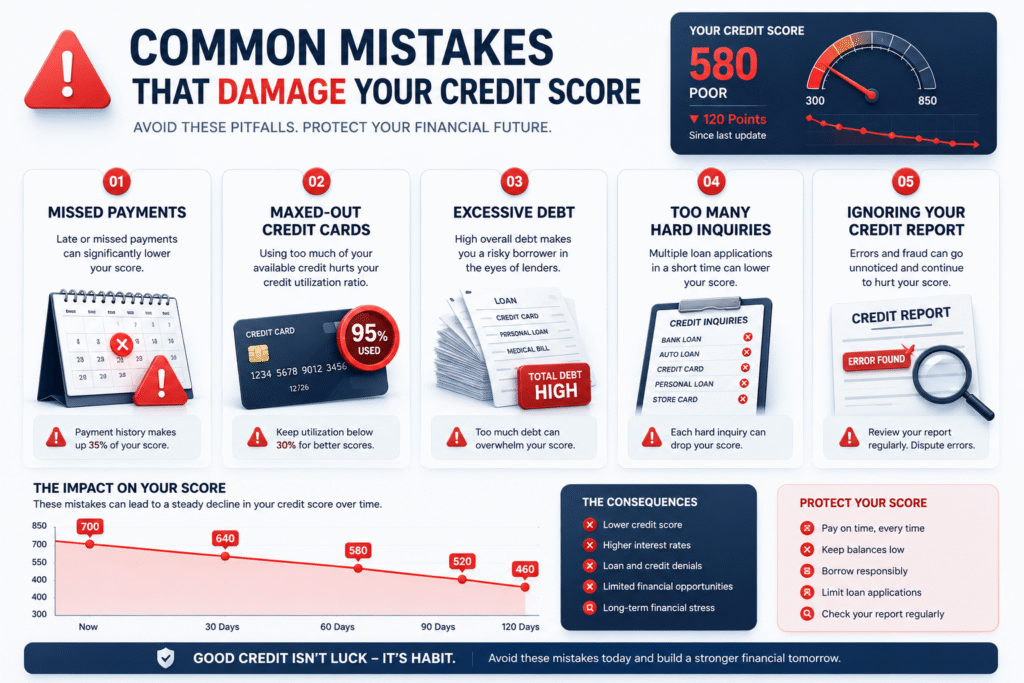
If you’re trying to improve your credit score, avoiding harmful financial habits is just as important as building positive ones. In many cases, people struggle to raise their score because they continue making small mistakes that quietly damage their credit over time.
Some credit score mistakes have only a temporary impact, while others can affect your financial profile for years.
Here are the most common mistakes that hurt your credit score—and how to avoid them.
🧠 1. Missing Payments
Late or missed payments are one of the biggest reasons credit scores drop.
👉 Even one missed payment can:
- lower your score significantly
- stay on your credit report for years
If you want to improve your credit score fast, making on-time payments must become a priority.
🧠 2. Maxing Out Your Credit Cards
Using too much of your available credit increases your credit utilization ratio.
👉 High utilization signals financial risk to lenders.
Many people trying to raise their credit score fast unknowingly slow their progress by carrying large balances.
🧠 3. Applying for Too Much Credit
Every loan or credit card application can create a hard inquiry.
👉 Too many inquiries in a short time may:
- lower your score
- make lenders nervous
If you’re trying to fix your credit score, avoid unnecessary applications.
🧠 4. Closing Old Credit Accounts
Closing older accounts may seem harmless, but it can:
- shorten your credit history
- increase utilization
👉 This is a common mistake people make while trying to simplify their finances.
🧠 5. Ignoring Your Credit Report
Many people don’t check their credit report regularly.
That’s risky because errors, fraud, or incorrect balances can damage your score without you realizing it.
👉 Monitoring your report is one of the smartest ways to:
- fix your credit score yourself
- protect your financial health
🧠 6. Carrying High Credit Card Balances for Long Periods
Even if you make minimum payments, carrying large balances can hurt your score over time.
👉 This is one of the biggest killers of credit score growth.
Reducing balances is one of the fastest ways to:
- increase your credit score
- improve your credit score quickly
🧠 7. Co-Signing Loans Without Understanding the Risk
When you co-sign a loan:
- you become responsible for the debt too
If the other person misses payments, your score may suffer as well.
👉 Many people underestimate how risky co-signing can be.
🧠 8. Ignoring Identity Theft or Fraud
Fraudulent activity can seriously damage your credit if not addressed quickly.
Signs include:
- accounts you don’t recognize
- unexpected balance increases
- unfamiliar hard inquiries
👉 If this happens, take action immediately to fix your credit score after identity theft.
🧠 9. Believing “Quick Fix” Credit Repair Myths
Many online promises like:
- “raise credit score 100 points overnight”
- “instant credit repair”
are misleading.
👉 Real credit improvement takes:
- consistency
- discipline
- smart financial habits
🧠 10. Not Building Credit at All
Some people avoid credit completely because they fear debt.
But without any positive credit history, it becomes difficult to:
- build your credit score
- qualify for better financial opportunities
👉 Responsible credit use is important for long-term credit growth.
Best Ways to Build Credit Fast for Beginners
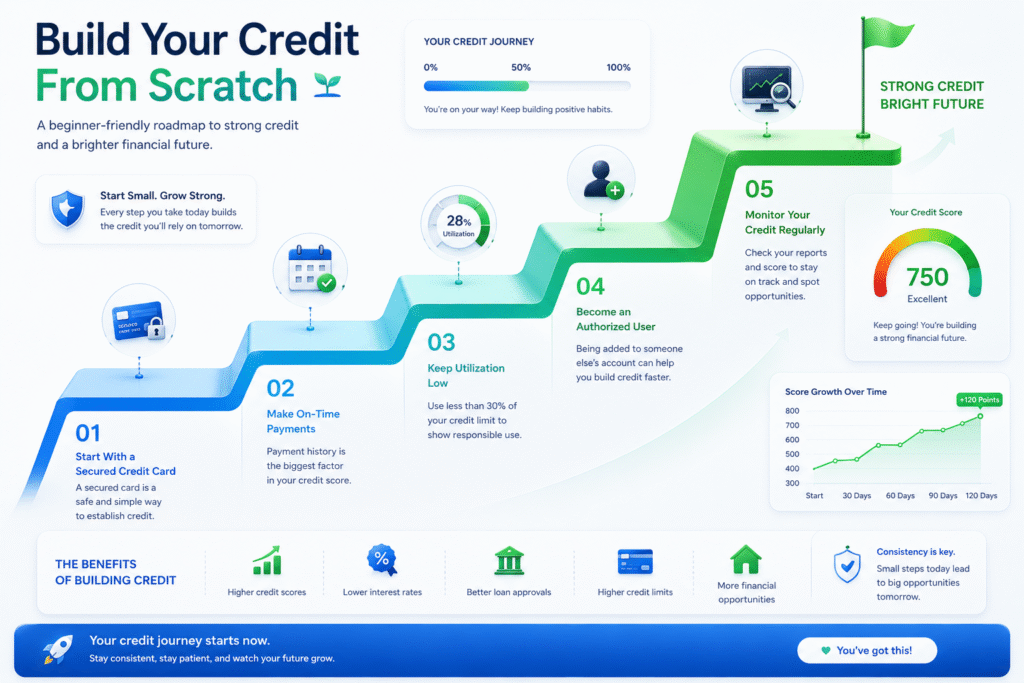
If you’re just starting your financial journey, learning how to build credit fast can feel overwhelming. Many beginners worry about getting approved for loans, qualifying for apartments, or even getting their first credit card because they have little or no credit history.
The good news is:
👉 Building credit doesn’t have to be complicated.
With the right habits and tools, you can start building a strong credit profile much faster than most people think.
🧠 Why Building Credit Matters
Your credit score affects many parts of your financial life, including:
- loan approvals
- credit card offers
- interest rates
- apartment applications
- even some job screenings
👉 That’s why learning the best way to build credit early can create long-term financial advantages.
🧠 1. Get a Starter or Secured Credit Card
One of the easiest ways to build credit fast is by opening a beginner-friendly credit card.
A secured credit card:
- requires a refundable deposit
- helps establish payment history
- is easier to qualify for with no credit history
👉 This is one of the most effective ways to build credit with no credit.
🧠 2. Make Every Payment on Time
Payment history is the most important factor in your credit score.
👉 Even one late payment can hurt your progress.
To build your credit score faster:
- pay every bill before the due date
- use reminders or auto-pay
- avoid missing minimum payments
Consistency matters more than perfection.
🧠 3. Keep Your Credit Utilization Low
Using too much of your available credit can slow your progress.
👉 Try to:
- use only a small portion of your limit
- keep utilization below 30%
- ideally stay under 10% for faster improvement
This is one of the easiest ways to increase your credit score over time.
🧠 4. Become an Authorized User
If a family member has strong credit habits, becoming an authorized user on their account may help you build credit faster.
👉 Their positive payment history and low utilization can strengthen your own credit profile.
This strategy is especially helpful for beginners trying to:
- build credit fast
- build credit score safely
🧠 5. Build Credit Without a Credit Card
Yes — it’s possible.
If you’re wondering how to build credit without a credit card, options include:
- credit-builder loans
- rent reporting services
- secured installment loans
👉 These tools can help establish a positive payment history even if you don’t want traditional credit cards.
🧠 6. Avoid Applying for Too Many Accounts
Applying for multiple cards or loans quickly can hurt your score.
👉 Each application creates a hard inquiry, which may temporarily lower your credit score.
If you’re just starting, focus on:
- quality accounts
- responsible usage
- long-term consistency
🧠 7. Monitor Your Credit Progress Regularly
Tracking your progress helps you:
- identify mistakes
- detect fraud early
- stay motivated
👉 Monitoring your score regularly also helps you understand which habits improve your credit over time.
🧠 8. Build Positive Habits Early
The fastest way to build strong credit is to develop healthy financial habits from the beginning.
That means:
- paying on time
- avoiding unnecessary debt
- keeping balances low
- using credit responsibly
👉 These habits help build long-term financial stability—not just a higher score.
🧠 What Is the Fastest Way to Build Credit?
For most beginners, the fastest combination is:
✅ Secured credit card
✅ Low utilization
✅ On-time payments
✅ Authorized user status
👉 Together, these strategies can help build your credit score surprisingly quickly.
Can You Fix Your Credit Score Yourself?
Yes — in many cases, you can absolutely fix your credit score yourself without paying expensive credit repair companies.
The truth is, most credit improvement comes from:
- Understanding what affects your score
- correcting mistakes
- building better financial habits consistently
While some situations take time to recover from, many people successfully improve their credit on their own by following the right strategies.
🧠 What Does “Fixing Your Credit” Actually Mean?
Fixing your credit score doesn’t mean using shortcuts or overnight hacks.
👉 It means:
- improving payment history
- lowering credit utilization
- correcting credit report errors
- avoiding harmful financial habits
Over time, these actions help rebuild trust with lenders and strengthen your overall credit profile.
🧠 1. Check Your Credit Report Carefully
The first step to fix your credit score yourself is understanding what’s hurting it.
Review your report for:
- missed payments
- high balances
- collections
- incorrect information
- unfamiliar accounts
👉 This helps you identify the exact problems affecting your score.
🧠 2. Dispute Errors on Your Credit Report
Errors are more common than many people realize.
Incorrect information may include:
- wrong balances
- duplicate accounts
- Inaccurate late payments
👉 Disputing these mistakes is one of the fastest ways to:
- fix your credit score for free
- improve your credit score quickly
🧠 4. Lower Your Credit Utilization
Using too much of your available credit can damage your score.
👉 Focus on:
- paying down balances
- keeping utilization below 30%
- avoiding maxed-out cards
This is one of the fastest ways to improve your credit score fast.
🧠 5. Avoid Credit Repair Scams
Be careful of companies promising:
- instant credit repair
- overnight score increases
- guaranteed results
👉 Real credit improvement takes:
- time
- consistency
- responsible financial behavior
If something sounds too good to be true, it probably is.
🧠 6. Rebuild Positive Credit Habits
Fixing your credit isn’t only about removing negatives—it’s also about creating positive activity.
That includes:
- making payments on time
- using credit responsibly
- avoiding unnecessary debt
👉 Healthy habits are what create long-term score improvement.
🧠 Can You Fix Your Credit Score Fast?
Some improvements can happen relatively quickly, especially if:
- your utilization drops significantly
- errors are removed
- negative activity stops immediately
However, serious credit damage may take months or longer to recover from.
👉 The key is consistency—not shortcuts.
🧠 When Should You Get Professional Help?
Sometimes professional guidance may help, especially if:
- you’re dealing with identity theft
- your debt situation is severe
- legal or collection issues are involved
But for many people, learning how to fix your credit score yourself is enough to create meaningful improvement over time.
Final Thoughts: Improving Your Credit Score Is a Process—Not a Shortcut
Learning how to improve your credit score can feel overwhelming at first, especially if you’re recovering from missed payments, high debt, or financial mistakes from the past. But the most important thing to remember is this:
No matter where your score stands today, it can improve over time with the right habits, consistency, and financial discipline.
👉 Your credit score is not permanent.
🧠 The Final Takeaway
Improving your credit score isn’t about being perfect—it’s about making smarter financial decisions consistently over time. By understanding how credit works and applying the right strategies, you can gradually increase your score, rebuild financial confidence, and create a stronger financial future for yourself.
👉 Start small.
👉 Stay consistent.
👉 Trust the process.
That’s how real credit improvement happens.
Leave a Reply