
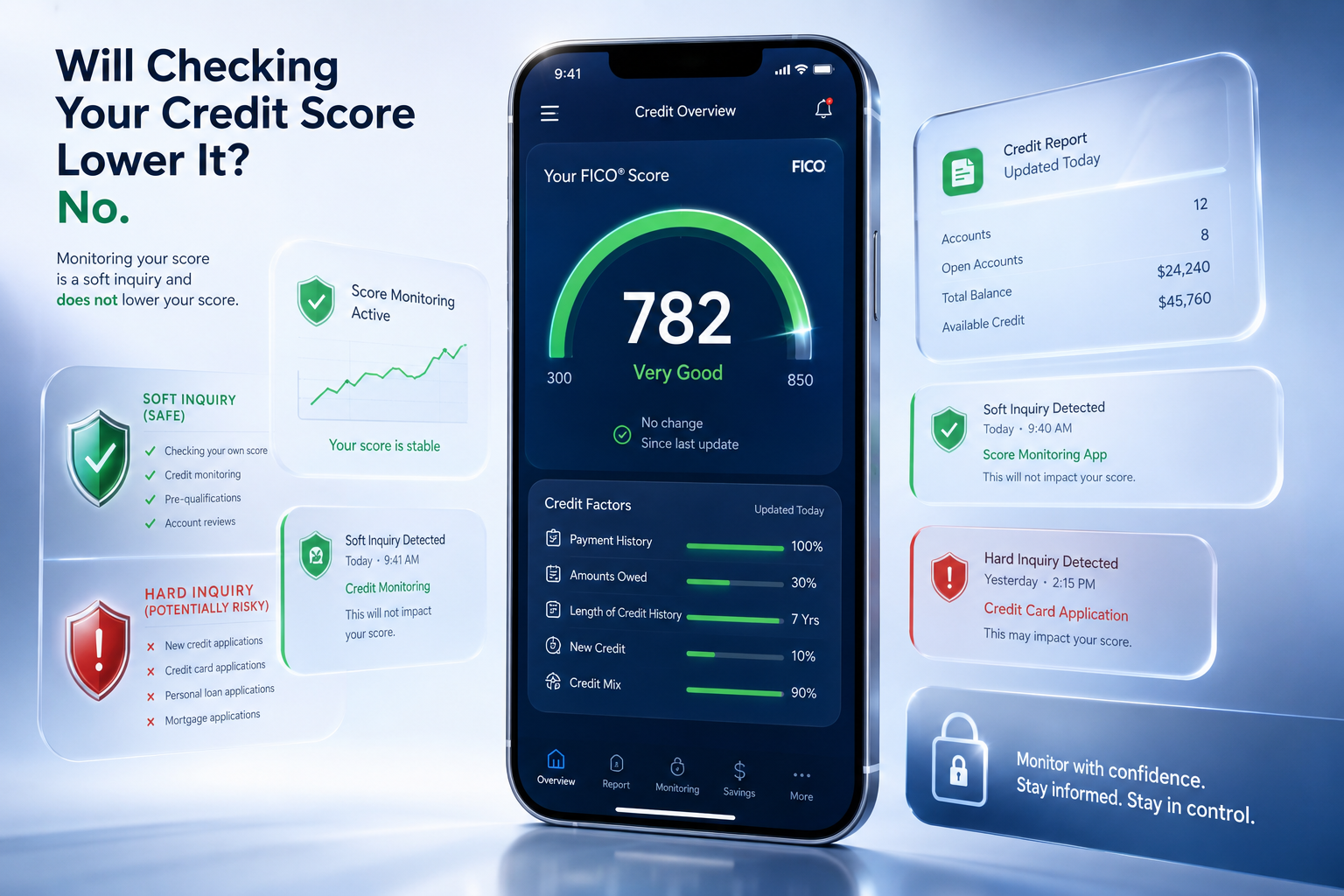
Many people avoid checking their credit score because they’ve heard it can lower their score. Others worry that checking too often on apps like Experian or Credit Karma could secretly hurt their credit without them realizing it. If you’ve ever wondered, “Does checking your credit score lower it?”, you’re definitely not alone.
The good news is:
👉 In most cases, checking your own credit score does not lower it.
The confusion usually comes from misunderstanding the difference between a soft inquiry and a hard inquiry. While some types of credit checks can temporarily affect your score, simply monitoring your own credit through services like Experian, Credit Karma, or your bank is generally considered safe and responsible financial behavior.
In this guide, you’ll learn exactly:
- Whether checking your credit score hurts it
- When a credit check can actually lower your score
- How soft inquiries and hard inquiries work
- Whether checking your FICO score affects your credit
- How often should you monitor your score safely
We’ll also break down common myths, explain why your credit score may drop after certain applications, and show you the smartest ways to monitor your credit without damaging it.
Does Checking Your Credit Score Lower It?
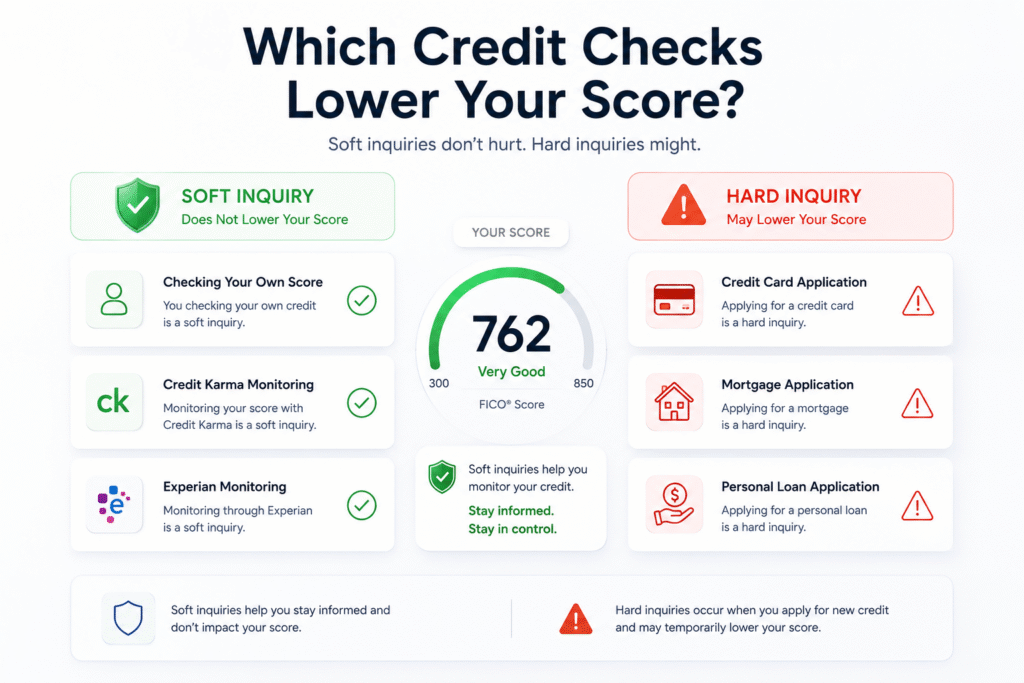
No — checking your own credit score does not lower it.
When you check your own credit score through services like Experian, Credit Karma, your bank, or other credit monitoring tools, it creates what’s known as a soft inquiry (also called a soft pull). Soft inquiries do not affect your credit score and are not considered risky by lenders.
This means you can safely:
- Monitor your credit score regularly
- Check your FICO score
- Review your credit report
- Use free credit monitoring tools
without damaging your credit.
🧠 Why Checking Your Own Credit Score Is Safe
Many people confuse checking their own credit score with applying for new credit.
👉 These are completely different actions.
When you apply for:
- a credit card
- a personal loan
- a mortgage
- auto financing
Lenders may perform a hard inquiry, which can temporarily lower your score slightly.
But when you check your own score, it’s usually treated as a soft inquiry, meaning:
✅ no score impact
✅ no penalty
✅ safe monitoring
🧠 Does Checking Your FICO Score Lower It?
No — checking your own FICO score also does not lower your credit score.
Whether you use:
- Experian
- Credit Karma
- your bank’s credit dashboard
- a free credit monitoring app
Checking your own score is usually treated as a soft inquiry.
🧠 The Important Difference: Soft Inquiry vs Hard Inquiry
The confusion around this topic usually comes from not understanding the difference between:
- soft inquiries
- hard inquiries
👉 Soft inquiries do NOT affect your score.
👉 Hard inquiries MAY temporarily lower it.
We’ll explain this in detail in the next section.
| Action | Lowers Score? |
|---|---|
| Checking your own score | ❌ No |
| Credit Karma monitoring | ❌ No |
| Loan application | ✅ Possibly |
| Credit card application | ✅ Possibly |
Why People Think Checking Their Credit Score Hurts It
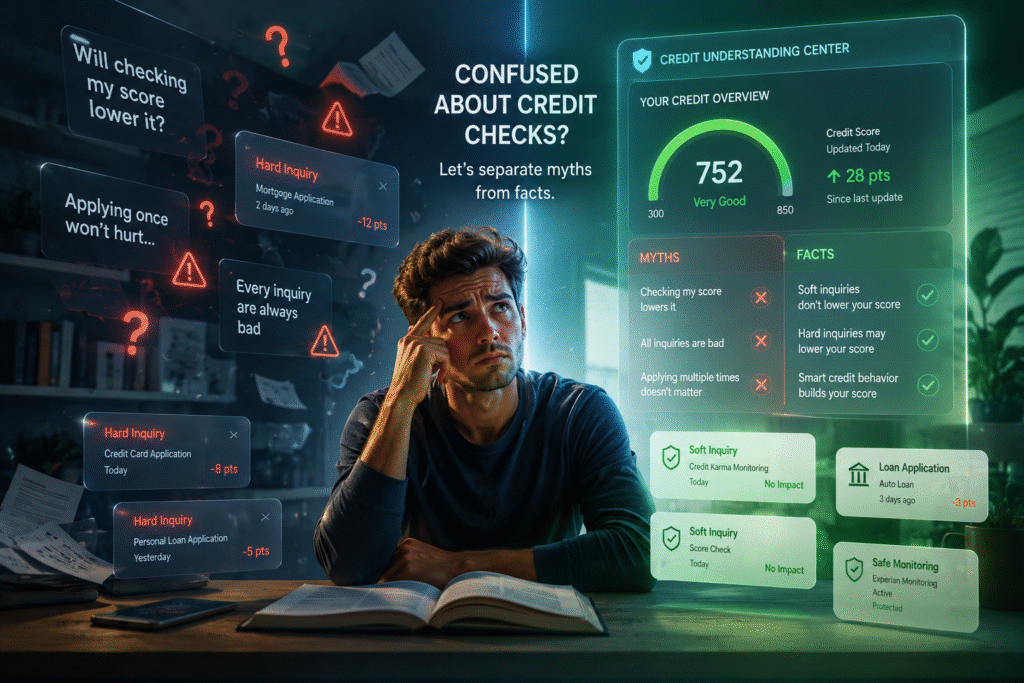
One of the biggest credit myths online is the belief that checking your own credit score lowers it. Many people avoid monitoring their credit because they’re afraid it could damage their score or make lenders see them as financially risky.
So why does this confusion exist?
The answer usually comes down to misunderstanding how different types of credit inquiries work.
🧠 The Confusion Between Soft Inquiries and Hard Inquiries
Most people hear that “credit checks can lower your score” without realizing there are actually two different types of inquiries:
✅ Soft Inquiries
Soft inquiries happen when:
- You check your own credit score
- You use Credit Karma or Experian
- A company prequalifies you for an offer
👉 Soft inquiries do not lower your credit score.
⚠️ Hard Inquiries
Hard inquiries happen when you apply for:
- a credit card
- a loan
- a mortgage
- car financing
👉 Hard inquiries may temporarily lower your score slightly because lenders see them as active borrowing behavior.
This is where most of the confusion begins.
🧠 Why People Associate Credit Checks With Score Drops
Sometimes people notice their score drops shortly after applying for credit and assume the act of checking their score caused the problem.
But in reality, the score drop usually comes from:
- a hard inquiry
- a new credit application
- increased debt
- Higher credit utilization
—not from checking their own score.
👉 This is why many people mistakenly believe checking their credit score hurts it.
🧠 Credit Monitoring Apps Also Create Confusion
Apps like:
- Credit Karma
- Experian
- bank credit dashboards
allow users to monitor their score frequently.
Some people worry:
- “Does checking your credit score on Experian lower it?”
- “Does checking your credit score with Credit Karma lower it?”
The answer is generally no.
These services usually perform soft inquiries, which do not affect your credit score.
🧠 Fear of “Too Many Checks.”
Another reason people get nervous is that they hear lenders dislike “too many credit checks.”
There’s some truth to this—but only for hard inquiries tied to actual credit applications.
Checking your own score regularly for:
- fraud detection
- financial planning
- score tracking
is considered responsible financial behavior.
👉 In fact, monitoring your score can help you identify problems early before they become serious.
🧠 Why This Myth Continues to Spread
The myth survives because:
- Credit scoring feels complicated
- Many people don’t understand inquiries
- Online advice is often oversimplified
As a result, people mix:
- checking their own score
- applying for new credit
- lender credit pulls
even though these actions affect credit differently.
What Happens When You Check Your Own Credit Score?
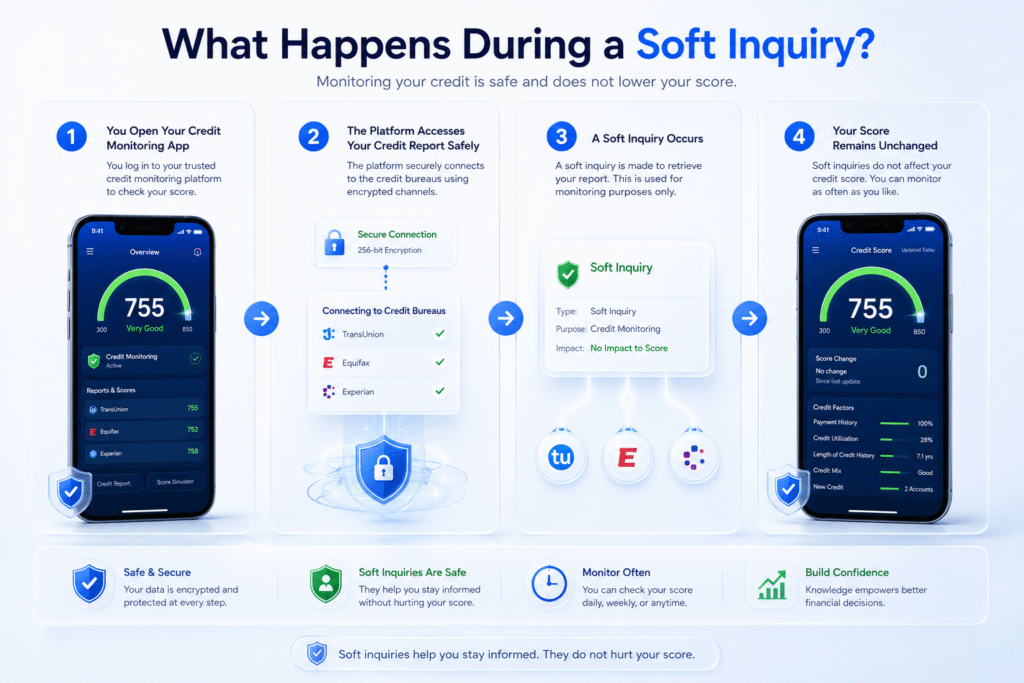
When you check your own credit score, the credit monitoring service or platform accesses information from your credit report to generate your current score. This process is usually considered a soft inquiry, which means it does not lower your credit score or negatively affect your credit history.
In simple terms:
👉 You are only viewing your own financial information—not applying for new credit.
That’s why checking your own score is generally safe.
🧠 What Information Is Reviewed?
When you check your credit score, the system may review details such as:
- payment history
- credit card balances
- credit utilization
- account age
- recent activity
This information is used to calculate your score and show updates about your credit profile.
🧠 Does Checking Your Own Credit Score Hurt It?
No — checking your own credit score does not hurt it.
Whether you use:
- Experian
- Credit Karma
- your bank’s credit dashboard
- a free monitoring app
Your personal score checks are usually classified as soft inquiries.
👉 Soft inquiries do not affect your credit score.
🧠 What Is a Soft Inquiry?
A soft inquiry happens when:
- You check your own credit score
- A company prequalifies you for an offer
- Background checks are performed
- Financial monitoring tools review your report
Soft inquiries:
✅ Do not lower your score
✅ are not visible to lenders in the same way as hard inquiries
✅ are considered normal credit activity
This is why regularly monitoring your score is safe.
🧠 What Happens When Lenders Check Your Credit?
Things work differently when you apply for:
- credit cards
- personal loans
- mortgages
- car financing
In these situations, lenders may perform a hard inquiry, which can temporarily lower your score slightly.
Hard inquiries signal that you may be taking on new debt, which is why scoring models treat them differently.
👉 This is one of the biggest reasons people confuse checking their own score with harmful credit checks.
🧠 Does Checking Your Credit Score on Experian or Credit Karma Lower It?
No — checking your credit score on Experian or Credit Karma generally does not lower your score.
These platforms usually use soft inquiries for monitoring purposes.
That means you can:
- track score changes
- Monitor financial progress
- Watch for suspicious activity
without damaging your credit.
🧠 Why Monitoring Your Credit Score Is Actually Helpful
Checking your score regularly can help you:
- Catch identity theft early
- Identify credit report errors
- track improvement progress
- understand what affects your score
👉 Responsible credit monitoring is considered a healthy financial habit.
In fact, many financial experts recommend reviewing your score regularly instead of avoiding it out of fear.
Hard Inquiry vs Soft Inquiry Explained
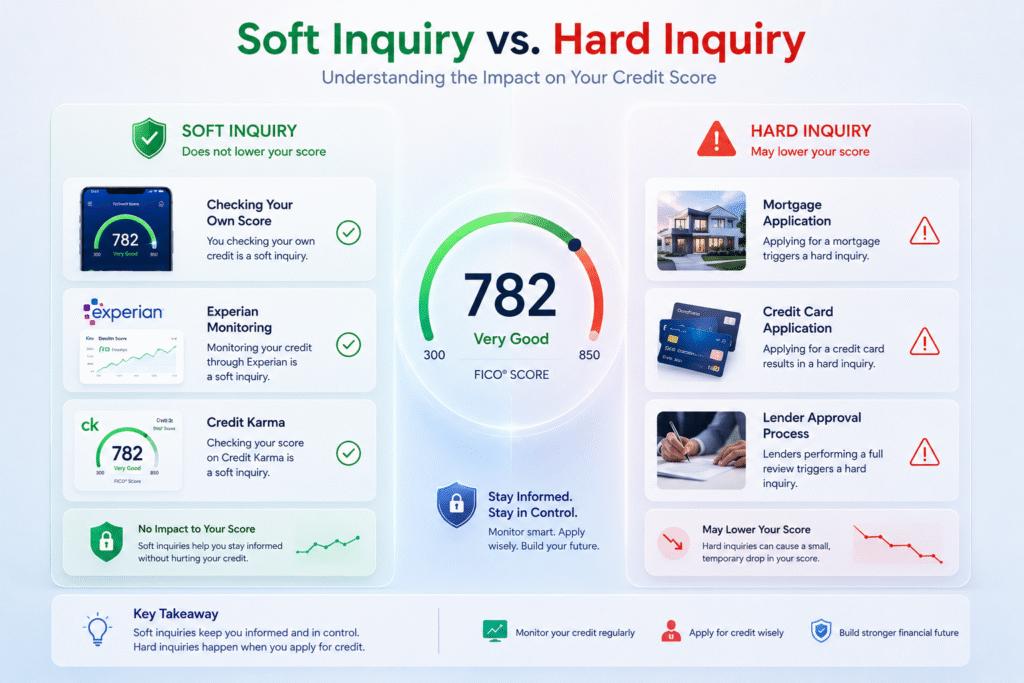
One of the biggest reasons people get confused about credit score checks is that they don’t fully understand the difference between a hard inquiry and a soft inquiry.
Both involve someone accessing your credit information, but they affect your credit score very differently.
👉 Understanding this difference is the key to knowing why checking your own credit score usually does not hurt it.
🧠 What Is a Soft Inquiry?
A soft inquiry (also called a soft pull) happens when your credit report is reviewed for informational or monitoring purposes rather than for a lending decision.
Soft inquiries commonly happen when:
- You check your own credit score
- You use Credit Karma or Experian
- Your bank provides free score monitoring
- Companies prequalify you for offers
- Employers perform certain background checks
👉 Soft inquiries do not lower your credit score.
They are considered normal financial activity and usually are not visible to lenders in the same way as hard inquiries are.
🧠 Does Checking Your Credit Score Create a Soft Inquiry?
Yes.
When you check your own credit score:
- through Experian
- Credit Karma
- Your bank app
- free credit monitoring tools
The system typically performs a soft inquiry.
That means:
✅ no credit score damage
✅ no penalty
✅ safe monitoring
This is why regularly checking your own score is generally safe.
🧠 What Is a Hard Inquiry?
A hard inquiry happens when a lender checks your credit report because you applied for new credit.
Hard inquiries may occur when you apply for:
- credit cards
- mortgages
- auto loans
- personal loans
- financing plans
Unlike soft inquiries, hard inquiries can temporarily lower your credit score slightly.
Why?
Because they signal that you may be taking on new debt.
🧠 How Much Can a Hard Inquiry Lower Your Credit Score?
For many people, a single hard inquiry may lower a credit score by only a few points temporarily.
However:
- multiple applications in a short period
- Repeated hard inquiries and
- risky borrowing behavior
can have a larger impact over time.
👉 This is one reason people mistakenly believe all credit checks are harmful.
🧠 Soft Inquiry vs Hard Inquiry: Key Differences
| Feature | Soft Inquiry | Hard Inquiry |
|---|---|---|
| Checking your own score | ✅ Yes | ❌ No |
| Credit card application | ❌ No | ✅ Yes |
| Loan application | ❌ No | ✅ Yes |
| Affects credit score | ❌ No | ✅ Possibly |
| Visible to lenders | Usually no | Yes |
| Credit monitoring apps | ✅ Yes | ❌ No |
🧠 Does a Soft Pull Inquiry Affect Your Credit Score?
No.
A soft pull inquiry does not:
- Lower your score
- damage your credit
- reduce your creditworthiness
You can safely check your own score as often as needed without harming your credit.
🧠 Why Hard Inquiries Exist
Lenders use hard inquiries to evaluate risk before approving new credit.
When you apply for:
- a loan
- a mortgage
- a credit card
Lenders want to understand:
- Your borrowing history
- debt levels
- repayment behavior
That’s why hard inquiries are treated differently by credit scoring models.
🧠 Should You Avoid Checking Your Credit Score?
Absolutely not.
In fact, avoiding your credit score because of fear can actually hurt you in the long run.
Regular monitoring helps you:
- Catch fraud early
- Identify credit report errors
- track score improvements
- understand financial habits
👉 Responsible credit monitoring is considered healthy financial behavior.
Does Checking Your FICO Score Lower It?
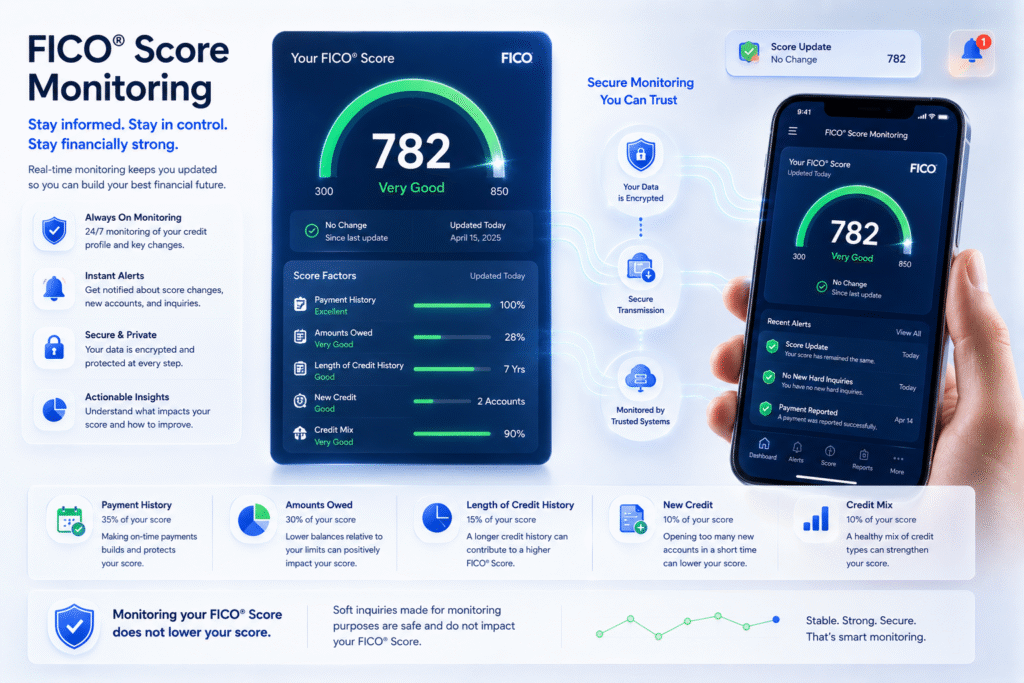
No — checking your own FICO score does not lower your credit score.
When you check your FICO score through trusted platforms like:
- Experian
- your bank
- credit monitoring services
- financial apps
The system usually performs a soft inquiry, not a hard inquiry.
👉 Soft inquiries do not affect your credit score.
This means you can safely monitor your FICO score without worrying about damaging your credit.
🧠 What Is a FICO Score?
A FICO score is one of the most commonly used credit scoring models in the United States. Lenders often use it to evaluate your creditworthiness when you apply for:
- credit cards
- loans
- mortgages
- financing options
Your FICO score is calculated using factors like:
- payment history
- credit utilization
- account age
- new credit activity
- credit mix
Because FICO scores are so important, many people regularly monitor them to track financial progress.
🧠 Why People Think Checking Their FICO Score Hurts It
The confusion usually comes from misunderstanding how credit inquiries work.
Many people hear:
“Credit checks lower your score.”
But they don’t realize there’s a major difference between:
- checking your own FICO score
- applying for new credit
Checking your own score creates a soft inquiry, while applying for loans or credit cards may create a hard inquiry.
👉 That’s why checking your FICO score itself generally does not hurt your credit.
🧠 Does Checking Your FICO Score Often Lower It?
No.
You can check your FICO score regularly without damaging your credit score.
In fact, monitoring your score frequently can help you:
- Detect identity theft
- spot credit report errors
- understand score changes
- track financial improvement
👉 Responsible score monitoring is considered a healthy financial habit.
🧠 When Can Your FICO Score Actually Drop?
Your FICO score may go down because of:
- missed payments
- high credit card balances
- multiple hard inquiries
- collections
- new debt
—not because you checked your own score.
This is an important distinction that many people misunderstand.
🧠 Does Checking Your FICO Score on Experian Lower It?
No — checking your FICO score on Experian generally does not lower your score.
Experian typically uses soft inquiries for score monitoring purposes.
That means you can safely:
- View your score
- monitor changes
- Review your credit activity
without hurting your credit.
🧠 Should You Monitor Your FICO Score Regularly?
Yes.
Regular monitoring helps you:
- Stay aware of financial changes
- Identify suspicious activity early
- understand what affects your score
- improve your financial habits over time
👉 Many financial experts recommend checking your score regularly instead of avoiding it.
Does Credit Karma Lower Your Credit Score?
No — using Credit Karma to check your credit score does not lower your credit score.
When you check your score through Credit Karma, the platform typically performs a soft inquiry (also called a soft pull), which does not affect your credit score or hurt your credit history.
This means you can safely:
- Monitor your credit score
- track score changes
- review credit activity
- Check your credit regularly
without damaging your credit.
🧠 Why People Think Credit Karma Lowers Their Score
Many people notice small changes in their score after using credit monitoring apps and assume the app caused the drop.
But in most cases, the score changes are actually caused by:
- credit card balances changing
- new hard inquiries
- missed payments
- updated account activity
- changes in credit utilization
—not by Credit Karma itself.
👉 Checking your score through Credit Karma generally does not lower it.
🧠 Does Checking Your Credit Score With Credit Karma Lower It?
No.
Whether you:
- log in daily
- Monitor your score weekly
- Check updates frequently
Credit Karma usually uses soft inquiries for monitoring purposes.
Soft inquiries:
✅ Do not lower your score
✅ are safe
✅ are considered normal financial activities
This is why many people use Credit Karma regularly to monitor their credit health.
🧠 What Type of Credit Check Does Credit Karma Use?
Credit Karma generally uses:
👉 soft inquiries
Soft inquiries happen when:
- You check your own score
- monitoring tools review your profile
- Companies prequalify you for offers
Unlike hard inquiries, soft inquiries are not treated as risky borrowing behavior by credit scoring models.
🧠 Why Your Score Might Look Different on Credit Karma
Sometimes users become confused because the score shown on Credit Karma may not perfectly match the score used by lenders.
That happens because:
- Different scoring models exist
- Lenders may use different versions of FICO or VantageScore
- Score updates happen at different times
👉 This does not mean Credit Karma is hurting your score.
It simply means different systems may calculate scores differently.
🧠 Can You Check Credit Karma Frequently?
Yes.
You can generally check your score as often as you want without lowering it.
In fact, regular monitoring can help you:
- Detect fraud early
- Identify suspicious activity
- track financial progress
- understand what affects your score
👉 Monitoring your score regularly is usually considered a smart financial habit.
🧠 Does Credit Karma Ever Cause a Hard Inquiry?
No — simply checking your score on Credit Karma does not create a hard inquiry.
However, if you apply for:
- a loan
- a credit card
- financing offers
through a lender, the lender may later perform a hard inquiry.
That inquiry—not Credit Karma itself—could temporarily affect your score.
Does Experian Lower Your Credit Score When You Check It?
No — checking your credit score through Experian does not usually lower your credit score.
When you log into Experian to view your own credit information, the platform typically performs a soft inquiry, which does not affect your credit score or harm your credit history.
That means you can safely:
- Monitor your score
- Review your credit report
- track score changes
- Check your FICO score
🧠 Why People Think Experian Lowers Their Score
Many people become worried after noticing score changes around the same time they check their credit.
This often creates the false impression that:
👉 “Checking your credit score on Experian lowered it.”
But in most cases, the score change is actually caused by:
- a hard inquiry from a lender
- changes in credit card balances
- missed payments
- increased utilization
- updated account activity
—not by checking your score through Experian itself.
🧠 What Type of Inquiry Does Experian Use?
Experian usually uses:
👉 soft inquiries
Soft inquiries happen when:
- You check your own credit score
- Monitor your report
- Use financial tracking tools
- Receive prequalified offers
Soft inquiries:
✅ Do not lower your score
✅ are safe
✅ are considered normal financial activities
This is why checking your score on Experian regularly is generally harmless.
🧠 Does Checking Your FICO Score on Experian Lower It?
No.
Experian may show you a FICO score or other credit score models for educational and monitoring purposes. Viewing your own score through the platform does not typically create a hard inquiry.
👉 Checking your FICO score on Experian is usually safe.
🧠 When Can Your Credit Score Actually Go Down?
Your score may drop because of:
- applying for new credit
- missed payments
- high credit utilization
- collections
- multiple hard inquiries
These factors can affect your score far more than simply monitoring it.
👉 This is one reason many people misunderstand how credit checks work.
🧠 Is It Safe to Check Experian Frequently?
Yes.
You can generally monitor your score regularly without harming your credit.
In fact, frequent monitoring may help you:
- Detect fraud early
- Identify suspicious activity
- catch credit report errors
- understand score changes faster
👉 Monitoring your financial health is usually considered a smart habit—not risky behavior.
🧠 Why Monitoring Your Credit Is Important
Avoiding your credit score because of fear can actually create bigger problems over time.
Regular monitoring helps you:
- Stay financially aware
- Protect yourself from identity theft
- track progress while improving your score
- understand how your financial decisions affect your credit
👉 Responsible credit monitoring can help you build healthier financial habits.
When Does Your Credit Score Actually Go Down?
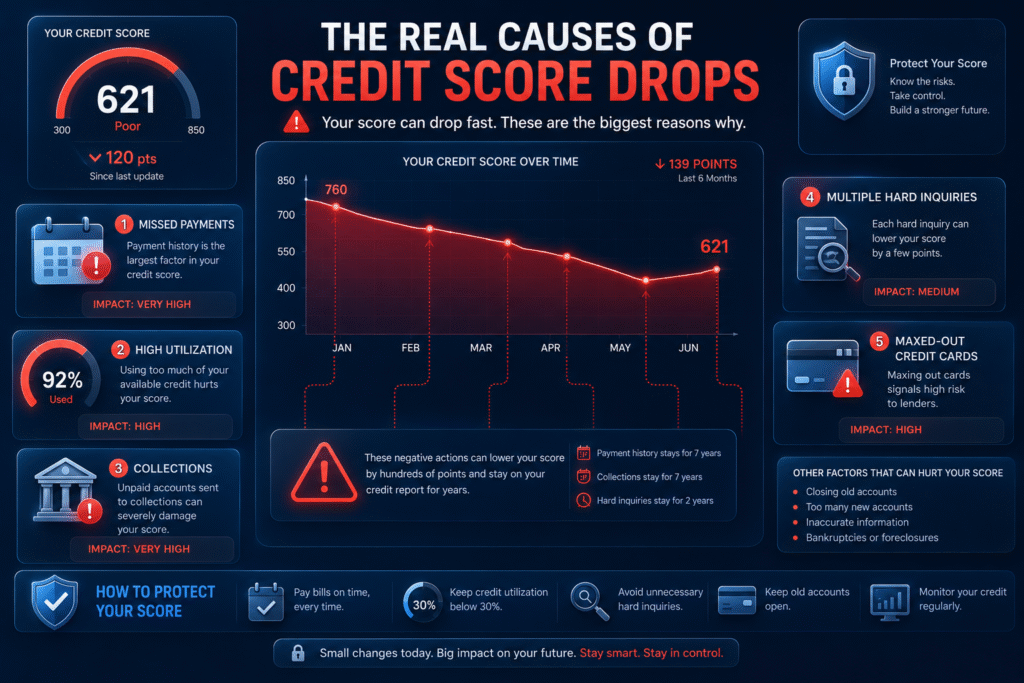
Many people believe checking their own credit score lowers it, but that’s usually not true. In reality, credit scores typically go down because of financial behaviors that signal increased risk to lenders.
Understanding what actually affects your score can help you avoid unnecessary fear and make smarter financial decisions.
Here are the most common reasons credit scores go down.
🧠 1. Hard Inquiries From Credit Applications
One of the most common reasons for a temporary score drop is a hard inquiry.
Hard inquiries usually happen when you apply for:
- credit cards
- personal loans
- mortgages
- car financing
Unlike soft inquiries, hard inquiries may lower your score slightly because they indicate potential new debt.
👉 This is why people sometimes confuse applying for credit with simply checking their own score.
🧠 2. Missing Payments
Payment history is one of the biggest factors affecting your credit score.
Even one late payment can:
- Lower your score
- stay on your credit report for years
- make lenders view you as a higher risk
👉 Consistent on-time payments are extremely important for maintaining strong credit.
🧠 3. High Credit Utilization
Using too much of your available credit can hurt your score.
This happens when:
- credit card balances rise too high
- cards become maxed out
- utilization ratios increase significantly
High utilization may signal financial stress to lenders.
👉 Many people see score drops after large purchases or rising balances.
🧠 4. Applying for Multiple Accounts Quickly
Too many hard inquiries within a short period can affect your score more noticeably.
This may happen when someone:
- applies to several credit cards
- shops aggressively for loans
- Repeatedly seeks financing
👉 Multiple applications can make lenders think you’re financially overextended.
🧠 5. Closing Old Credit Accounts
Closing older accounts can sometimes lower your score because it may:
- shorten your credit history
- increase overall utilization
Many people don’t realize that old accounts often help strengthen long-term credit stability.
🧠 6. Collections and Debt Problems
Collections, charge-offs, and unpaid debts can seriously damage your credit score.
These negative marks may stay on your report for years and often have a major impact on your creditworthiness.
🧠 7. Errors or Fraudulent Activity
Sometimes credit scores drop because of:
- reporting errors
- identity theft
- fraudulent accounts
- inaccurate balances
👉 This is one reason monitoring your credit score regularly is actually important.
Catching suspicious activity early can help protect your financial health.
🧠 8. Bankruptcy or Serious Financial Problems
Major financial events like bankruptcy can significantly lower a credit score.
Although recovery is possible over time, serious negative events often affect credit for much longer periods.
🧠 Does Checking Your Own Credit Score Cause These Problems?
No.
Checking your own score through:
- Experian
- Credit Karma
- your bank
- monitoring apps
typically creates a soft inquiry, which does not lower your score.
👉 The actual causes of score drops are usually connected to borrowing behavior, payment history, and debt management.
🧠 Why Monitoring Your Credit Score Still Matters
Avoiding your score out of fear can actually make financial problems harder to detect.
Regular monitoring helps you:
- identify fraud
- track score changes
- understand financial habits
- catch reporting errors early
👉 Responsible credit monitoring is generally considered a healthy financial habit.
How Often Should You Check Your Credit Score?
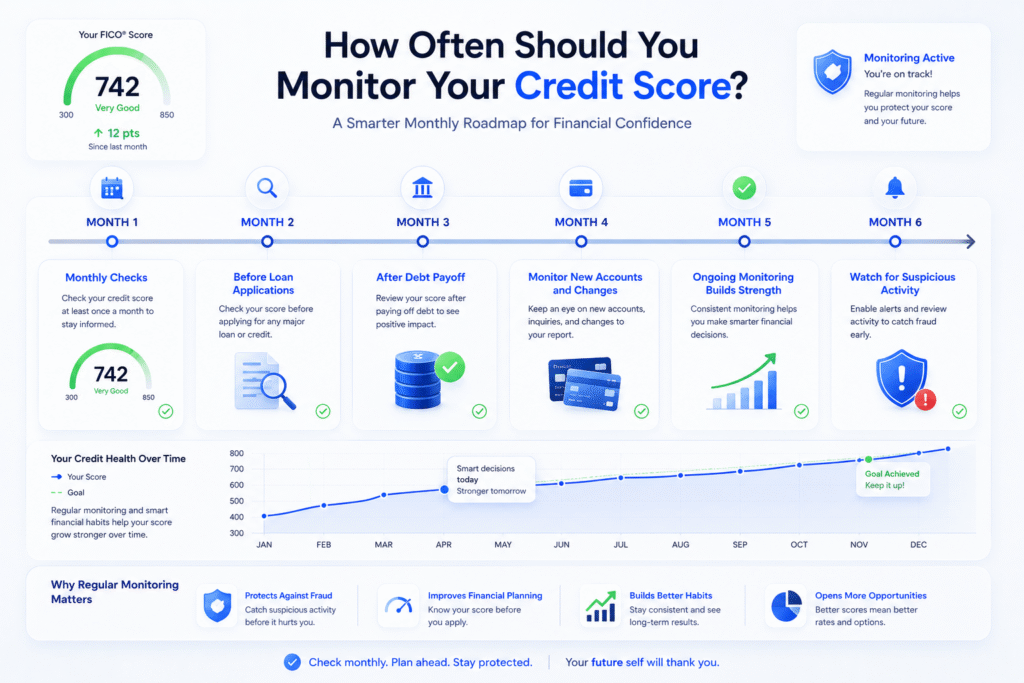
In most cases, checking your credit score at least once a month is considered a smart financial habit. Regular monitoring helps you stay aware of changes in your credit profile and allows you to identify potential problems before they become serious.
The good news is:
👉 Checking your own credit score regularly does not usually lower it because it typically creates a soft inquiry rather than a hard inquiry.
That means you can monitor your score safely without damaging your credit.
🧠 Why Regular Credit Monitoring Matters
Your credit score can change for many reasons, including:
- payment activity
- credit card balances
- new accounts
- credit utilization changes
- reporting updates
By checking your score regularly, you can:
- Detect identity theft early
- Identify credit report errors
- Monitor financial progress
- understand what affects your score
👉 Responsible credit monitoring helps you stay in control of your financial health.
🧠 Does Checking Your Credit Score Often Lower It?
No.
Many people worry that checking their score too often could hurt their credit, but this is usually a myth.
Checking your own score through:
- Experian
- Credit Karma
- your bank
- credit monitoring apps
typically creates a soft inquiry, which does not lower your score.
👉 You can generally monitor your credit regularly without harming it.
🧠 When Should You Check Your Credit Score More Frequently?
You may want to monitor your score more closely if:
- You’re applying for a mortgage or loan
- You’re improving your credit score
- You recently paid off debt
- You suspect identity theft
- You noticed unusual account activity
Frequent monitoring during these situations can help you react quickly to important changes.
🧠 Is Daily Credit Monitoring Necessary?
For most people, daily monitoring is not required.
However, some people prefer more frequent updates because it helps them:
- Stay financially aware
- track score changes in real time
- Monitor fraud risks more closely
As long as you’re checking your own score through trusted platforms, frequent monitoring generally does not hurt your credit.
🧠 Best Ways to Monitor Your Credit Score Safely
You can safely monitor your score through:
- Experian
- Credit Karma
- your bank’s credit dashboard
- official credit monitoring tools
These services usually rely on soft inquiries, which means checking your own score does not damage your credit profile.
🧠 Why Avoiding Your Credit Score Can Be Risky
Some people avoid checking their score because they fear it might lower their credit.
But ignoring your credit entirely can actually create bigger problems because:
- Fraud may go unnoticed
- errors can stay unresolved
- Score drops may surprise you later
👉 Monitoring your credit regularly is usually safer than avoiding it.
Can You Check Your Credit Score for Free Without Affecting It?
Yes — you can usually check your credit score for free without lowering it.
Many trusted platforms allow you to monitor your credit score safely because they use soft inquiries instead of hard inquiries. Soft inquiries do not affect your credit score, which means checking your own score is generally considered safe financial behavior.
You can often check your score for free through:
- Experian
- Credit Karma
- your bank or credit card provider
- official credit monitoring tools
👉 These services typically allow you to view your credit information without hurting your score.
🧠 Why Free Credit Score Checks Usually Don’t Hurt Your Credit
When you check your own credit score, the platform normally performs a:
👉 soft inquiry
Soft inquiries are different from hard inquiries because they:
✅ Do not lower your score
✅ are not tied to borrowing applications
✅ are considered normal monitoring activity
This is why checking your own score regularly usually does not damage your credit history.
🧠 What Is the Difference Between Free Credit Monitoring and Applying for Credit?
This is where many people get confused.
✅ Free Credit Monitoring
Examples:
- checking your score on Experian
- using Credit Karma,
- reviewing your score through your bank
These usually create:
👉 soft inquiries
⚠️ Applying for New
Examples:
- applying for a loan
- submitting a mortgage application
- applying for a new credit card
These may create:
👉 hard inquiries
Hard inquiries can temporarily lower your score slightly.
🧠 Where Can You Check Your Credit Score for Free?
Many legitimate services offer free credit score access.
Common options include:
- Experian
- Credit Karma
- banking apps
- credit card dashboards
- official annual credit report services
Some services provide:
- score updates
- fraud alerts
- account monitoring
- credit education tools
👉 These platforms help people stay informed about their financial health.
🧠 Does Checking Your Credit Score on Credit Karma Lower It?
No.
Credit Karma generally uses soft inquiries for score monitoring purposes.
That means you can:
- Check your score frequently
- monitor changes
- track financial progress
without damaging your credit.
🧠 Does Checking Your Credit Score on Experian Lower It?
No.
Checking your own score on Experian is usually considered a soft inquiry and does not lower your score.
You can safely:
- Review your credit information
- monitor changes
- track your FICO score
without harming your credit profile.
🧠 Can Checking Your Credit Score Too Often Hurt It?
In most cases, no.
As long as you’re checking your own score through trusted monitoring services, frequent checks typically create soft inquiries, not hard inquiries.
That means:
✅ no score penalty
✅ no credit damage
✅ safe score monitoring
Final Thoughts: Checking Your Credit Score Is Safe — and Smart
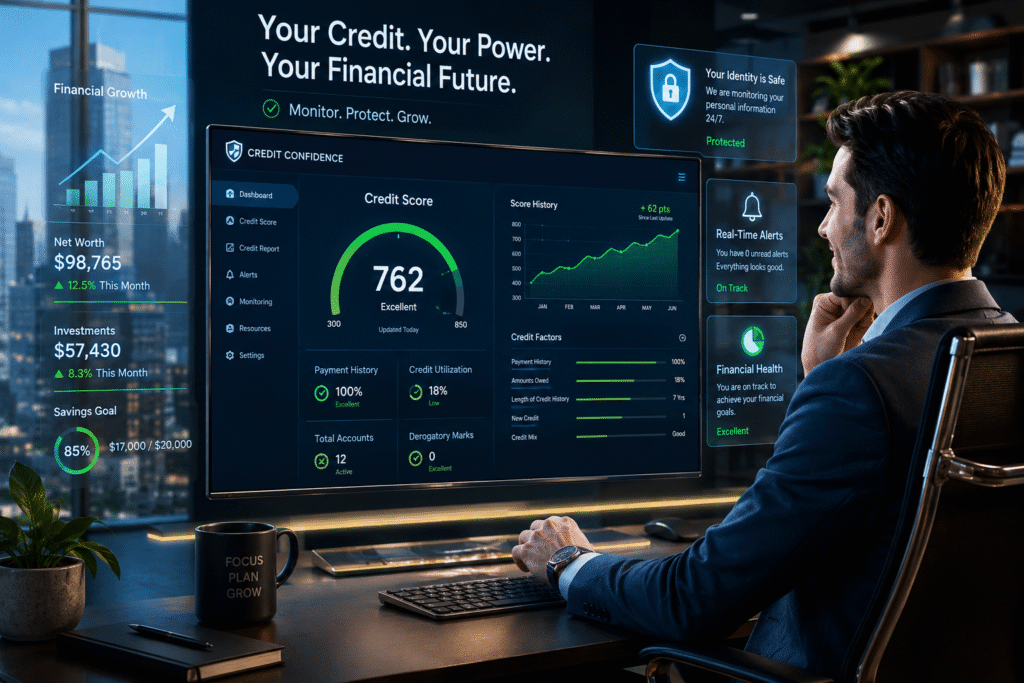
Many people avoid monitoring their credit because they worry it could hurt their score. But in most cases, checking your own credit score through trusted services like Experian, Credit Karma, or your bank does not lower your credit score.
The key difference is understanding:
👉 soft inquiries vs hard inquiries
Checking your own score usually creates a soft inquiry, which does not affect your credit. Hard inquiries, on the other hand, may temporarily lower your score because they’re tied to new credit applications like loans or credit cards.
Leave a Reply