
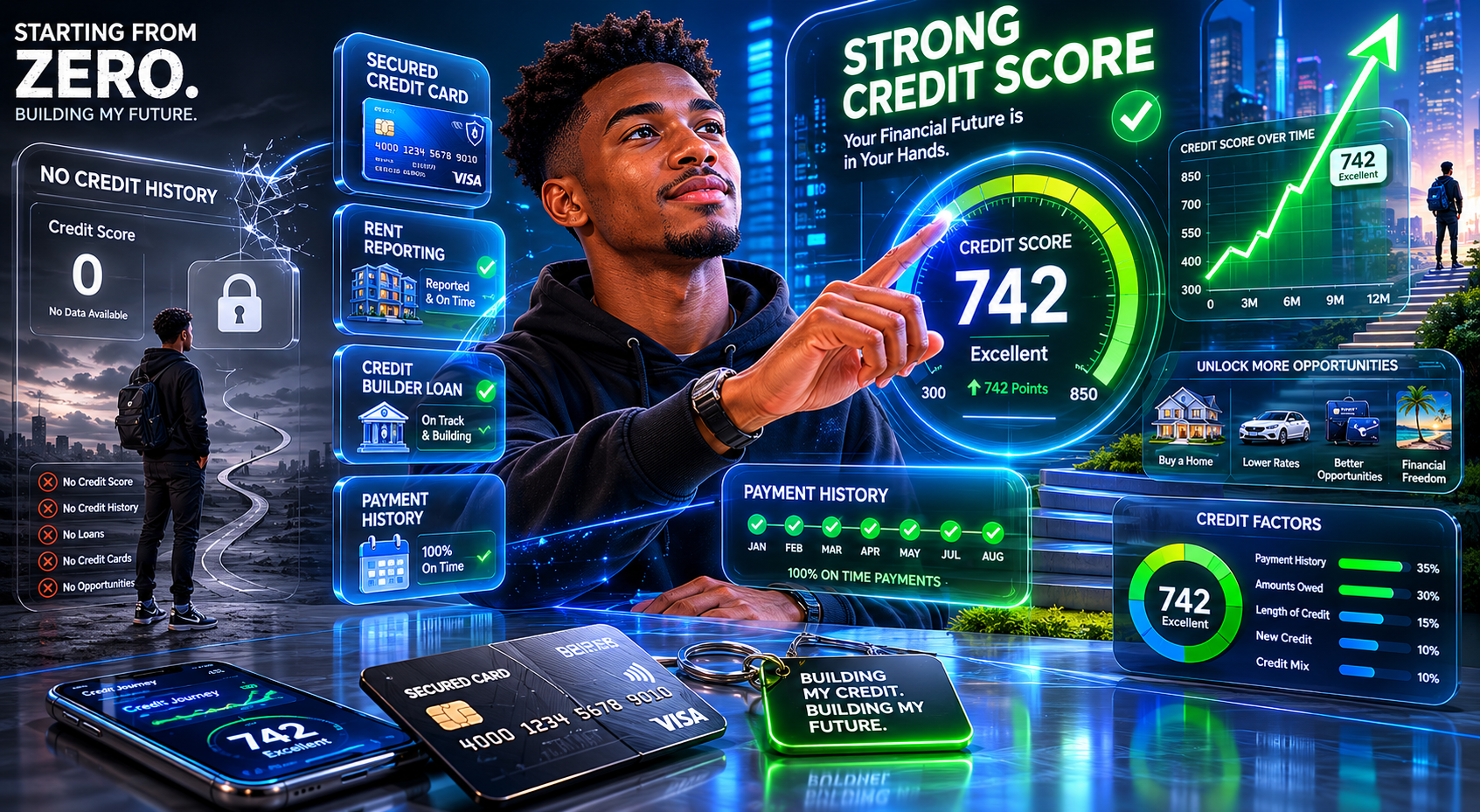
Starting with no credit history can feel frustrating. You may need credit to get approved for a credit card, rent an apartment, finance a car, or even qualify for certain loans—but without any credit history, many lenders hesitate to trust you.
That leaves many people asking:
👉 “How do I build credit when I have none?”
The good news is:
Yes, you can absolutely learn how to build credit with no credit history—even if you’re starting completely from scratch.
Building credit doesn’t happen overnight, but there are several beginner-friendly ways to establish credit safely and start creating a positive financial track record. Methods like secured credit cards, credit builder loans, rent reporting, and becoming an authorized user can all help you build credit even if you currently have no credit score at all.
In this guide, you’ll learn:
- How to build credit with no credit history
- How to build credit from zero
- How to build credit without a credit card
- What builds credit the quickest
- How to get a credit card with no credit history
- The best beginner strategies for establishing strong credit safely
Whether you’re a student, young adult, immigrant, or simply someone who has never used credit before, this guide will walk you through the smartest ways to start building credit step by step—even if you’re starting with absolutely nothing.
How to Build Credit With No Credit History?
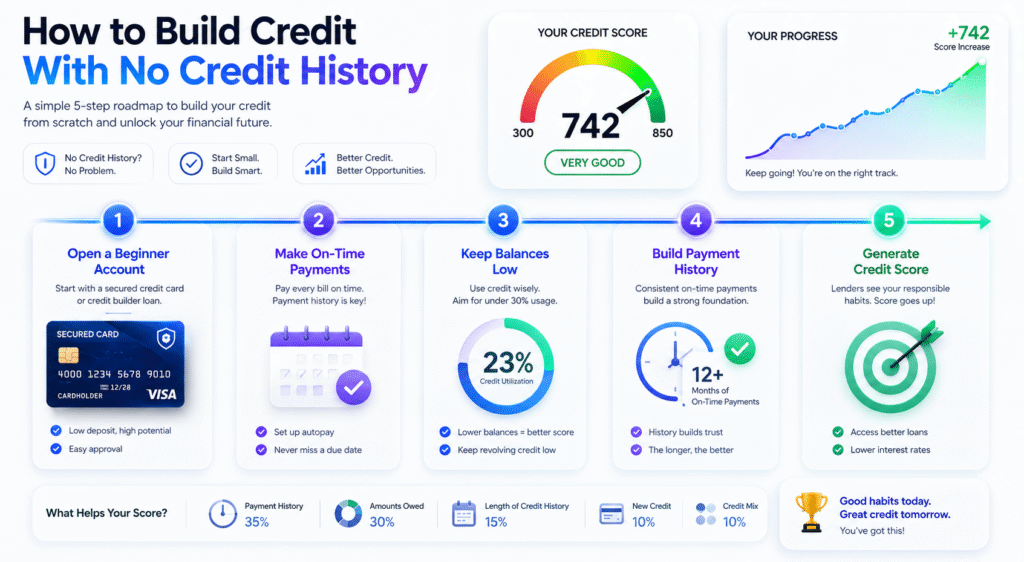
Yes — you can absolutely build credit even if you have no credit history at all.
Everyone starts with no credit at some point. Credit scores are not automatic; they are created over time as lenders and financial institutions begin reporting your financial activity to the major credit bureaus.
That means if you currently have:
- no credit score
- no credit cards
- no loans
- no borrowing history
You are not “behind” — you’re simply starting from zero.
The key is learning how to establish credit safely and consistently.
🧠 What Does “No Credit History” Actually Mean?
Having no credit history usually means the major credit bureaus don’t yet have enough information to generate a credit score for you.
This can happen if:
- You’ve never used a credit card
- You’ve never taken out a loan
- You’ve never had accounts reported to credit bureaus
- You’re a student or young adult
- You recently moved to the United States
- You’ve always paid with cash or debit cards
👉 No credit history is different from having bad credit.
If you have no history, you haven’t damaged your credit—you simply haven’t built it yet.
🧠 How Is Credit Built From Scratch?
Credit is built when financial activity is reported to the credit bureaus over time.
This usually includes things like:
- credit card payments
- loan payments
- rent reporting
- credit builder loans
- authorized user activity
As positive payment history builds up, the credit bureaus gradually generate a credit profile and eventually calculate your credit score.
🧠 How Long Does It Take to Build Credit?
Building credit from scratch takes time and consistency.
In many cases, it may take:
- around 3–6 months to generate an initial credit score
- longer to build a strong credit history
The speed depends on:
- payment history
- account activity
- credit utilization
- the type of accounts you open
👉 Consistent on-time payments are one of the most important factors.
🧠 Is It Hard to Get Approved With No Credit?
It can be more difficult because lenders have no borrowing history to evaluate yet.
Without a credit history, lenders may not know:
- how reliably you repay debt
- How do you manage credit
- How risky is lending to you
That’s why beginner-friendly tools like:
- secured credit cards
- credit builder loans
- authorized user accounts
exist to help people establish credit safely.
🧠 Can You Build Credit Without a Credit Card?
Yes.
Although credit cards are one of the most common ways to build credit, they are not the only option.
You can also build credit through:
- rent reporting services
- credit builder loans
- utility payment reporting
- authorized user accounts
👉 We’ll cover these methods in detail later in this guide.
Why Building Credit Matters
If you have no credit history, it may seem like building credit isn’t important yet. But in reality, your credit history can affect many parts of your financial life long before you realize it.
A strong credit profile can make it easier to:
- qualify for credit cards
- Get approved for loans
- rent an apartment
- finance a car
- access to lower interest rates
- qualify for better financial opportunities
Without a credit history, lenders and companies may have difficulty determining how financially reliable you are.
That’s why learning how to build credit with no credit history early can be extremely valuable.
🧠 Why Lenders Care About Credit History
Lenders use credit history to evaluate financial risk.
They want to understand:
- whether you make payments on time
- How responsibly you manage debt
- How much credit do you use
- How long have you handled credit accounts
If you have no credit history, lenders don’t yet have enough information to evaluate your borrowing behavior.
👉 This is why getting approved for credit with no credit history can sometimes feel difficult.
🧠 No Credit Can Limit Financial Opportunities
Many people assume credit scores only matter when applying for loans, but credit can affect much more than borrowing money.
In some cases, your credit history may influence:
- apartment applications
- cellphone financing
- insurance pricing
- utility deposits
- certain employment screenings
Even if you currently don’t plan to borrow money, establishing credit early can help create more financial flexibility later.
🧠 Good Credit Can Save You Money
Strong credit may help you qualify for:
- lower interest rates
- better credit card offers
- higher approval odds
- reduced deposits and fees
Over time, this can potentially save thousands of dollars in borrowing costs.
👉 That’s one reason many people try to start building credit from scratch as early as possible.
🧠 Building Credit Is About Trust
At its core, credit history is really about financial trust.
When you consistently:
- make payments on time
- keep balances low
- manage accounts responsibly
You gradually show lenders that you can handle credit safely.
Over time, that trust helps strengthen your credit score and improve your financial opportunities.
🧠 Why Starting Early Helps
One important factor in credit scoring is:
👉 credit age
The longer you responsibly manage accounts, the stronger your credit history can become over time.
That’s why many financial experts recommend learning how to establish credit with no credit history early rather than waiting until you urgently need financing later.
🧠 Building Credit Doesn’t Mean Going Into Debt
Many beginners worry that building credit means carrying large amounts of debt.
That’s not true.
You can build strong credit by:
- making small purchases
- paying balances on time
- keeping utilization low
- using beginner-friendly credit tools responsibly
👉 Responsible usage matters much more than spending heavily.
How Credit Scores Work When You Have No Credit
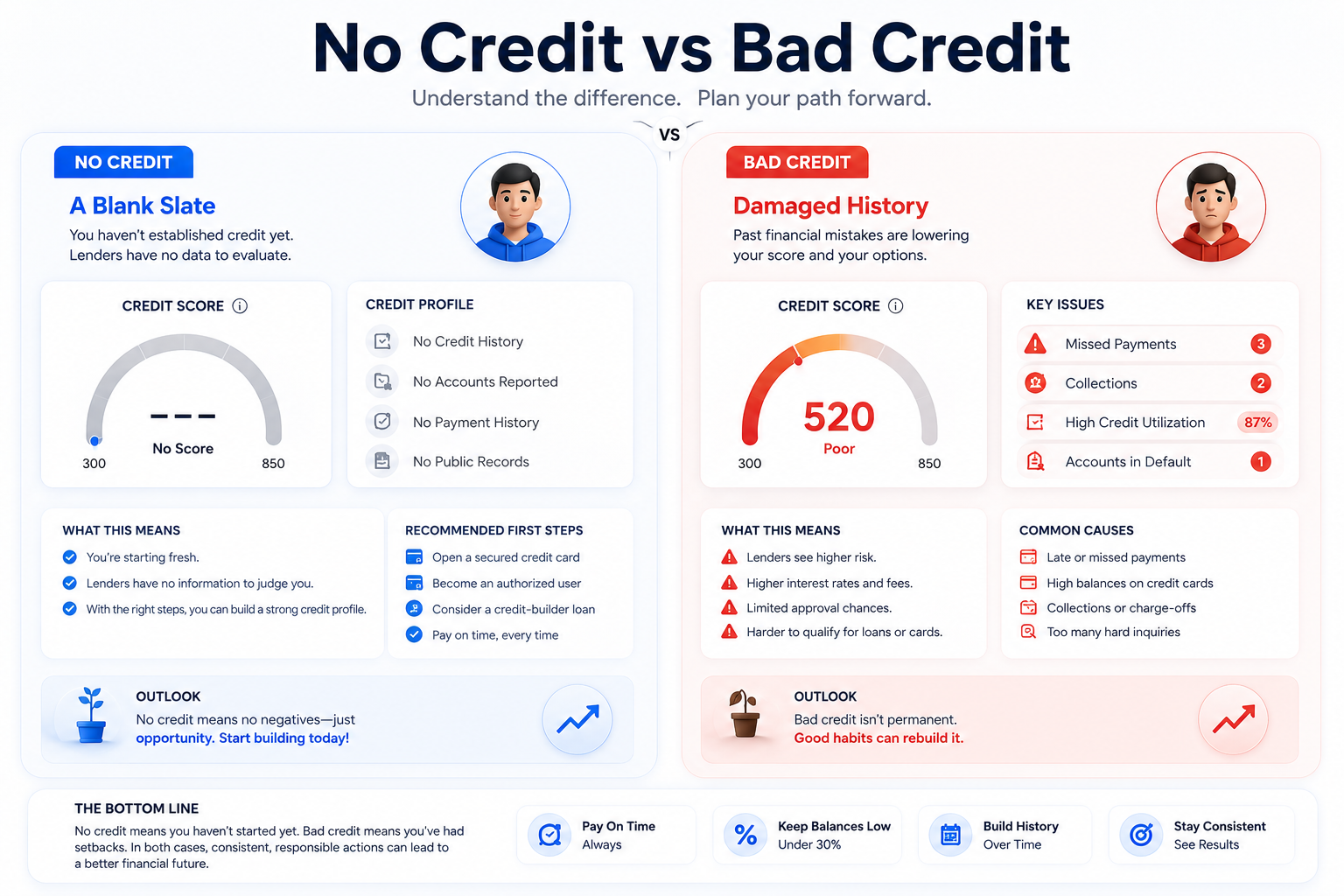
One of the biggest misconceptions beginners have is that “no credit” means “bad credit.”
But those are not the same thing.
If you have no credit history, it usually means the credit bureaus simply don’t have enough financial information to calculate a credit score for you yet.
In other words:
👉 You haven’t damaged your credit—you just haven’t built it yet.
That’s why learning how to build credit with no credit history is all about creating positive financial activity that can be reported over time.
🧠 How Credit Scores Are Created
Credit scores are generated using information from your credit report.
When lenders and financial institutions report activity to the major credit bureaus, that data helps create your credit profile.
This information may include:
- payment history
- credit card balances
- loans
- account age
- credit utilization
- new credit activity
As enough information builds up, credit scoring models like FICO and VantageScore can eventually calculate your credit score.
🧠 Why You May Not Have a Credit Score Yet
You may not have a credit score if:
- You’ve never opened a credit account
- You’ve never used a loan or a credit card
- Your accounts are too new
- There hasn’t been enough reported activity yet
In many cases, it can take several months of reported activity before a score is generated.
👉 This is very common for people trying to build credit from scratch.
🧠 No Credit vs Bad Credit
This is one of the most important things beginners need to understand.
✅ No Credit
Means:
- little or no borrowing history
- not enough information for scoring models
- limited financial data
⚠️ Bad Credit
Means:
- missed payments
- collections
- high debt
- negative financial history
👉 No credit is usually much easier to improve than bad credit because there’s no damaged history to repair.
🧠 What Factors Eventually Affect Your Credit Score?
Once your credit history starts developing, your score may be influenced by factors like:
🔹 Payment History
Making payments on time consistently is one of the most important factors.
🔹 Credit Utilization
This refers to how much of your available credit you’re using. Lower utilization is generally healthier for your score.
🔹 Length of Credit History
Older accounts help strengthen your credit profile over time.
🔹 New Credit Applications
Applying for too many accounts quickly can create hard inquiries and affect your score.
🔹 Credit Mix
Having different types of accounts, like credit cards and loans, may help build a stronger profile over time.
🧠 Why Consistency Matters More Than Speed
Many beginners search for:
- How to build credit fast with no credit
- What builds credit the quickest
But in reality, strong credit is usually built through:
- consistent payments
- responsible account management
- low utilization
- patience over time
👉 Healthy financial habits matter more than shortcuts.
🧠 How Your First Credit Score Is Generated
In many cases, once you’ve had enough reported activity for several months, the credit bureaus can finally generate your first score.
This initial score is based on:
- account behavior
- payment consistency
- utilization patterns
- reported financial activity
That’s why beginner-friendly tools like secured credit cards and credit builder loans can be useful starting points.
11 Best Ways to Build Credit With No Credit History
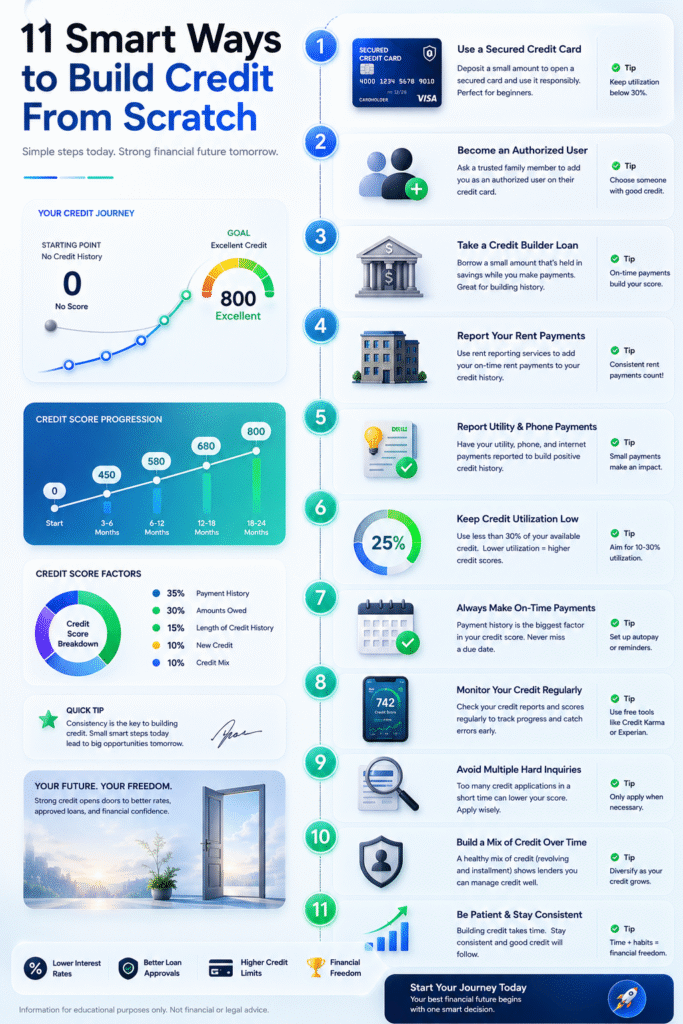
If you’re starting with no credit history, the good news is that there are several beginner-friendly ways to begin building credit safely. The key is creating positive financial activity that gets reported to the major credit bureaus over time.
Here are some of the smartest ways to build credit from scratch—even if you currently have no credit score at all.
🟢 1. Get a Secured Credit Card
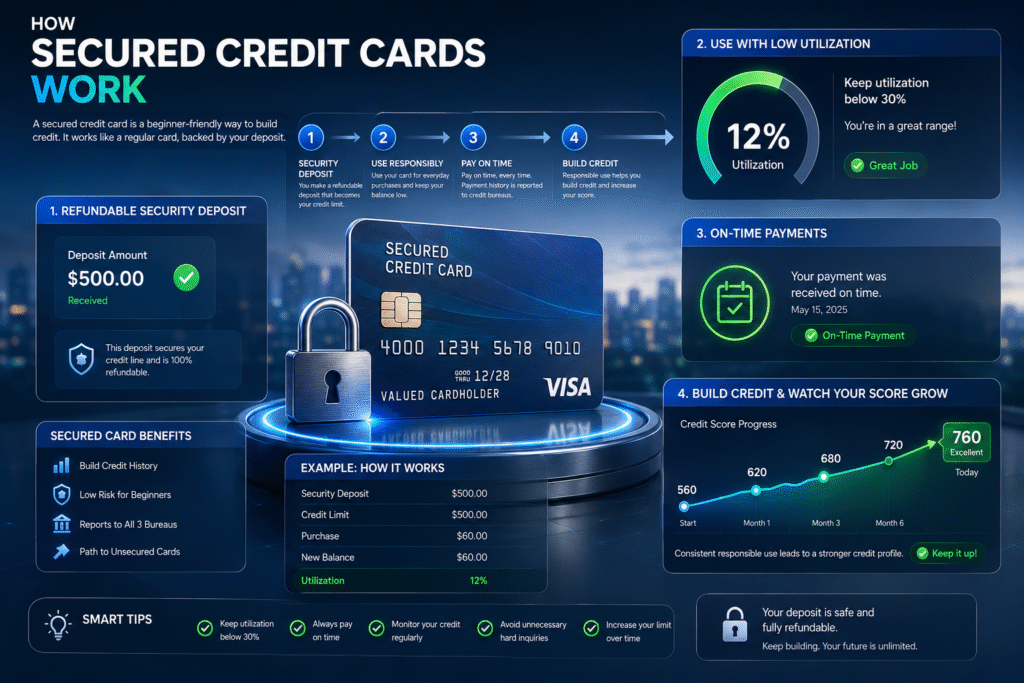
One of the most common ways to build credit with no credit history is by using a secured credit card.
A secured credit card usually requires a refundable security deposit, which acts as collateral for the account. Because the lender takes on less risk, secured cards are often easier to qualify for when you have no credit.
Using a secured card responsibly can help you:
- establish payment history
- build your credit profile
- Generate your first credit score
👉 To build credit effectively:
- keep balances low
- make payments on time
- Avoid maxing out the card
This is one of the fastest and safest ways to start building credit from zero.
🟢 2. Become an Authorized User
Another beginner-friendly strategy is becoming an authorized user on someone else’s credit card account.
This usually means:
- A trusted family member or partner adds you to their account
- Their positive payment history may appear on your credit report
If the primary account holder:
- pays on time
- keeps balances low
- manages the account responsibly
It may help you begin establishing a credit history.
👉 This can be helpful for people trying to build credit with no credit score or no borrowing history.
🟢 3. Use a Credit Builder Loan
A credit builder loan is specifically designed for people who are trying to establish credit from scratch.
Unlike traditional loans:
- The money is usually held in a secure account first
- You make monthly payments over time
- Payment activity gets reported to credit bureaus
Once the loan is repaid, you typically receive the funds.
Credit builder loans may help:
- establish payment history
- diversify your credit profile
- build credit safely over time
🟢 4. Report Your Rent Payments
Rent payments can sometimes help build credit if they are reported to the credit bureaus.
Some rent reporting services allow landlords or tenants to report:
- on-time rent payments
- consistent housing payments
This can help create positive payment history, especially for beginners who don’t yet have traditional credit accounts.
👉 This is also one of the best ways to build credit without a credit card.
🟢 5. Report Utility and Phone Payments
Certain services allow utility bills and phone payments to be reported to credit bureaus.
This may include:
- electricity bills
- streaming services
- mobile phone payments
- internet bills
While not all utility activity gets reported automatically, some reporting tools can help add positive payment data to your credit history.
🟢 6. Open a Student Credit Card
If you’re a student, beginner-friendly student credit cards may help you establish credit earlier.
These cards are often designed for:
- young adults
- first-time borrowers
- people with limited credit history
Responsible use can help you:
- Start building a payment history
- learn credit management habits
- Establish your first score over time
🟢 7. Keep Your Credit Utilization Low
Credit utilization refers to how much of your available credit you’re using.
For example:
- a $100 balance on a $1,000 limit = 10% utilization
Lower utilization is generally healthier for your credit score.
Many experts recommend keeping utilization below 30%, though lower is often better.
👉 Maxing out cards too early can hurt your score even if you pay on time.
🟢 8. Make Every Payment On Time
Payment history is one of the most important factors affecting your credit score.
Even one missed payment can negatively impact a young credit profile.
That’s why it’s extremely important to:
- pay on time consistently
- avoid late payments
- Set reminders or autopay if needed
👉 Responsible payment habits help build lender trust over time.
🟢 9. Avoid Applying for Too Many Accounts Quickly
Many beginners make the mistake of applying for multiple credit cards at once.
Each application may create a:
👉 hard inquiry
Too many hard inquiries within a short period can affect your score and make lenders cautious.
Instead:
- apply strategically
- Focus on beginner-friendly accounts
- avoid unnecessary applications
🟢 10. Monitor Your Credit Score Regularly
Monitoring your credit helps you:
- track progress
- identify errors
- Detect fraud early
- understand score changes
Using tools like:
- Experian
- Credit Karma
- your bank’s credit dashboard
can help you stay aware of your financial progress without hurting your score.
🟢 11. Be Patient and Consistent
Building strong credit takes time.
Many people are searching:
- How to build credit fast with no credit
- What builds credit the quickest
Hope for instant results, but healthy credit growth usually comes from:
- consistency
- responsible usage
- on-time payments
- long-term habits
👉 Strong credit is built gradually—not overnight.
How to Build Credit Without a Credit Card
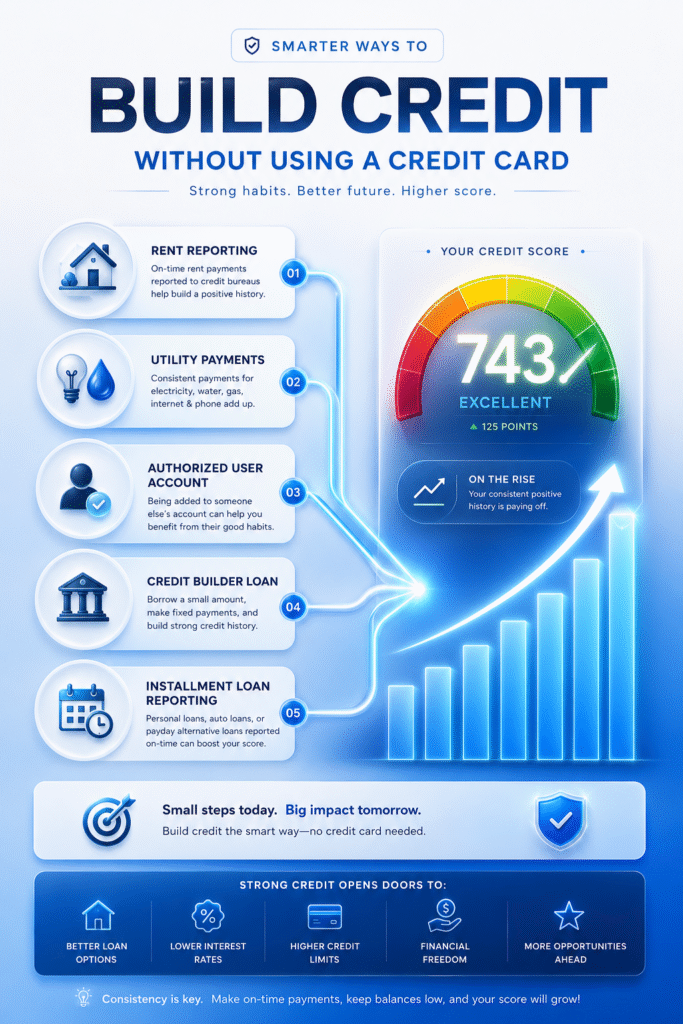
Many people assume the only way to build credit is by using credit cards. But that’s not always true.
If you don’t want a credit card—or can’t qualify for one yet—there are still several ways to build credit with no credit history.
In fact, some beginners prefer building credit without credit cards because it can feel:
- less risky
- easier to manage
- less tempting for overspending
The key is finding financial activity that can still be reported to the credit bureaus.
🧠 Can You Build Credit Without a Credit Card?
Yes.
You can absolutely build credit without a credit card if your financial activity is being reported properly.
Some of the most common alternatives include:
- credit builder loans
- rent reporting services
- utility payment reporting
- authorized user accounts
- certain installment loans
👉 These methods can help establish a positive payment history even if you never use a traditional credit card yourself.
🟢 1. Use a Credit Builder Loan
A credit builder loan is one of the most popular ways to establish credit without using a credit card.
With this type of loan:
- The lender usually holds the money in a secured account
- You make monthly payments over time
- Payment activity gets reported to the credit bureaus
This helps create:
✅ payment history
✅ account activity
✅ credit-building data
Once the loan is fully repaid, the funds are released to you.
👉 This is often a beginner-friendly option for people trying to build credit from scratch.
🟢 2. Report Your Rent Payments
If you regularly pay rent on time, rent reporting services may help turn those payments into positive credit activity.
Some services can report:
- monthly rent payments
- consistent housing history
- payment reliability
This may help people:
- establish a credit history
- build payment consistency
- strengthen their credit profile over time
👉 Rent reporting is becoming increasingly popular among people building credit without credit cards.
🟢 3. Report Utility and Phone Payments
Certain reporting services allow:
- utility bills
- streaming subscriptions
- mobile phone payments
- internet bills
to contribute to your credit profile.
While not all payments are automatically reported, some services can add these positive payment records to your credit history.
This may help beginners establish credit activity without relying on traditional credit cards.
🟢 4. Become an Authorized User
Even if you don’t use your own credit card, becoming an authorized user on someone else’s account may still help you build credit.
If the primary cardholder:
- pays on time
- maintains low balances
- manages the account responsibly
Their positive account history may appear on your credit report.
👉 This can help establish credit history even if you never personally apply for a credit card.
🟢 5. Use Certain Installment Loans Responsibly
Some installment loans may help build credit if payments are reported consistently.
Examples may include:
- small personal loans
- auto loans
- student loans
- credit builder loans
The important factor is:
👉 making every payment on time consistently.
🧠 Why Some People Prefer Building Credit Without Credit Cards
Some beginners avoid credit cards because they worry about:
- overspending
- debt accumulation
- missed payments
- high interest rates
Building credit without a credit card may feel more manageable and less stressful for some people.
However, whether you use a card or not, the most important factors are:
- payment consistency
- responsible account management
- long-term habits
🧠 What Builds Credit Faster Without a Credit Card?
Among non-credit-card methods, the strategies that often help most include:
- credit builder loans
- rent reporting
- authorized user accounts
- consistent installment payments
These methods help create the positive payment history needed to establish a stronger credit profile over time.
🧠 Can You Get a Credit Score Without a Credit Card?
Yes.
You do not necessarily need a credit card to generate a credit score.
If enough financial activity is reported through:
- loans
- rent payments
- authorized user accounts
- utility reporting services
The credit bureaus may still be able to generate a credit profile and score.
How Long Does It Take to Build Credit From Scratch?
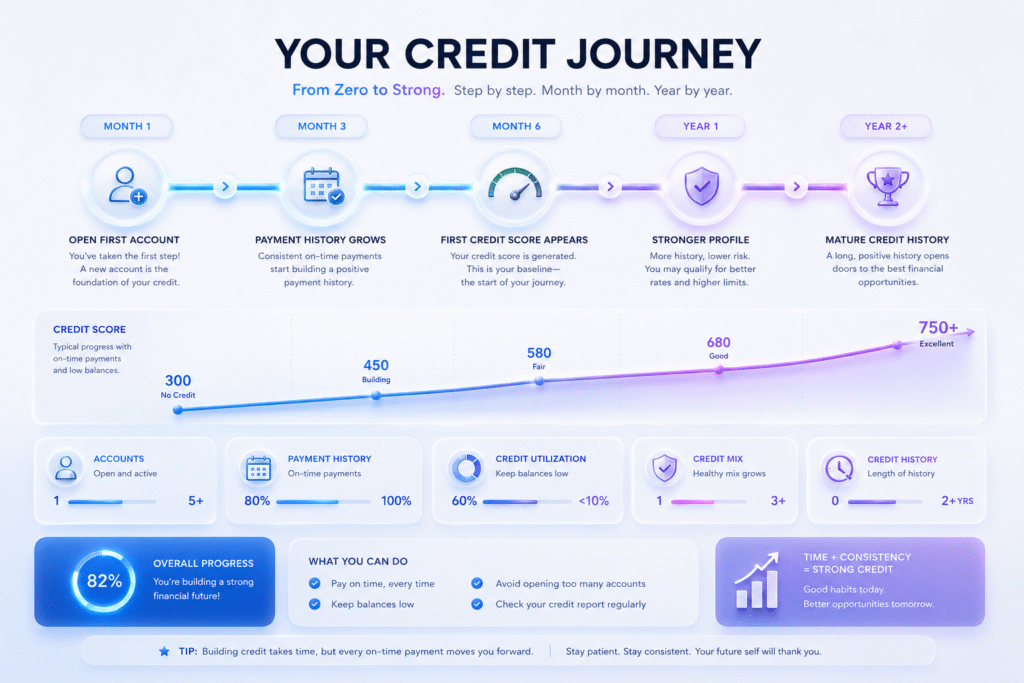
Building credit from scratch takes time, but many people can generate their first credit score within a few months if they begin using credit-building tools responsibly.
In many cases:
👉 It may take around 3 to 6 months of reported financial activity before a credit score is created.
However, building strong credit—not just any credit score—usually takes much longer.
The timeline depends on factors like:
- payment history
- credit utilization
- account age
- the types of accounts you use
- How consistently is activity reported
🧠 Why Building Credit Takes Time
Credit scores are designed to measure long-term financial behavior.
Lenders want to see:
- consistent payments
- responsible account management
- healthy borrowing habits
- stable credit activity over time
Because of this, credit scoring models usually need several months of reported activity before they can generate a reliable score.
👉 Building strong credit is generally a gradual process—not an overnight transformation.
🧠 How Soon Can You Get Your First Credit Score?
If you open your first reported credit account and use it responsibly, you may receive your first score in:
- approximately 3–6 months
This often applies to:
- secured credit cards
- credit builder loans
- authorized user accounts
- reported installment loans
During this period, the credit bureaus collect enough information to begin calculating your credit profile.
🧠 What Helps Build Credit Faster?
✅ Make Every Payment On Time
Payment history is one of the biggest factors affecting your credit score. Even one missed payment can slow progress significantly.
✅ Keep Credit Utilization Low
Using only a small portion of your available credit generally looks healthier to lenders. Many experts recommend keeping utilization below 30%, though lower is often better.
✅ Use Beginner-Friendly Credit Tools
Accounts like:
- secured credit cards
- credit builder loans
- authorized user accounts
are specifically designed to help people establish credit safely.
✅ Monitor Your Credit Progress
Regularly checking your credit report and score can help you:
- track improvements
- identify errors
- understand score changes
🧠 What Builds Credit the Quickest?
Many beginners search for:
- What builds credit the quickest
- How to build credit fast with no credit history
While there are no instant solutions, some methods often help people establish credit more efficiently, including:
- secured credit cards
- Becoming an authorized user
- credit builder loans
- maintaining low utilization
- making consistent on-time payments
👉 Consistency matters more than speed.
🧠 What Can Slow Down Credit Building?
Certain mistakes may delay progress, including:
- missed payments
- maxing out cards
- applying for too many accounts
- high credit utilization
- inconsistent payment history
Avoiding these problems early can help protect your growing credit profile.
🧠 Can You Build Excellent Credit Quickly?
Building an initial score may happen within months, but building excellent credit usually takes years of responsible behavior.
Strong credit history is built through:
- long-term consistency
- healthy financial habits
- responsible account management
👉 Credit age becomes increasingly important over time.
🧠 Why Patience Is Important
Many beginners become discouraged because they expect immediate results.
But even small positive steps:
- making payments on time
- using low balances
- keeping accounts active responsibly
can gradually strengthen your credit profile over time.
Everyone with strong credit today once started with no credit history at all.
Common Mistakes People Make When Building Credit
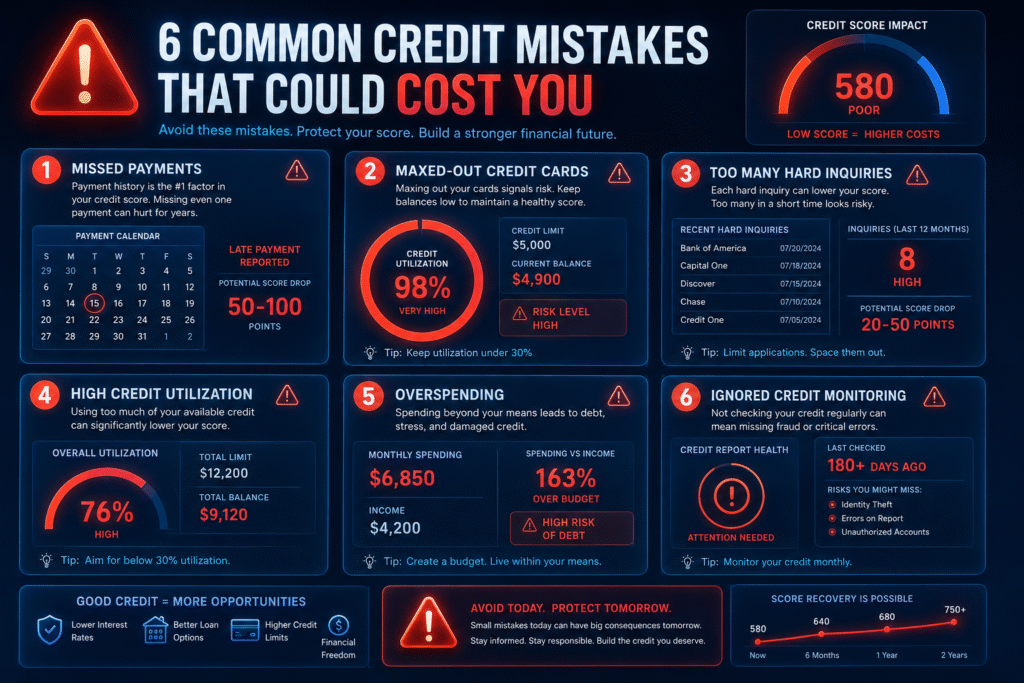
When people first start building credit, it’s easy to make mistakes that can slow progress or damage a new credit profile. Many beginners focus only on getting approved for accounts without understanding how credit habits actually affect their score over time.
The good news is:
👉 Most beginner credit mistakes are avoidable once you understand how credit works.
Here are some of the most common mistakes people make when building credit from scratch.
🟢 1. Missing Payments
One of the biggest mistakes beginners make is missing payments.
Payment history is one of the most important factors affecting your credit score. Even one late payment can negatively affect a young credit profile.
Missed payments may:
- Lower your score
- stay on your credit report for years
- make lenders see you as a higher risk
👉 Setting reminders or using autopay can help prevent missed payments.
🟢 2. Maxing Out Credit Cards
Many people assume that using more credit helps build credit faster.
That’s usually not true.
Using too much of your available credit increases your:
👉 credit utilization ratio
High utilization may signal financial stress and can hurt your score—even if you pay on time.
Experts often recommend keeping utilization below 30%, though lower is generally better.
🟢 3. Applying for Too Many Accounts Too Quickly
When beginners get rejected for credit, they sometimes apply for several accounts at once.
This can create:
👉 multiple hard inquiries
Too many hard inquiries within a short period may:
- Lower your score temporarily
- make lenders cautious
- hurt approval odds
Instead, focus on:
- beginner-friendly accounts
- strategic applications
- responsible account management
🟢 4. Closing Old Accounts Too Early
Some people close accounts quickly after opening them, especially secured cards.
But older accounts may help strengthen your:
- credit age
- account history
- overall credit profile
Closing accounts too early can sometimes reduce the positive history helping your score.
🟢 5. Ignoring Credit Monitoring
Many beginners avoid checking their credit because they fear it could hurt their score.
But monitoring your own score through trusted services usually creates:
👉 soft inquiries
Soft inquiries generally do not lower your score.
Regular monitoring helps you:
- track progress
- identify errors
- Detect fraud early
- understand financial habits better
🟢 6. Carrying Large Balances Unnecessarily
Another common myth is:
“You need to carry debt to build credit.”
That’s not necessarily true.
You can build strong credit by:
- making small purchases
- paying balances responsibly
- avoiding unnecessary debt
👉 Responsible usage matters more than carrying large balances.
🟢 7. Expecting Instant Results
Many people search:
- How to build credit fast with no credit
- What builds credit the quickest
hoping for immediate score increases.
But strong credit usually takes:
- patience
- consistency
- healthy financial habits over time
Building excellent credit is generally a long-term process.
🟢 8. Ignoring Credit Report Errors
Mistakes on your credit report can sometimes:
- hurt your score
- create approval issues
- delay credit-building progress
That’s why reviewing your report regularly is important, especially when you’re building credit from scratch.
🟢 9. Overspending Just to Build Credit
You do not need to spend heavily to build strong credit.
Many beginners are confused:
- using credit responsibly
with - spending more money
Small purchases paid on time can still help build a positive payment history.
👉 Responsible behavior matters far more than large spending.
🧠 Why Beginner Credit Habits Matter So Much
When you first start building credit, your profile is still very new.
That means:
- Mistakes may affect your score more noticeably
- Positive habits can also help more quickly
Starting with healthy financial habits early can make it easier to build stronger credit over time.
Can You Build Credit With No Money?
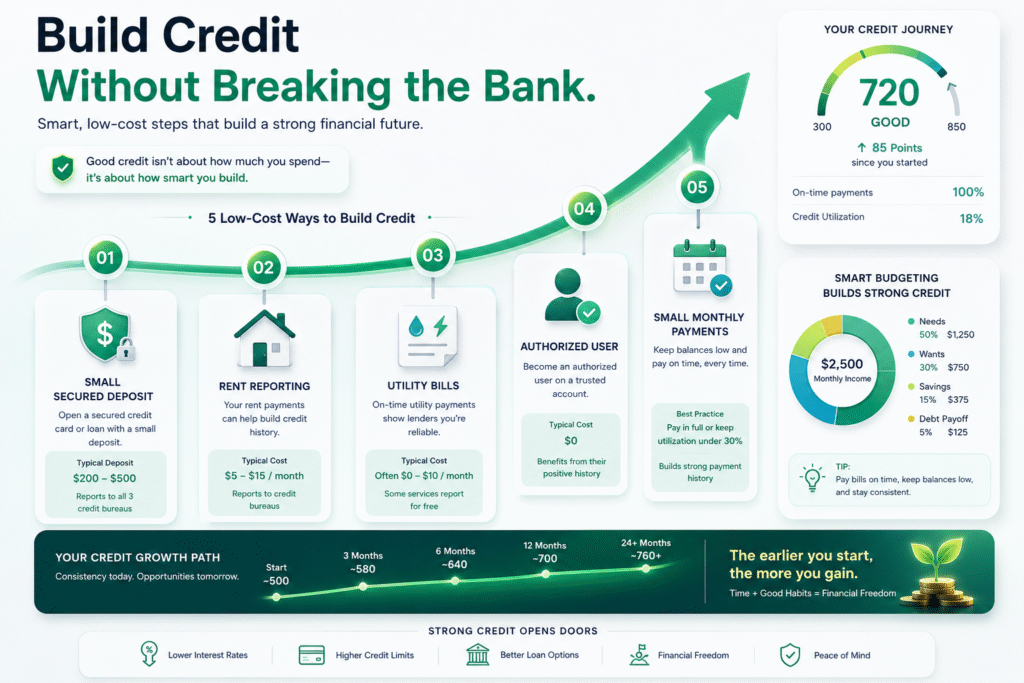
Yes — it is possible to start building credit even if you don’t have a lot of money.
Many people assume building credit requires:
- large purchases
- expensive credit cards
- high income
- carrying debt
But in reality, building credit is usually more about:
👉 consistency and responsible financial behavior rather than spending large amounts of money.
Even small financial activities reported to the credit bureaus can help establish credit history over time.
🧠 Why Building Credit Doesn’t Require Big Spending
Credit scores are designed to measure how responsibly you manage financial obligations—not how much money you spend.
That means things like:
- making payments on time
- keeping balances low
- managing accounts responsibly
often matter more than expensive purchases.
👉 Small, consistent actions can still help you build credit from scratch.
🟢 Low-Cost Ways to Start Building Credit
Several beginner-friendly methods may help you establish a credit history without needing large amounts of money.
🟢 1. Become an Authorized User
One of the easiest low-cost ways to start building credit is becoming an authorized user on someone else’s credit card account.
If the primary account holder:
- pays on time
- keeps balances low
- manages the account responsibly
Their positive history may help strengthen your credit profile.
👉 This method may require little or no money from you directly.
🟢 2. Use Rent Reporting Services
If you already pay rent consistently, some rent reporting services may allow those payments to contribute toward your credit history.
Because you’re already paying rent anyway, this can sometimes help build credit without adding major new expenses.
🟢 3. Report Utility and Phone Payments
Certain reporting services may help add:
- utility bills
- mobile phone payments
- streaming services
- internet payments
to your credit profile.
This can help beginners establish a positive payment history using bills they already pay regularly.
🟢 4. Start With a Small Secured Credit Card Deposit
Some secured credit cards allow relatively small security deposits.
You do not necessarily need:
- large spending limits
- expensive purchases
- heavy usage
to begin building credit.
Making small purchases and paying them on time consistently may still help establish a positive history.
🟢 5. Use a Credit Builder Loan Carefully
Some credit builder loans are specifically designed for beginners with limited income or no credit history.
These loans are often structured to:
- help establish payment history
- Encourage small monthly payments
- build credit gradually over time
🧠 Can You Build Credit Without Going Into Debt?
Yes.
Many people mistakenly believe they need to carry debt to improve their credit score.
That’s not necessarily true.
You can often build healthy credit by:
- making small purchases
- paying balances on time
- keeping utilization low
- avoiding unnecessary debt
👉 Responsible account management matters much more than carrying large balances.
🧠 What Matters Most When Building Credit?
Whether you have a lot of money or very little, the habits that generally matter most include:
- paying on time consistently
- avoiding missed payments
- keeping balances manageable
- monitoring your credit responsibly
- being patient over time
👉 Healthy habits usually matter more than income level alone.
🧠 Why Starting Small Is Better Than Waiting
Some beginners delay building credit because they think they need:
- more money
- a higher salary
- larger savings
before getting started.
But starting early—even with small steps—can help you:
- establish a credit history sooner
- build account age earlier
- develop healthier financial habits over time
Frequently Asked Questions About Building Credit With No Credit History
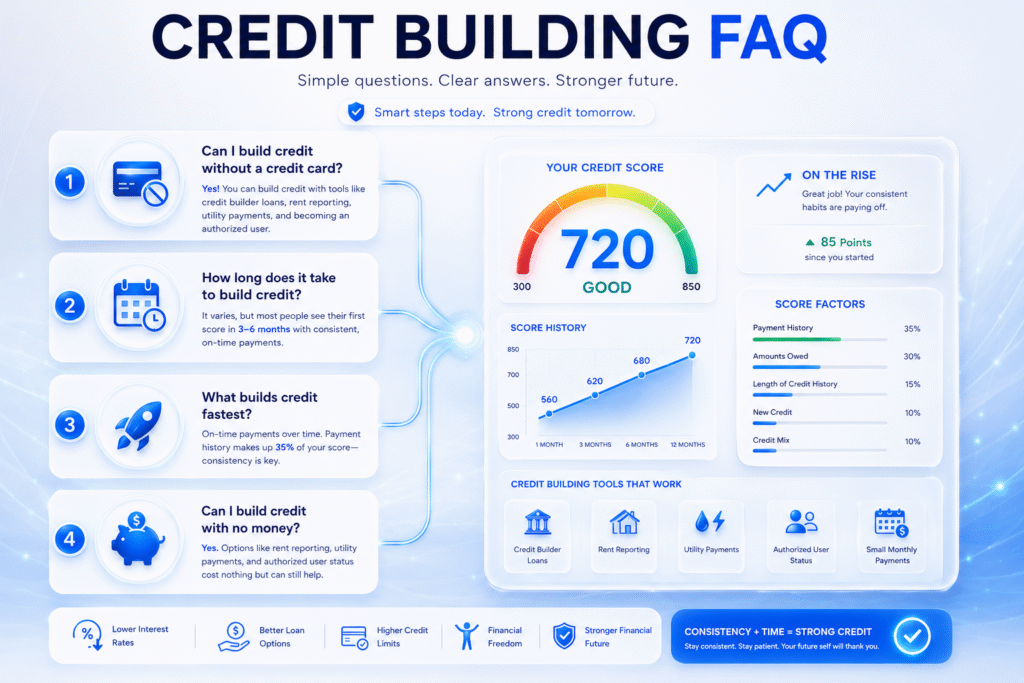
🔵 Can you build credit without a credit card?
Yes. You can build credit without a credit card by using alternative credit-building methods like credit builder loans, rent reporting services, utility payment reporting, installment loans, and authorized user accounts. As long as positive financial activity is reported to the credit bureaus consistently, it’s possible to establish a credit history without using a traditional credit card.
🔵 What is the fastest way to build credit with no credit history?
There is no instant way to build strong credit, but some methods may help you establish credit more quickly than others.
Common beginner-friendly strategies include:
- secured credit cards
- Becoming an authorized user
- credit builder loans
- keeping utilization low
- making every payment on time
In many cases, people may generate their first credit score within several months of reported activity.
🔵 How long does it take to build credit from scratch?
For many beginners, it may take approximately 3–6 months of reported financial activity before a credit score is generated. However, building a strong credit history usually takes much longer and depends on factors like payment consistency, account age, utilization, and responsible credit management over time.
🔵 Is no credit better than bad credit?
No credit means you simply haven’t established a borrowing history yet, while bad credit usually means there is negative financial history, such as missed payments, collections, or high debt.
Building credit from no credit is often easier than rebuilding damaged credit.
🔵 How do I get a credit card with no credit history?
Many beginners start with:
- secured credit cards
- student credit cards
- beginner-focused credit cards
These cards are often designed for people with limited or no credit history. Approval requirements may vary depending on the lender and your financial profile.
🔵 What builds credit the quickest?
Yes, in some cases.
Certain rent reporting services can report your on-time rent payments to the major credit bureaus. This may help establish positive payment history and strengthen your credit profile over time.
🔵 Do debit cards build credit?
Typically, no.
Most standard debit card activity is not reported to the major credit bureaus because debit cards use your own money rather than borrowed credit.
However, some financial products may offer credit-building features connected to debit-style accounts.
🔵 Can I build credit if I’ve never had a loan?
Yes.
You can still begin building credit through:
- secured credit cards
- authorized user accounts
- rent reporting
- utility reporting
- credit builder loans
You do not necessarily need a traditional loan history to start establishing credit.
Final Thoughts: Everyone Starts With No Credit at Some Point
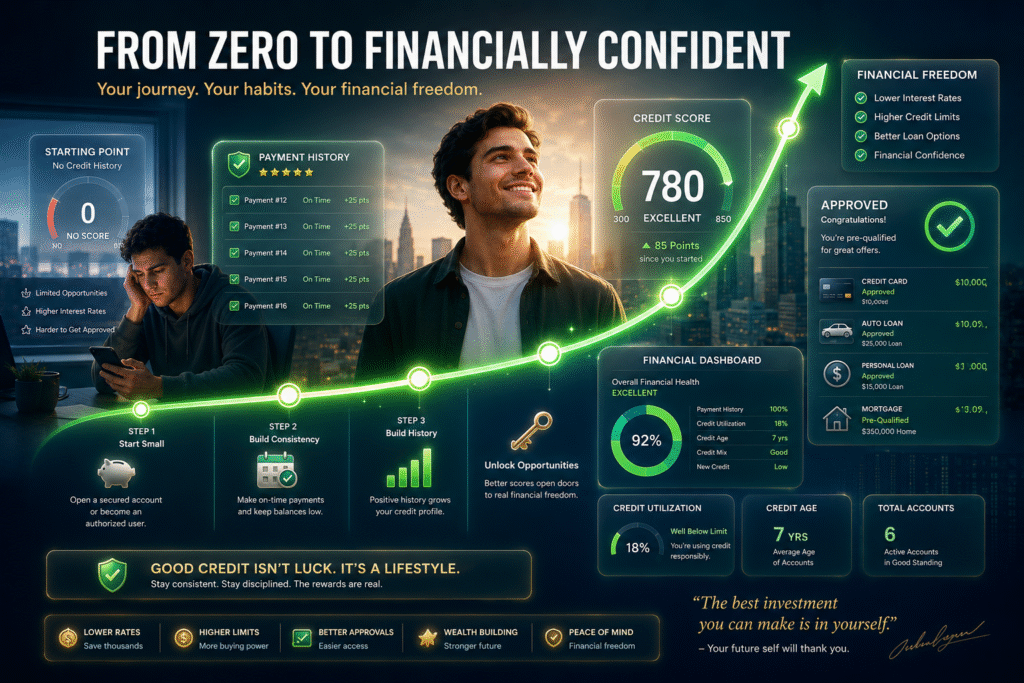
Building credit with no credit history can feel confusing and frustrating at first. Many beginners worry they’ll never qualify for loans, credit cards, or financial opportunities because they’re starting from zero.
But the truth is:
👉 Everyone with strong credit today once had no credit history, too.
The key is understanding how credit works and taking small, consistent steps to build positive financial habits over time.
Whether you choose:
- a secured credit card
- a credit builder loan
- rent reporting services
- authorized user accounts
- or other beginner-friendly methods
Responsible account management and on-time payments are usually the foundation of strong credit growth.
🧠 Building Credit Is a Process — Not an Overnight Fix
Many people search for:
- How to build credit fast with no credit
- What builds credit the quickest
hoping for immediate results.
But strong credit is typically built through:
- consistency
- patience
- low credit utilization
- responsible borrowing habits
- long-term financial discipline
Even small positive actions today can help strengthen your credit profile over time.
🧠 You Don’t Need Perfect Finances to Start
One of the biggest misconceptions about credit building is believing you need:
- a high income
- expensive purchases
- large credit limits
- Lots of money
before getting started.
In reality, many people successfully build credit from scratch using small, manageable financial steps and beginner-friendly credit tools.
👉 Starting early and staying consistent usually matters far more than spending heavily.
🧠 Focus on Healthy Financial Habits
As you continue building credit, remember to:
- make payments on time
- keep balances low
- avoid unnecessary applications
- monitor your credit responsibly
- stay patient with the process
These habits not only help improve your credit score but also create stronger long-term financial stability.
Leave a Reply