

Introduction
If you’ve ever wondered how credit scores work in USA or why your credit score changes, you’re not alone. For many beginners, understanding what a credit score is, how it’s calculated, and what affects it can feel confusing and overwhelming.
In simple terms, your credit score is a number that represents your financial reliability—it influences your ability to get a credit card, qualify for loans, and even determine the interest rates you’ll pay. But what is a good credit score? How is it calculated? And how can you check your credit score in the USA without hurting it?
In this beginner-friendly guide, we’ll break down how credit scores work, explain the credit score range, and show you the key factors that impact your score. By the end, you’ll have a clear understanding of how to manage your credit, avoid common mistakes, and make smarter financial decisions with confidence.
What Is a Credit Score?
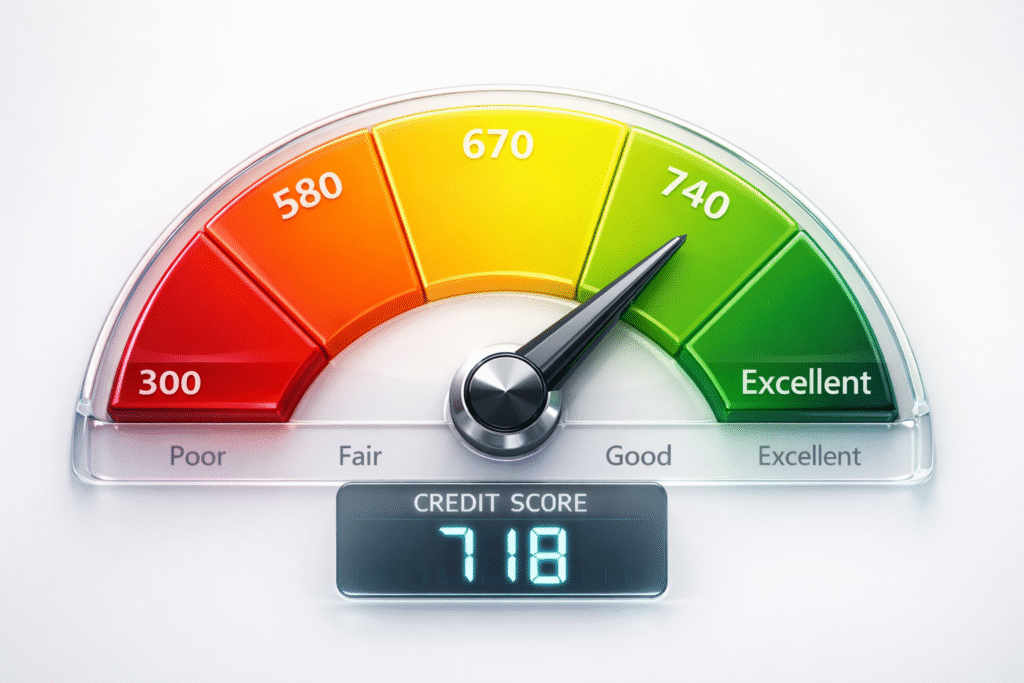
A credit score is a three-digit number that represents how reliable you are when it comes to borrowing and repaying money. In the USA, this score is used by lenders, banks, and credit card companies to decide whether you qualify for credit and what interest rates you’ll receive.
In simple terms, your credit score acts like a financial trust rating. The higher your score, the more trustworthy you appear to lenders. This means you’re more likely to get approved for a credit card, loan, or mortgage—and often at better interest rates.
Credit scores in the United States typically range from 300 to 850. This is known as the credit score range, and it helps categorize your financial health. A good credit score usually falls between 670 and 739, while higher scores indicate stronger creditworthiness.
Your credit score is calculated based on information in your credit report, which includes your borrowing and repayment history. Factors like payment history, credit utilization, and account age all play a role in determining your score.
Understanding what a credit score is is the first step toward managing it effectively. Once you know how it works, you can start making smarter financial decisions—whether that’s improving your score, applying for credit, or learning how to check your credit score in the USA without impacting it negatively.
How Credit Scores Work in the USA?
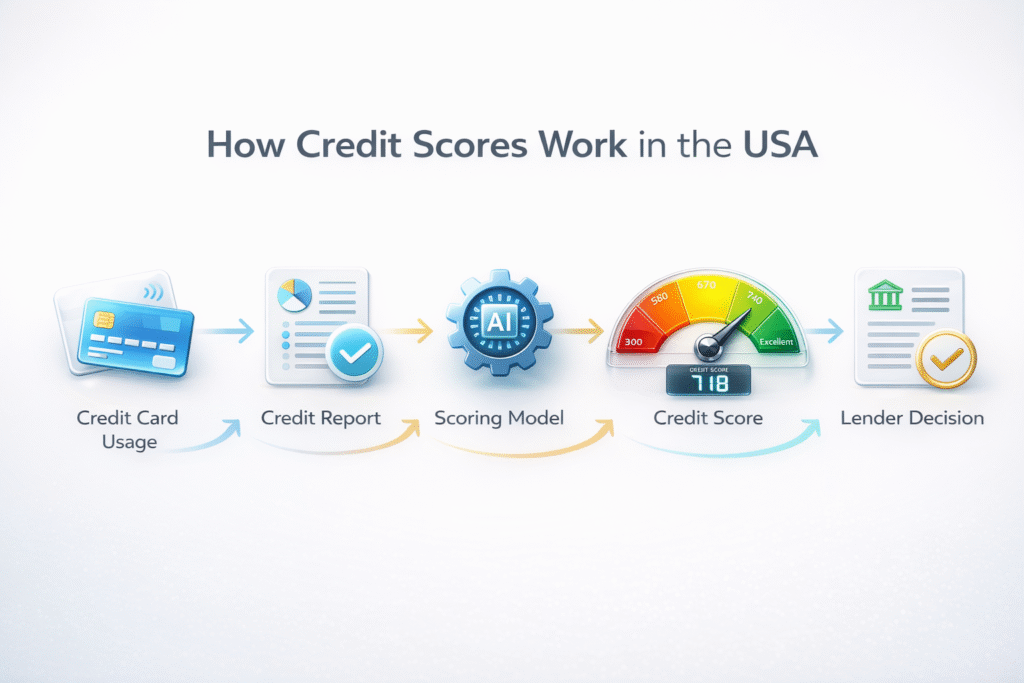
To understand how credit scores work in USA, you need to know that your score is not random—it’s calculated based on your financial behavior over time. Every time you use credit, make a payment, or apply for a new account, that activity is recorded and used to update your credit score.
In the United States, credit scores are primarily calculated using models like FICO and VantageScore. These models analyze the information in your credit report, which is maintained by the three major credit bureaus: Experian, Equifax, and TransUnion. Your credit report includes details about your credit cards, loans, payment history, and overall credit usage.
Here’s how the process works in simple terms:
🔹 1. Your Financial Activity Is Recorded
Whenever you use a credit card, take out a loan, or make a payment, that activity is reported to the credit bureaus. This includes whether you pay on time, how much of your credit you’re using, and how often you apply for new credit.
🔹 2. Credit Bureaus Maintain Your Credit Report
All this information is stored in your credit report, which acts as a detailed record of your borrowing history. Lenders rely on this report when performing a credit check to evaluate your financial reliability.
🔹 3. Scoring Models: Calculate Your Credit Score
Scoring models like FICO use your credit report data to calculate your credit score. They look at key factors such as your payment history, credit utilization, length of credit history, credit mix, and new credit inquiries.
🔹 4. Lenders Use Your Score to Make Decisions
When you apply for a credit card or loan, lenders review your credit score to decide:
- Whether to approve your application
- How much credit to offer
- What interest rate to charge
A higher score increases your chances of approval and helps you qualify for better financial terms.
How Credit Score Is Calculated
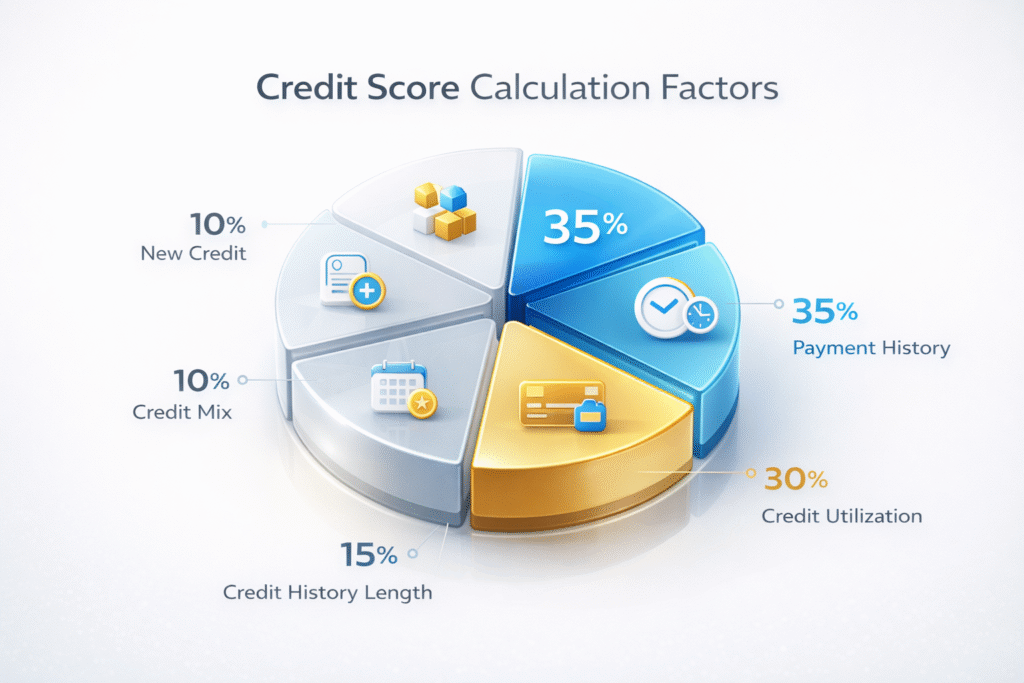
Your credit score is calculated based on specific factors that reflect how you manage and use credit over time. In the USA, scoring models like FICO use data from your credit report to evaluate your financial behavior and assign you a score within the standard credit score range (300 to 850).
Instead of relying on one single factor, your credit score is calculated using a combination of key elements—each with a different level of importance.
Here’s a simple breakdown of the main factors that affect your credit score:
🔹 1. Payment History (≈ 35%)
This is the most important factor in your credit score.
It shows whether you pay your bills on time, including:
- Credit cards
- Loans
- Other credit accounts
Late or missed payments can significantly lower your score, while consistent on-time payments help build a good credit score over time.
🔹 2. Credit Utilization (≈ 30%)
This refers to how much of your available credit you’re using.
For example:
- If your credit limit is $1,000 and you’re using $800
👉 Your utilization is 80% (which is high)
Keeping your credit utilization below 30% is generally recommended for maintaining a healthy credit score.
🔹 3. Length of Credit History (≈ 15%)
This factor looks at how long you’ve been using credit.
It includes:
- Age of your oldest account
- Average age of all accounts
A longer credit history shows stability and can positively impact your score.
🔹 4. Credit Mix (≈ 10%)
This refers to the variety of credit accounts you have, such as:
- Credit cards
- Installment loans (auto, student, personal loans)
Having a balanced mix of credit types can slightly improve your score.
🔹 5. New Credit (≈ 10%)
This includes:
- Recent credit applications
- Hard inquiries (credit checks when you apply for credit)
Applying for multiple credit accounts in a short period can lower your score temporarily.
Credit Score Range Explained
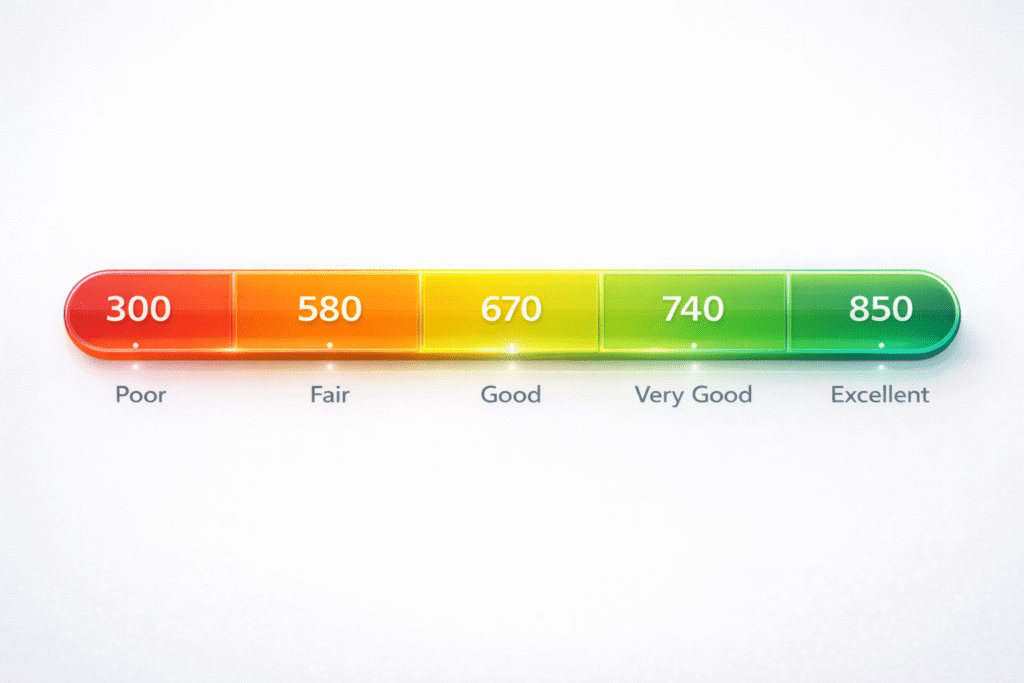
In the USA, credit scores typically fall within a range of 300 to 850. This range helps lenders quickly understand how risky or reliable you are as a borrower.
The higher your score, the better your chances of getting approved for credit cards, loans, and lower interest rates. A lower score, on the other hand, may make it harder to qualify for credit or result in higher borrowing costs.
Here’s a simple breakdown of the credit score range:
🔴 Poor (300 – 579)
- High risk for lenders
- Difficult to get approved for credit
- Higher interest rates if approved
👉 This range usually indicates missed payments, high debt, or limited credit history.
🟠 Fair (580 – 669)
- Below-average credit
- Limited approval chances
- Moderate to high interest rates
👉 You may qualify for some credit options, but not the best terms.
🟡 Good (670 – 739)
- Considered a good credit score
- Better approval chances
- More favorable interest rates
👉 Most lenders see this as a reliable credit profile.
🟢 Very Good (740 – 799)
- Strong credit profile
- High approval chances
- Lower interest rates
👉 You’re seen as a low-risk borrower.
🟣 Excellent (800 – 850)
- Top-tier credit score
- Best loan terms and lowest interest rates
- Maximum financial flexibility
👉 This range reflects excellent credit management over time.
| Range | Rating | Meaning |
| 300-579 | Poor | High Risk |
| 580-669 | Fair | Limited Options |
| 670-739 | Good | Reliable |
| 740-799 | Very Good | Strong |
| 800-850 | Excellent | Best terms |
Why Credit Scores Matter
Your credit score is more than just a number—it plays a major role in your financial life in the USA. It affects not only your ability to borrow money but also the cost and opportunities available to you.
Whether you’re applying for a credit card, taking out a loan, or even renting an apartment, your credit score helps lenders and service providers decide how trustworthy you are financially.
Approval for Credit Cards and Loans
Lenders use your credit score to decide whether to approve your application.
- A higher score → higher chances of approval
- A lower score → increased chances of rejection
If you have a good credit score, you’re more likely to qualify for:
- Credit cards
- Personal loans
- Auto loans
- Mortgages
Interest Rates You Pay
Your credit score directly impacts the interest rates you’re offered.
- Higher score → lower interest rates
- Lower score → higher interest rates
Even a small difference in your credit score can save—or cost—you thousands of dollars over time when borrowing money.
Credit Limits and Financial Flexibility
A strong credit score can help you get:
- Higher credit limits
- Better repayment terms
- More flexible financial options
This gives you more control over your finances and access to better opportunities.
Renting an Apartment
Many landlords in the USA perform a credit check before approving rental applications.
- A good score → easier approval
- A poor score → possible rejection or higher deposits
Your credit score can directly affect where you’re able to live.
Insurance and Other Financial Services
In some cases, your credit score may influence:
- Insurance premiums
- Utility deposits
- Financial service approvals
A higher score can lead to better overall financial terms.
What Affects Your Credit Score
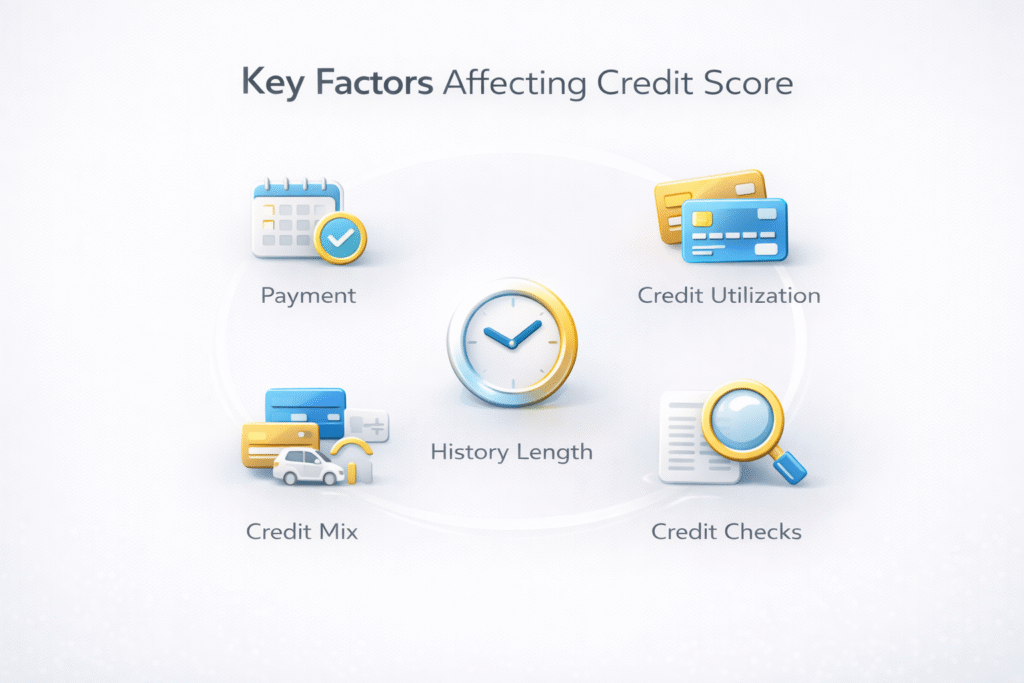
Your credit score is influenced by several key factors that reflect how you manage credit over time. Understanding what affects your credit score is essential if you want to improve it and maintain a good credit score in the USA.
Instead of focusing on just one element, credit scoring models evaluate a combination of behaviors. Here are the most important factors that can either improve or lower your credit score:
Payment History
Your payment history has the biggest impact on your credit score.
It tracks whether you pay your bills on time, including:
- Credit cards
- Loans
- Other credit accounts
👉 Late or missed payments can significantly lower your score.
👉 Consistent on-time payments help build a strong credit profile.
Credit Utilization
This refers to how much of your available credit you’re currently using.
Example:
- Credit limit = $1,000
- Usage = $800 → 80% utilization (too high)
👉 Keeping your utilization below 30% is ideal for maintaining a healthy credit score.
Length of Credit History
This factor looks at how long you’ve been using credit.
It includes:
- Age of your oldest account
- Average age of all accounts
👉 A longer credit history shows stability and can positively impact your score.
Credit Mix
Your credit mix refers to the variety of credit accounts you have, such as:
- Credit cards
- Installment loans (auto, student, personal loans)
👉 A balanced mix can slightly improve your credit score, but it’s not as important as payment history or utilization.
New Credit and Credit Checks
Every time you apply for credit, a credit check (hard inquiry) may be performed.
👉 Too many applications in a short period can lower your score temporarily.
👉 Checking your own credit score (soft inquiry) does not affect your score.
How to Check Your Credit Score in the USA
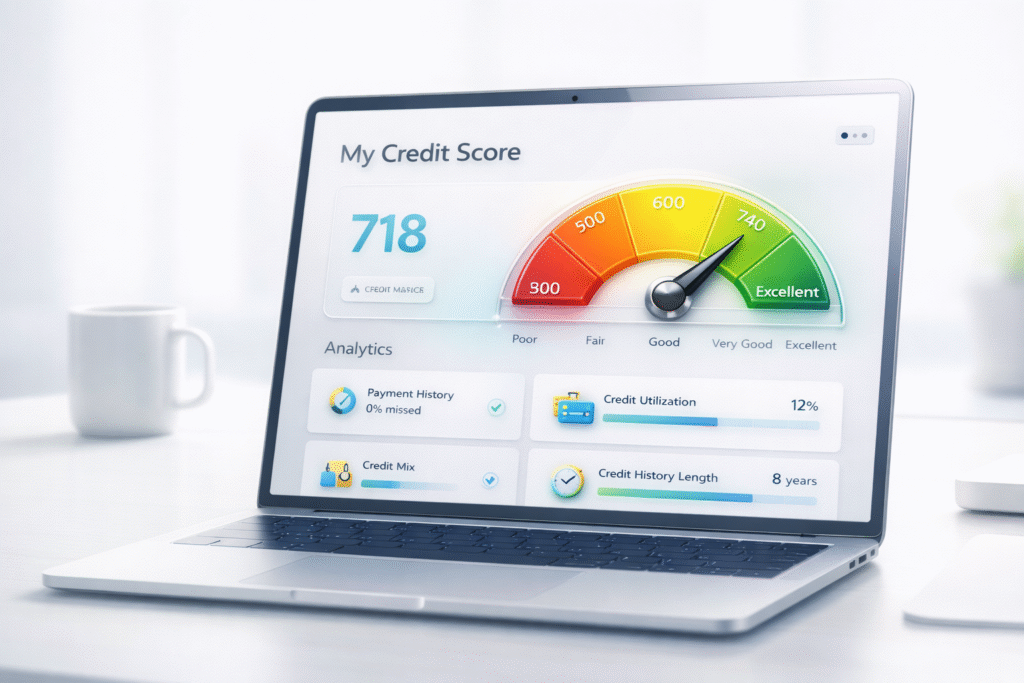
Checking your credit score in the USA is simple, safe, and something you should do regularly. It helps you understand where you stand within the credit score range and allows you to spot any issues before applying for a credit card or loan.
The good news is that you can check your credit score for free, and doing so will not harm your score—as long as it’s a soft credit check.
Use Free Credit Score Services
Several trusted platforms allow you to check your credit score in the USA for free.
These services:
- Show your current credit score
- Provide updates over time
- Offer insights into what affects your credit score
👉 This is the easiest way for beginners to stay informed.
Check Your Credit Report from Official Sources
You’re entitled to access your credit report from the major credit bureaus:
- Experian
- Equifax
- TransUnion
Your credit report contains the data used to calculate your credit score, including your payment history, credit accounts, and any recent credit checks.
👉 Reviewing your report helps you understand how your credit score is calculated and identify any errors.
Use Your Bank or Credit Card Provider
Many banks and credit card companies in the USA offer free credit score checks as part of their services.
You can usually find this feature:
- Inside your online banking dashboard
- In your mobile banking app
👉 This is a convenient way to monitor your score regularly.
Understand Soft vs Hard Credit Checks
It’s important to know the difference between the two types of credit checks:
- Soft credit check → Does NOT affect your score
(e.g., checking your own credit score) - Hard credit check → May slightly lower your score
(e.g., applying for a loan or credit card)
👉 Checking your own credit score is always safe and will not reduce your score.
Common Credit Score Myths
There’s a lot of confusion around how credit scores work in the USA. Many people believe common myths that can actually hurt their financial decisions. Let’s clear up some of the biggest misunderstandings so you can manage your credit score with confidence.
Myth 1: Checking Your Credit Score Lowers It
❌ False
Checking your own credit score is considered a soft credit check, which does not affect your score at all.
👉 Only hard credit checks (like applying for a credit card or loan) may temporarily lower your score.
Myth 2: Closing a Credit Card Improves Your Score
❌ False
Closing a credit card can actually lower your credit score.
Why?
- It reduces your total available credit
- It increases your credit utilization ratio
👉 Keeping older accounts open (if managed well) can help maintain a good credit score.
Myth 3: Your Income Affects Your Credit Score
❌ False
Your income is not included in your credit score calculation.
Credit scoring models focus on:
- Payment history
- Credit usage
- Credit behavior
👉 Even a high income won’t improve your score if you don’t manage credit responsibly.
Myth 4: You Only Have One Credit Score
❌ False
You actually have multiple credit scores.
Different scoring models (like FICO and VantageScore) and different credit bureaus may calculate your score slightly differently.
👉 This is why your score may vary depending on where you check it.
Myth 5: You Need to Carry a Balance to Build Credit
❌ False
You do not need to carry a balance or pay interest to build your credit score.
👉 Paying your full balance on time is the best way to build and maintain a strong credit profile.
Myth 6: A Bad Credit Score Is Permanent
❌ False
Your credit score is not permanent—it changes over time based on your financial behavior.
👉 By improving habits like paying on time and reducing debt, you can gradually increase your score.
How to Improve Your Credit Score
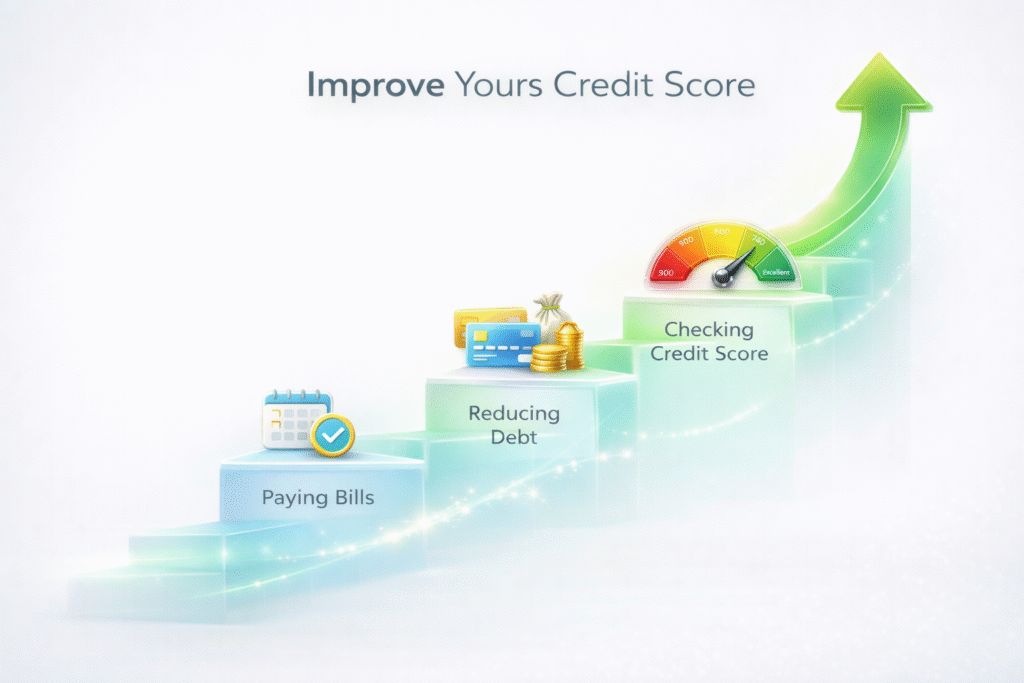
Improving your credit score doesn’t happen overnight, but with the right habits, you can steadily build a good credit score over time. Since your score is based on how you manage credit, even small changes in your financial behavior can make a big difference.
Here are some simple and effective ways to improve your credit score in the USA:
Pay All Your Bills on Time
Your payment history is the most important factor in your credit score.
👉 Always pay:
- Credit card bills
- Loan EMIs (or monthly payments)
- Any other credit obligations
Even one missed payment can lower your score, while consistent on-time payments help improve it.
Keep Your Credit Utilization Low
Try to use less than 30% of your available credit at any time.
Example:
- Credit limit = $1,000
- Keep usage below $300
👉 Lower utilization shows lenders that you manage credit responsibly.
Avoid Too Many Credit Applications
Every time you apply for a credit card or loan, a hard credit check is performed.
👉 Too many applications in a short time can lower your score.
Instead:
- Apply only when necessary
- Space out your applications
Keep Old Credit Accounts Open
The length of your credit history matters.
👉 Older accounts help:
- Increase your average account age
- Improve your credit profile
Even if you don’t use a credit card often, keeping it open can support your score.
Check Your Credit Score Regularly
Make it a habit to check your credit score in the USA regularly.
👉 This helps you:
- Track improvements
- Identify errors
- Stay aware of your financial position
Remember, checking your own score is a soft credit check and does not affect your score.
Fix Errors in Your Credit Report
Sometimes, mistakes in your credit report can lower your score.
👉 Look for:
- Incorrect account details
- Wrong payment history
- Unauthorized accounts
If you find errors, report them to the credit bureau immediately.
Be Consistent and Patient
Improving your credit score takes time.
👉 Focus on:
- Good habits
- Consistent payments
- Responsible credit usage
Over time, these actions will help you move into a better credit score range.
🧠 The Bottom Line
Improving your credit score is all about building strong financial habits. By paying on time, managing your credit wisely, and avoiding common mistakes, you can gradually increase your score and unlock better financial opportunities.
Leave a Reply