
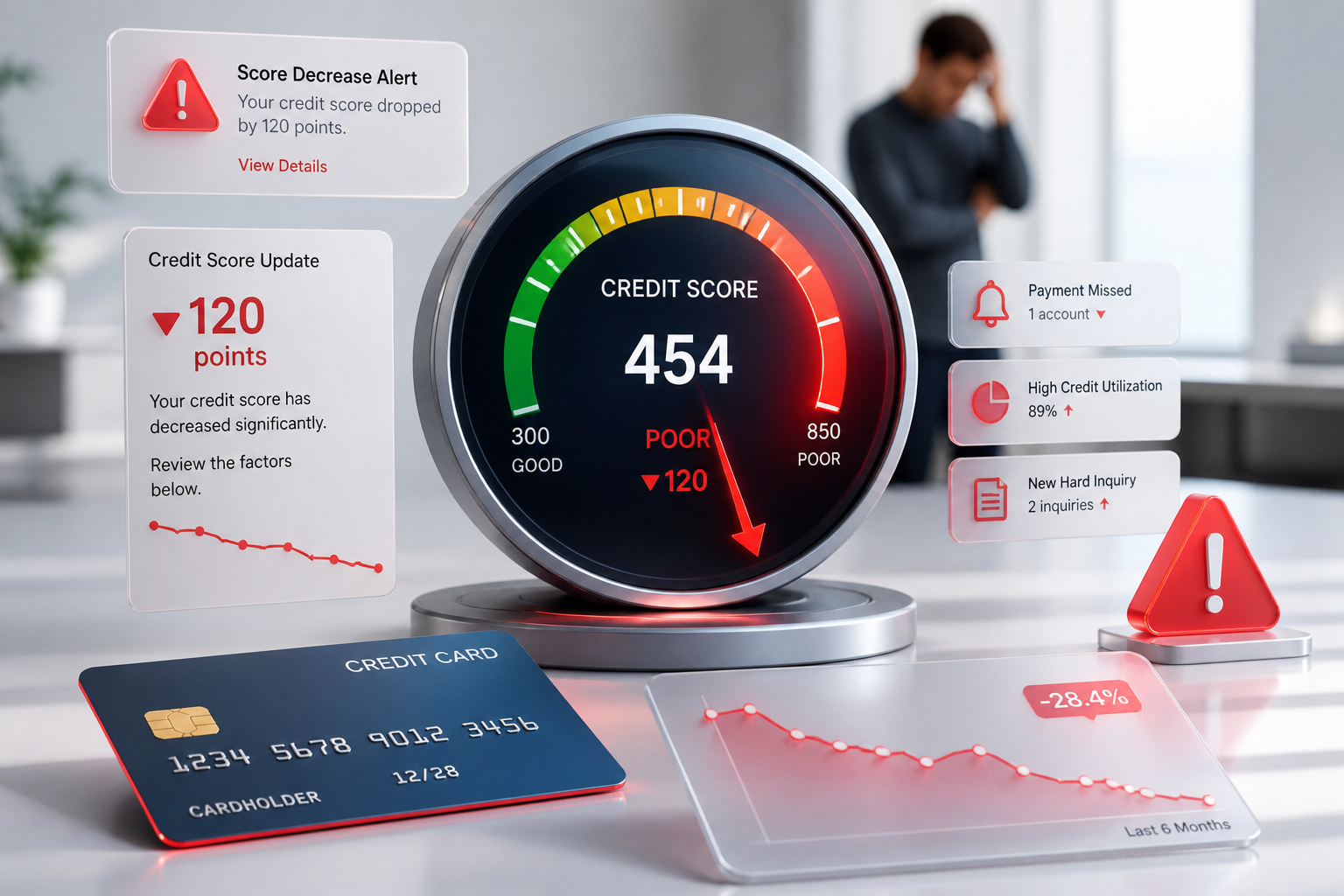
If you’ve recently checked your credit score and noticed it going down, you’re not alone. Many people search “why did my credit score drop suddenly” or even “why did my credit score drop for no reason” after seeing an unexpected decrease. It can feel frustrating—especially if you paid your bills on time and were trying to do everything right.
The truth is, a credit score drop doesn’t happen randomly. Whether your credit score dropped suddenly, decreased after a payment, or went down even though nothing obvious changed, there is always a reason behind it. The problem is, most of these reasons are not immediately visible.
In this guide, we’ll break down exactly why your credit score is going down, uncover the real reasons behind a sudden drop, and show you how to find out why your credit score dropped step by step. More importantly, you’ll learn how to fix it and prevent it from happening again—without confusion or guesswork.
Why Did My Credit Score Drop?

Your credit score can drop for several reasons, but the most common ones include late payments, high credit utilization, new credit applications, changes in your credit report, or closing an account.
If you’re wondering “why did my credit score drop suddenly” or “why is my credit score going down even though I paid on time”, the key thing to understand is this:
👉 Your credit score doesn’t drop randomly—there is always a specific change behind it.
The Real Reason Your Credit Score Is Going Down
A credit score is calculated based on your financial behavior. Even small changes in how you use credit can cause your score to decrease.
Here are the most common triggers behind a credit score drop:
- Increased credit utilization (using more of your available credit)
- Late or missed payments
- Too many hard inquiries (applying for loans or credit cards)
- Changes in your credit report
- Closing old credit accounts
👉 This is why many people notice their credit score dropped suddenly, even when they didn’t expect it.
Why Did My Credit Score Drop Suddenly?
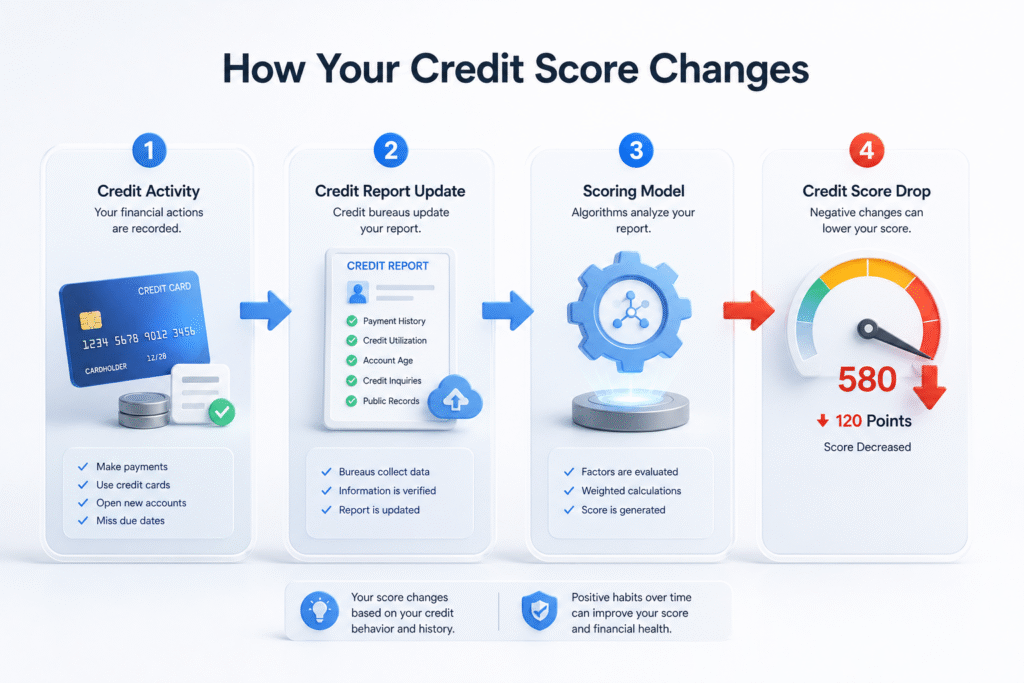
A sudden drop usually happens because of a recent update in your credit report.
For example:
- You made a large purchase → utilization increased
- You applied for a loan → hard inquiry added
- A lender reported new data → score recalculated
👉 These updates can make it feel like your score dropped “overnight,” but in reality, it reflects recent activity.
Why Did My Credit Score Drop for No Reason?
If it feels like your credit score dropped for no reason, it’s usually because the change isn’t immediately visible.
Some hidden reasons include:
- Reporting delays from lenders
- Small utilization changes
- Account updates you didn’t notice
- Errors in your credit report
👉 That’s why it’s important to find out why your credit score dropped by checking your credit report regularly.
Why Did My Credit Score Drop Even Though I Paid on Time?
This is one of the most common concerns.
Even if you paid on time, your score can still drop due to:
- Increased credit usage before the billing cycle closed
- New credit applications
- Changes in your credit mix
- Paying off a loan (which can reduce account diversity)
👉 So while payment history is important, it’s not the only factor affecting your score.
11 Real Reasons Your Credit Score Dropped
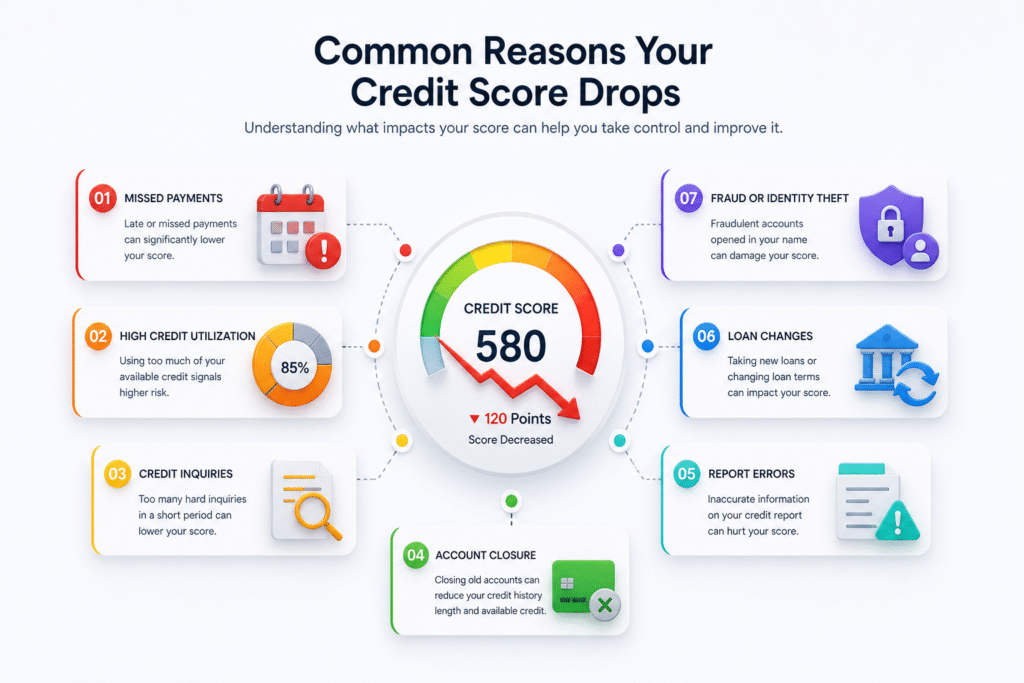
If you’re wondering, “Why did my credit score drop?”, the answer usually comes down to specific changes in your credit behavior or report. Even small actions can lead to a noticeable credit score drop, especially if they affect key scoring factors.
Here are the 11 most common reasons your credit score dropped—including some that surprise most people.
1. Missed or Late Payments
This is the biggest reason for a drop.
- Even one late payment can significantly lower your score
- Payment history is the most important factor
👉 If your credit score dropped suddenly, check if any payments were reported late.
2. High Credit Utilization
Using too much of your available credit can hurt your score.
- Ideal: keep usage below 30%
- High usage → signals risk
👉 Many people ask, “Why is my credit score going down?”—This is often the reason.
3. Too Many Credit Applications (Hard Inquiries)
Each time you apply for credit:
- A hard inquiry is recorded
- Too many in a short time lowers your score
👉 This often explains why your credit score dropped after applying for a loan.
4. Your Credit Score Dropped After Paying Off Debt
Sounds strange, but it happens.
- Paying off a loan can reduce your credit mix
- It may also shorten your active credit history
👉 This is a common reason behind “why did my credit score drop after paying off debt”.
5. Your Credit Score Dropped Even Though You Paid on Time
Frustrating—but possible.
Reasons include:
- Increased utilization before statement closing
- New inquiries
- Account changes
👉 Payment history is important, but it’s not the only factor.
6. Closing a Credit Card
Closing an account can:
- Reduce your total credit limit
- Increase your utilization ratio
👉 This can cause a credit score drop, even if you had good habits.
7. Errors in Your Credit Report
Mistakes happen more often than you think.
Examples:
- Incorrect late payments
- Wrong balances
- Unknown accounts
👉 If your credit score dropped for no reason, this is something to check immediately.
8. Your Credit Score Dropped Suddenly After a Loan Application
Applying for a loan can:
- Trigger a hard inquiry
- Add new debt
👉 This explains why your credit score dropped suddenly after applying for a loan.
9. Short Credit History
If your accounts are relatively new:
- Less history = less trust
- The score may fluctuate more
👉 This is common for beginners building credit.
10. Bankruptcy or Major Negative Events
Serious financial events can cause a large drop.
- Bankruptcy
- Collections
- Defaults
👉 Many people search “how much does bankruptcy drop your credit score”—and the answer is: significantly.
11. Identity Theft or Fraud
Unexpected drops can sometimes be due to fraud.
Signs include:
- Unknown accounts
- Sudden large balances
- Unauthorized activity
👉 If your credit score dropped suddenly, always rule this out.
Why Did My Credit Score Drop Suddenly for No Reason?
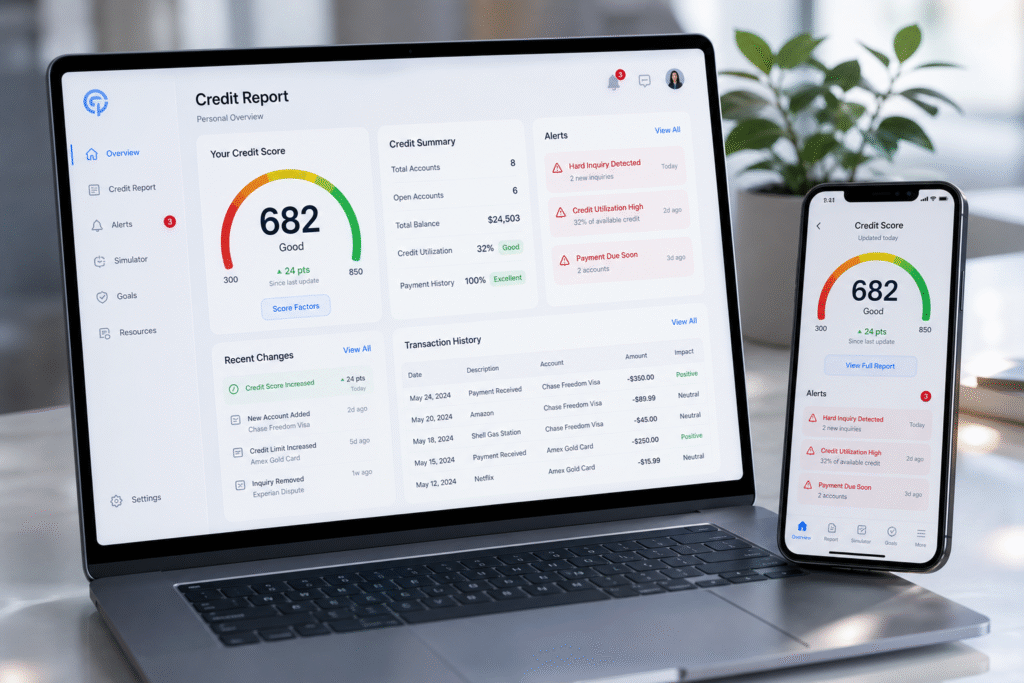
If your credit score dropped suddenly for no reason, it can feel confusing and even stressful—especially when you haven’t missed any payments or made any obvious mistakes.
But here’s the truth:
👉 A credit score never drops without a reason—it’s just not always immediately visible.
What feels like a random drop is usually caused by hidden changes in your credit report or recent activity that hasn’t caught your attention yet.
Hidden Reasons Behind a Sudden Credit Score Drop
Even if everything seems normal, small or delayed changes can trigger a noticeable credit score drop.
Here are the most common hidden causes:
🔹 1. Credit Report Updates or Delays
Lenders don’t report activity instantly.
- Your balance, payments, or new accounts may be updated later
- A recent change might just now be affecting your score
👉 This is why your credit score dropped suddenly, even though nothing changed recently (from your perspective).
🔹 2. Slight Increase in Credit Utilization
Even a small increase in your credit usage can impact your score.
- You may have used more credit before your billing cycle closed
- Even if you paid it off later, the higher balance was already reported
👉 This often explains why your credit score dropped even though you paid on time.
🔹 3. New Credit Inquiry You Forgot About
Sometimes, a recent application can affect your score:
- Credit card application
- Loan inquiry
- Buy-now-pay-later services
👉 These hard inquiries can cause a temporary drop.
🔹 4. Account Changes You Didn’t Notice
Changes like:
- A closed account
- A reduced credit limit
- A loan is being paid off
👉 These can shift your credit score factors and lead to a drop.
🔹 5. Errors or Inaccuracies in Your Credit Report
Sometimes, the reason truly isn’t your fault.
- Incorrect late payment
- Duplicate account
- Wrong balance
👉 If your credit score dropped for no reason, always check your credit report for errors.
🔹 6. Algorithm or Scoring Model Updates
Credit scoring models (like FICO) may update or recalculate your score based on new data.
👉 This can cause small fluctuations, even without major changes in your behavior.
How to Find Out Why Your Credit Score Dropped
If you want a clear answer, the best approach is to:
- Review your latest credit report
- Compare it with your previous report
- Look for any recent changes
👉 This is the most reliable way to find out why your credit score dropped instead of guessing.
Should You Be Worried?
Not always.
👉 A sudden drop doesn’t automatically mean something is wrong.
- Small drops (10–30 points) are common
- Larger drops need investigation
👉 The key is to identify the cause and respond quickly.
How to Find Out Why Your Credit Score Dropped
If you’re asking, “How do I find out why my credit score dropped?”, the answer is simple:
👉 You need to analyze your credit report and recent activity step by step.
A credit score drop always has a reason—you just need to uncover it. Here’s exactly how to find out why your credit score went down without guessing.
Check Your Credit Report First
The most important step is to review your credit report.
Look for:
- New accounts you didn’t open
- Changes in balances
- Late payment entries
- Closed accounts
👉 This is the fastest way to find out why your credit score dropped, especially if it happened suddenly.
Compare Your Current Report with a Previous One
Don’t just look at your current report—compare it with an older version.
Ask:
- What changed?
- Which account shows new activity?
- Did any balance increase?
👉 This helps you clearly see why your credit score went down instead of guessing blindly.
Check Your Credit Utilization
One of the most common hidden reasons is credit utilization.
Even if you paid on time:
- Your balance might have been reported before payment
- Your usage might have crossed 30%
👉 This often explains “why did my credit score drop even though I paid on time?”
Look for Recent Credit Applications
Think about any recent financial activity:
- Did you apply for a credit card?
- Did you apply for a loan?
👉 A hard inquiry may be the reason your credit score dropped suddenly after applying for a loan.
Check for Errors or Fraud
Sometimes, the drop isn’t your fault.
Look for:
- Incorrect late payments
- Duplicate accounts
- Unknown activity
👉 If something looks wrong, it’s critical to investigate immediately.
Use Credit Monitoring Tools
Credit monitoring tools can show:
- What changed
- When it changed
- Why your score moved
👉 These tools make it easier to see why your credit score went down without manually analyzing everything.
Check If You Recently Paid Off a Loan
This surprises many people.
- Paying off a loan can reduce your credit mix
- It can temporarily lower your score
👉 This is a common answer to “why did my credit score drop after paying off debt?”
How to Fix a Credit Score Drop
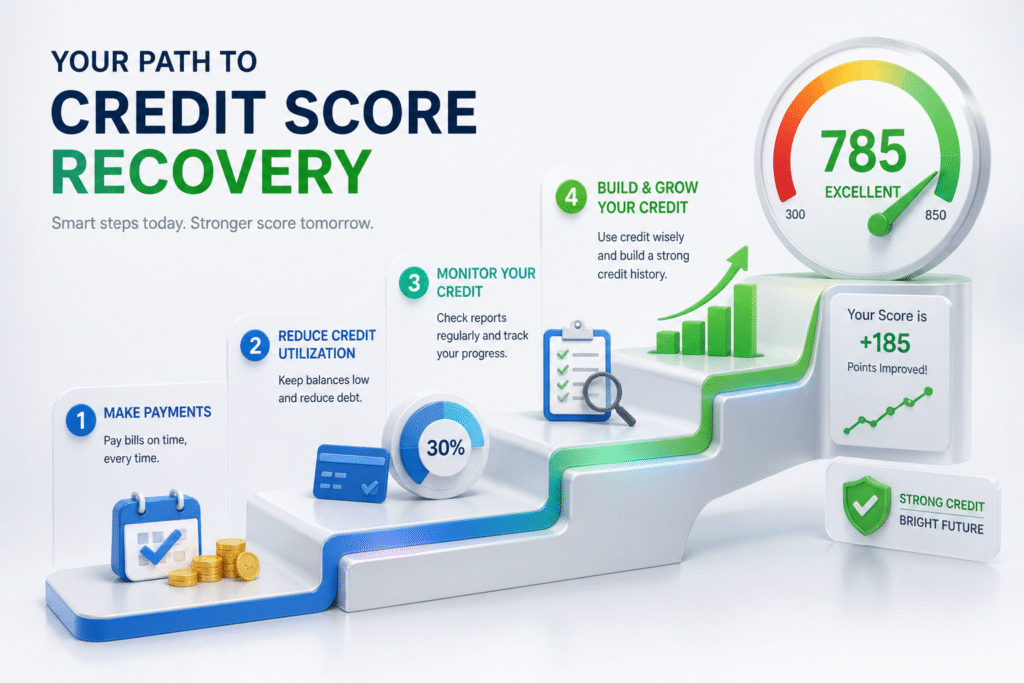
If your credit score dropped, the good news is that it can usually be fixed. The key is to first understand why your credit score dropped, and then take the right actions to recover it.
Here’s a simple, step-by-step approach to fix a credit score drop and start improving your score again.
1. Identify the Exact Reason for the Drop
Before taking action, you need clarity.
👉 Ask:
- Did your credit score drop suddenly?
- Did it drop after a payment or a loan?
👉 Check your credit report to find out why your credit score dropped.
Fixing the wrong problem won’t improve your score—so start here.
2. Pay All Bills on Time (No Exceptions)
Payment history is the biggest factor.
👉 If you missed a payment:
- Bring the account current immediately
- Set reminders or auto-pay
Consistent on-time payments will gradually improve your score and help recover from a drop.
3. Reduce Your Credit Utilization
If your credit score is going down, high credit usage is often the reason.
👉 Do this:
- Keep usage below 30%
- Ideally, below 10% for faster improvement
Even a small reduction can help reverse a credit score drop quickly.
4. Avoid New Credit Applications
After a drop, don’t make it worse.
👉 Avoid:
- Applying for new credit cards
- Taking new loans
Each hard inquiry can further lower your score.
5. Correct Errors in Your Credit Report
If your credit score dropped for no reason, errors could be the cause.
👉 Look for:
- Incorrect late payments
- Wrong balances
- Unknown accounts
👉 Dispute any inaccuracies as soon as possible.
6. Keep Old Accounts Open
Closing accounts can increase your credit utilization and reduce your history length.
👉 Instead:
- Keep older accounts active
- Use them occasionally
This helps stabilize and improve your credit score.
7. Build Positive Credit Activity
If your score dropped, focus on rebuilding.
👉 Do:
- Make small purchases
- Pay them off on time
- Maintain low balances
👉 This sends positive signals to credit scoring models.
8. Be Patient — Recovery Takes Time
There’s no instant fix.
👉 Timeline depends on the cause:
- Small drops → a few weeks
- Medium drops → a few months
- Major issues → longer recovery
👉 Consistency is what moves you back into a good credit score range.
How Long Does It Take to Recover Your Credit Score?
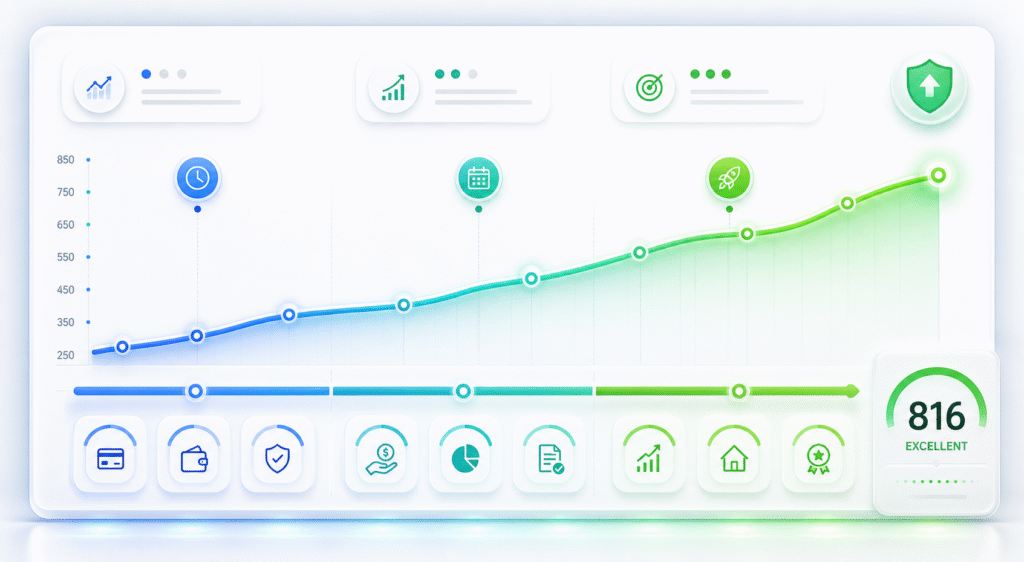
If your credit score dropped, one of the first questions you’ll have is: how long does it take to recover?
The answer depends on why your credit score dropped in the first place. Some drops can be reversed quickly, while others take time and consistent effort.
👉 The key thing to remember: credit score recovery is gradual, not instant.
Recovery Timeline Based on the Cause
Here’s a realistic breakdown of how long it can take to recover from a credit score drop:
Small Drop (10–30 Points)
Time to recover: A few weeks to 1–2 months
Common causes:
- Slight increase in credit utilization
- Minor report updates
👉 These are usually easy to fix by reducing your credit usage and making on-time payments.
Moderate Drop (30–70 Points)
Time to recover: 2–4 months
Common causes:
- Hard inquiries (credit applications)
- Higher credit utilization
- Account changes
👉 If your credit score dropped suddenly, this is often the category—and recovery is still manageable with the right steps.
Major Drop (70–150+ Points)
Time to recover: 6 months to 1 year (or more)
Common causes:
- Missed payments
- Collections or defaults
- Bankruptcy or serious negative events
👉 These take longer to recover from, but improvement is still possible with consistent positive behavior.
What Speeds Up Credit Score Recovery?
If you want to recover faster, focus on:
- Paying all bills on time
- Reducing credit utilization
- Avoiding new credit applications
- Monitoring your credit report regularly
👉 These actions directly help fix the issues that caused your credit score to go down.
What Slows Down Recovery?
Some habits can delay your progress:
- Missing additional payments
- Keeping high balances
- Applying for too much credit
- Ignoring errors in your credit report
👉 If you don’t address the root cause, your credit score drop may take longer to recover.
Can a Credit Score Recover Quickly?
Yes — in some cases.
👉 If your score dropped due to:
- Temporary utilization increase
- Reporting delay
It can bounce back within weeks once corrected.
The Bottom Line
How long it takes to recover your credit score depends on the cause of the drop. Small issues can be fixed quickly, while major problems take longer. The most important thing is to stay consistent—because over time, good financial habits will always move your score back in the right direction.
Final Thoughts: Don’t Panic—Understand and Take Control
If you’ve been wondering, “Why did my credit score drop?”, the most important thing to remember is this:
👉 A credit score drop is not permanent—and it’s almost always fixable.
Whether your credit score dropped suddenly, went down after a payment, or changed for reasons that weren’t immediately clear, there is always a cause behind it. Once you identify that cause, you can take the right steps to recover and improve your score over time.
Focus on What You Can Control
Instead of worrying about the drop, focus on actions that move your score in the right direction:
- Pay all bills on time
- Keep your credit utilization low
- Avoid unnecessary credit applications
- Monitor your credit report regularly
👉 These simple habits are the foundation of moving from a drop back into a good credit score range—and eventually the best credit score range.
Progress Over Perfection
You don’t need a perfect score to succeed financially.
👉 What matters is:
- Consistency
- Awareness
- Smart financial behavior
Even if your credit score went down, it can always go back up with the right approach.
The Final Takeaway
A drop in your credit score is not a setback—it’s a signal. It tells you that something has changed, and once you understand what that change is, you’re in control again.
👉 Learn from it.
👉 Fix it.
👉 Improve it.
That’s how you build long-term financial strength.
Leave a Reply